Muutke küpsiste eelistusi

E-raamat: Hidden Minority: Perceptions of Belonging and Otherness in the Finnish - Russian Borderland

  • Formaat: EPUB+DRM
  • Sari: EASA Series
  • Ilmumisaeg: 01-Nov-2024
  • Kirjastus: Berghahn Books
  • Keel: eng
  • ISBN-13: 9781805397571
  • Formaat - EPUB+DRM
  • Hind: 24,64 €*
  • * hind on lõplik, st. muud allahindlused enam ei rakendu
  • Lisa ostukorvi
  • Lisa soovinimekirja
  • See e-raamat on mõeldud ainult isiklikuks kasutamiseks. E-raamatuid ei saa tagastada.
  • Formaat: EPUB+DRM
  • Sari: EASA Series
  • Ilmumisaeg: 01-Nov-2024
  • Kirjastus: Berghahn Books
  • Keel: eng
  • ISBN-13: 9781805397571

DRM piirangud

  • Kopeerimine (copy/paste):

    ei ole lubatud

  • Printimine:

    ei ole lubatud

  • Kasutamine:

    Digitaalõiguste kaitse (DRM)
    Kirjastus on väljastanud selle e-raamatu krüpteeritud kujul, mis tähendab, et selle lugemiseks peate installeerima spetsiaalse tarkvara. Samuti peate looma endale  Adobe ID Rohkem infot siin. E-raamatut saab lugeda 1 kasutaja ning alla laadida kuni 6'de seadmesse (kõik autoriseeritud sama Adobe ID-ga).

    Vajalik tarkvara
    Mobiilsetes seadmetes (telefon või tahvelarvuti) lugemiseks peate installeerima selle tasuta rakenduse: PocketBook Reader (iOS / Android)

    PC või Mac seadmes lugemiseks peate installima Adobe Digital Editionsi (Seeon tasuta rakendus spetsiaalselt e-raamatute lugemiseks. Seda ei tohi segamini ajada Adober Reader'iga, mis tõenäoliselt on juba teie arvutisse installeeritud )

    Seda e-raamatut ei saa lugeda Amazon Kindle's. 
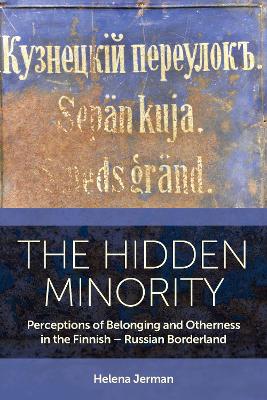
"Looking at the Finnish-Russian borderland as a transnational space and claiming that there is a need to understand the long-term effects of migration--a continuing process spanning several generations--The Hidden Minority takes a multi-temporal perspective on mobility and belonging. The focus of this ethnographic study is the Russian minority in Finland, which is socially, economically, politically and culturally heterogeneous.The Russian minority in Finland is imbued with 'being hidden' or 'hiding oneself'. The book explores informants' reflections, together with the author, on the mental and physical crossing of national borders. Perceptions of belonging and/or Otherness and lived experience reveal a complex relationship of embodied memory, history, time and a multi-national social space"--

Looking at the Finnish–Russian borderland as a transnational space and claiming that there is a need to understand the long-term effects of migration – a continuing process spanning several generations – The Hidden Minority takes a multi-temporal perspective on mobility and belonging. The focus of this ethnographic study is the Russian minority in Finland, which is socially, economically, politically and culturally heterogeneous.The Russian minority in Finland is imbued with ’being hidden‘ or ’hiding oneself‘. The book explores informants’ reflections, together with the author, on the mental and physical crossing of national borders. Perceptions of belonging and/or Otherness and lived experience reveal a complex relationship of embodied memory, history, time and a multi-national social space.

Arvustused

This is an impressive and important book. It makes the hidden minority of Russians in Finland visible in terms of perceptions of self and lived experience. Helena Wulff, Stockholm University


The language of The Hidden Minority is very appropriate easy to read and easy to understand, but at the same time also explanatory and reasoned. Ieva Garda-Rozenberga, University of Latvia

List of Illustrations

Prologue

Acknowledgments

Chronology

General Maps


Introduction


Chapter
1. The Hidden Minority

Chapter
2. Travelling Memory and the Creation of Belonging

Chapter
3. Human Mobility: Disruption and Continuity

Chapter
4. Across Borders and Generations; Memory Moves

Chapter
5. Between Inclusion and Exclusion


Conclusion


Epilogue

References

Index
Helena Jerman is affiliated to the Faculty of Social Sciences, Global Development Studies at the University of Helsinki, where she has taught and worked as a university researcher and later as an experienced researcher of the Kone Foundation. She was a member of the board of the Finnish Oral History Network (FOHN) for several years and is a founding member of the Finnish Anthropological Society and the Society for the Study of Ethnic Relations and International Migration.