Muutke küpsiste eelistusi

E-raamat: History of Modern Greek Economic Thought

(University of Athens, Greece)
  • Formaat - PDF+DRM
  • Hind: 55,89 €*
  • * hind on lõplik, st. muud allahindlused enam ei rakendu
  • Lisa ostukorvi
  • Lisa soovinimekirja
  • See e-raamat on mõeldud ainult isiklikuks kasutamiseks. E-raamatuid ei saa tagastada.

DRM piirangud

  • Kopeerimine (copy/paste):

    ei ole lubatud

  • Printimine:

    ei ole lubatud

  • Kasutamine:

    Digitaalõiguste kaitse (DRM)
    Kirjastus on väljastanud selle e-raamatu krüpteeritud kujul, mis tähendab, et selle lugemiseks peate installeerima spetsiaalse tarkvara. Samuti peate looma endale  Adobe ID Rohkem infot siin. E-raamatut saab lugeda 1 kasutaja ning alla laadida kuni 6'de seadmesse (kõik autoriseeritud sama Adobe ID-ga).

    Vajalik tarkvara
    Mobiilsetes seadmetes (telefon või tahvelarvuti) lugemiseks peate installeerima selle tasuta rakenduse: PocketBook Reader (iOS / Android)

    PC või Mac seadmes lugemiseks peate installima Adobe Digital Editionsi (Seeon tasuta rakendus spetsiaalselt e-raamatute lugemiseks. Seda ei tohi segamini ajada Adober Reader'iga, mis tõenäoliselt on juba teie arvutisse installeeritud )

    Seda e-raamatut ei saa lugeda Amazon Kindle's. 

"Tracing the evolution of economic ideas in the context of the economic history and economic policy issues in Greece, this book examines the history of modern Greek economic thought from the War of Independence from Ottoman rule in 1821 until the present. The book explores how native, religious-oriented, economic thought was secularised and merged with different economic discourses during successive historical periods. It traces how the dissemination of French and German economic thought in the 19th century was followed by British and US influences in the 20th century. The institutionalization of economics as a discipline in the 1920s and its internationalization after 1971, with their effects on the emergence of modern mainstream and heterodox thought, are also discussed. Finally, reference is made to contemporary Greek economic thought in the frame of European Union economic thinking. This book will be of interest to readers in history of economic thought, economic history, intellectual history, Greek history and modern European history more broadly"--

Tracing the evolution of economic ideas in the context of the economic history and economic policy issues in Greece, this book examines the history of modern Greek economic thought from the War of Independence from Ottoman rule in 1821 until the present.

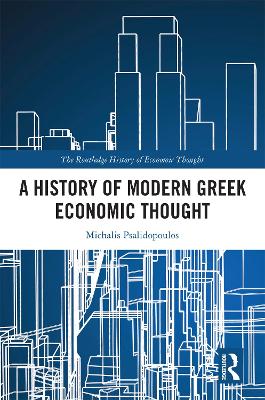
The book explores how native, religious-oriented economic thought was secularized and merged with different economic discourses during successive historical periods. It traces how the dissemination of French and German economic thought in the 19th century was followed by British and US influences in the 20th century. The institutionalization of economics as a discipline in the 1920s and its internationalization after 1971, with their effects on the emergence of modern mainstream and heterodox thought, are also discussed. Finally, reference is made to contemporary Greek economic thought in the frame of European Union economic thinking.

This book will be of interest to readers in the history of economic thought, economic history, intellectual history, Greek history, and modern European history more broadly.


Tracing the evolution of economic ideas in the context of the economic history and economic policy issues in Greece, this book examines the history of modern Greek economic thought from the War of Independence from Ottoman rule in 1821 until the present.

Arvustused

"Psalidopoulos great historical synthesis is an important account of the history of economic thought in Greece from the creation of the Greek State in 1830 to the national debt crisis of 2010...[ T]his book recounts this story remarkably."

Michel S. Zouboulakis, The European Journal of the History of Economic Thought

"Michalis Psalidopoulos' integration of two centuries Greek economic history with the history of economic thought is done in a paradigmatic way. The book lays stress on the dissemination of ideas of major economists and schools of economic thought, and the way these ideas were perceived and implemented in Greece either to stimulate economic growth or to deal with the harsh reality of economic slowdowns. The book extends the analysis and applied policies to the great recession of 2007 that affected Greece more than any other country."

Lefteris Tsoulfidis, University of Macedonia

Introduction

1 Before 1821

2 French Ideas and German Cameralism (182162)

3 The Age of French Economic Liberalism (186297)

4 The Age of the German Historical School (18971944)

5 Economics Takes Off: The Institutionalization of Economics (192071)

6 The (Subtle) Anglo-Saxonization of Greek Economics (194471)

7 The Internationalization of Greek Economics after 1971

Concluding Summary
Michalis Psalidopoulos is Chief Consultant at the Institute for Hellenic Growth and Prosperity of the American College of Greece and Professor Emeritus for the History of Economics at the National and Kapodistrian University of Athens, Greece.