Muutke küpsiste eelistusi

E-raamat: How Writing Came About

  • Formaat: EPUB+DRM
  • Ilmumisaeg: 24-Feb-2022
  • Kirjastus: University of Texas Press
  • Keel: eng
  • ISBN-13: 9780292774865
  • Formaat - EPUB+DRM
  • Hind: 11,09 €*
  • * hind on lõplik, st. muud allahindlused enam ei rakendu
  • Lisa ostukorvi
  • Lisa soovinimekirja
  • See e-raamat on mõeldud ainult isiklikuks kasutamiseks. E-raamatuid ei saa tagastada.
  • Formaat: EPUB+DRM
  • Ilmumisaeg: 24-Feb-2022
  • Kirjastus: University of Texas Press
  • Keel: eng
  • ISBN-13: 9780292774865

DRM piirangud

  • Kopeerimine (copy/paste):

    ei ole lubatud

  • Printimine:

    ei ole lubatud

  • Kasutamine:

    Digitaalõiguste kaitse (DRM)
    Kirjastus on väljastanud selle e-raamatu krüpteeritud kujul, mis tähendab, et selle lugemiseks peate installeerima spetsiaalse tarkvara. Samuti peate looma endale  Adobe ID Rohkem infot siin. E-raamatut saab lugeda 1 kasutaja ning alla laadida kuni 6'de seadmesse (kõik autoriseeritud sama Adobe ID-ga).

    Vajalik tarkvara
    Mobiilsetes seadmetes (telefon või tahvelarvuti) lugemiseks peate installeerima selle tasuta rakenduse: PocketBook Reader (iOS / Android)

    PC või Mac seadmes lugemiseks peate installima Adobe Digital Editionsi (Seeon tasuta rakendus spetsiaalselt e-raamatute lugemiseks. Seda ei tohi segamini ajada Adober Reader'iga, mis tõenäoliselt on juba teie arvutisse installeeritud )

    Seda e-raamatut ei saa lugeda Amazon Kindle's. 

In 1992, the University of Texas Press published Before Writing, Volume I: From Counting to Cuneiform and Before Writing, Volume II: A Catalog of Near Eastern Tokens. In these two volumes, Denise Schmandt-Besserat set forth her groundbreaking theory that the cuneiform script invented in the Near East in the late fourth millennium B.C. - the world's oldest known system of writing - derived from anarchaic counting device.
How Writing Came About draws material from both volumes to present Schmandt-Besserat's theory for a wide public and classroom audience. Based on the analysis and interpretation of a selection of 8,000 tokens or counters from 116 sites in Iran, Iraq, the Levant, and Turkey, it documents the immediate precursor of the cuneiform script.

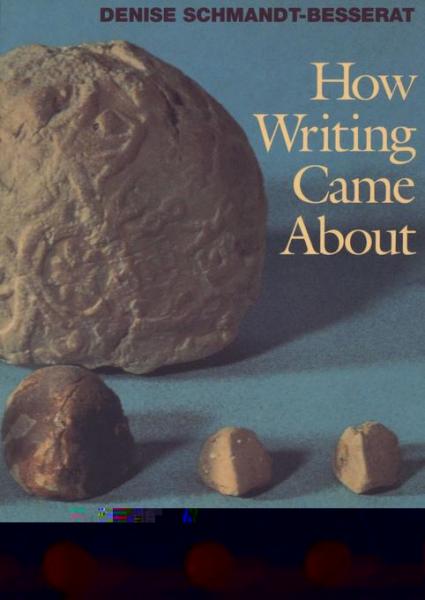
Draws on the author's earlier works, Before Writing, Volume I: From Counting to Cuneiform and Before Writing, Volume II: A Catalog of Near Eastern Tokens to present her theory that the world's oldest system of writing derived from a counting device. Analyzes and interprets evidence of tokens and counters from the Near and Middle East, examining uses of the tokens, the evolution of symbols, and counting and the emergence of writing. Includes drawings of the tokens, and a glossary. For students. Annotation c. by Book News, Inc., Portland, Or.

In 1992, the University of Texas Press published Before Writing, Volume I: From Counting to Cuneiformand Before Writing, Volume II: A Catalog of Near Eastern Tokens. In these two volumes, Denise Schmandt-Besserat set forth her groundbreaking theory that the cuneiform script invented in the Near East in the late fourth millennium B.C.—the world's oldest known system of writing—derived from an archaic counting device.

How Writing Came About draws material from both volumes to present Schmandt-Besserat's theory for a wide public and classroom audience. Based on the analysis and interpretation of a selection of 8,000 tokens or counters from 116 sites in Iran, Iraq, the Levant, and Turkey, it documents the immediate precursor of the cuneiform script.

Arvustused

Discoveries in the history of writing are rare, but Denise Schmandt-Besserat made one in realizing that phonetic writing in the West descends not from pictography, a view repeated everywhere, but from abstract, nonphonetic, mostly noniconographic accounting tokens used in Neolithic farming communities of the Near East beginning from about 8000 B.C. A condensation of volume I of Before Writing ...this book is a perfect production, utterly lucid, thoughtfully illustrated, and thoroughly convincing. (American Journal of Archaeology)

  • Preface
  • Introduction: Tokens, a New Theory
    • The Myths
    • The Pictographic Theory
    • Tokens
  • Part One: The Evidence
    • 1. What Are Tokens?
      • Types and Subtypes
      • Evolution from Plain to Complex Materials
      • Manufacture
      • The Token Collection under Study
    • 2. Where Tokens Were Handled and Who Used Them
      • Types of Settlements
      • Distribution within Settlements
      • Structures
      • Token Clusters
      • Containers Holding Tokens
      • Associated Assemblages
      • Tokens as Funerary Offerings
    • 3.Strings of Tokens and Envelopes
      • Strings of Tokens
      • Envelopes
    • 4. Impressed Tablets
      • Number
      • Context
      • Chronology
      • Description
      • The Signs
      • Beyond the Impressed Tablets: Pictography
      • The Meaning of Signs and Their Corresponding Tokens
      • The Place of Impressed Tablets in the Evolution of Writing
  • Part Two: The Interpretation
    • 5. The Evolution of Symbols in Prehistory
      • Symbols and Signs
      • Lower and Middle Paleolithic Symbols
      • Upper Paleolithic and Mesolithic Symbols
      • Neolithic Symbols
      • A Turning Point in Communication and Data Storage
    • 6. Tokens: The Socioeconomic Implications
      • Reckoning Technology and Economy
      • Reckoning Technology and Social Organization
    • 7. Counting and the Emergence of Writing
      • The Various Modes of Counting
      • The Sumerian Philological Evidence
      • The Near Eastern Archaeological Data
    • 8. Conclusions: Tokens, Their Role in Prehistory and Their Contribution to Archaeology
      • Economy
      • Political Structure
      • Mathematics
      • Communication
  • Part Three: The Artifacts
    • Cones
    • Spheres
    • Disks
    • Cylinders
    • Tetrahedrons
    • Ovoids
    • Quadrangles
    • Triangles
    • Biconoids
    • Paraboloids
    • Bent Coils
    • Ovals/Rhomboids
    • Vessels
    • Tools
    • Animals
    • Miscellaneous
  • Notes
  • Glossary
  • Index
Denise Schmandt-Besserat is Professor of Middle Eastern Studies at the University of Texas at Austin.