Muutke küpsiste eelistusi

E-raamat: Human Nature, Human Goods: A Theory of Natural Perfectionism

(University of Cape Town)
  • Formaat: PDF+DRM
  • Ilmumisaeg: 31-Jan-2026
  • Kirjastus: Cambridge University Press
  • Keel: eng
  • ISBN-13: 9781009375610
  • Formaat - PDF+DRM
  • Hind: 142,03 €*
  • * hind on lõplik, st. muud allahindlused enam ei rakendu
  • Lisa ostukorvi
  • Lisa soovinimekirja
  • See e-raamat on mõeldud ainult isiklikuks kasutamiseks. E-raamatuid ei saa tagastada.
  • Formaat: PDF+DRM
  • Ilmumisaeg: 31-Jan-2026
  • Kirjastus: Cambridge University Press
  • Keel: eng
  • ISBN-13: 9781009375610

DRM piirangud

  • Kopeerimine (copy/paste):

    ei ole lubatud

  • Printimine:

    ei ole lubatud

  • Kasutamine:

    Digitaalõiguste kaitse (DRM)
    Kirjastus on väljastanud selle e-raamatu krüpteeritud kujul, mis tähendab, et selle lugemiseks peate installeerima spetsiaalse tarkvara. Samuti peate looma endale  Adobe ID Rohkem infot siin. E-raamatut saab lugeda 1 kasutaja ning alla laadida kuni 6'de seadmesse (kõik autoriseeritud sama Adobe ID-ga).

    Vajalik tarkvara
    Mobiilsetes seadmetes (telefon või tahvelarvuti) lugemiseks peate installeerima selle tasuta rakenduse: PocketBook Reader (iOS / Android)

    PC või Mac seadmes lugemiseks peate installima Adobe Digital Editionsi (Seeon tasuta rakendus spetsiaalselt e-raamatute lugemiseks. Seda ei tohi segamini ajada Adober Reader'iga, mis tõenäoliselt on juba teie arvutisse installeeritud )

    Seda e-raamatut ei saa lugeda Amazon Kindle's. 
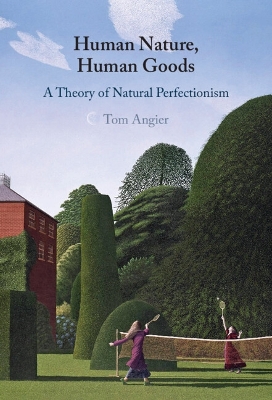
Is there a human nature? Can knowledge of it help us live better lives? This book synthesises ancient and modern philosophical ideas and draws on scientific research to answer yes to both these questions. It develops an innovative normative theory on the basis of commonsensical, naturalistic, premisses; and it defends an Aristotelian normative theory -- whereby we should understand human goods as realisations or perfections of human nature -- against both traditional and emerging challenges to perfectionist ethics, including evolutionary biology and transhumanism. The result is a ground-breaking theory of 'natural perfectionism', which both returns perfectionistic ethics to its Aristotelian roots and shows how this is compatible with evolutionary biology and cognitive science. At a time when the very idea of human nature is viewed as something that can be readily transcended, this work recalls us to a realistic, sober and better-founded vision of it.

Arvustused

'A fascinating, original, and deeply engaging development of Aristotelian perfectionism. Highly recommended to all, in particular those doubtful whether the notion of human nature has much to offer to modern philosophical ethics.' Roger Crisp, St Anne's College and Uehiro Institute Director, University of Oxford 'Tom Angier's book examines one of the most fundamental philosophical questions: what does it mean to live well? In clear, insightful and thought-provoking chapters, Angier defends 'natural perfectionism'-the view that goodness consists in perfecting our nature. Ranging smoothly from Aristotle to Richard Dawkins, Angier maps the history of this idea, explores its implications and defends it against contemporary objections. The result is not merely a profound philosophical argument, but also a rich and cogent guide on how to lead a flourishing life.' , Jonathan Crowe, Professor of Law and Justice, University of Southern Queensland

Muu info

A ground-breaking theory of human nature and its relevance to ethics, bringing ancient ideas into dialogue with cutting-edge science and philosophy.
Introduction; Part I. Foundations:
1. All roads lead to goods;
2.
Analytic theories of goods;
3. Goodness as natural perfection;
4. Fortifying
natural perfectionism; Part II. The Natural Perfections:
5. Framing goods;
6.
Bodily goods;
7. Intellectual goods;
8. Perceptual goods;
9. Productive
goods; Part III. Challenges:
10. The fact/value dichotomy;
11. Evolutionary
biology;
12. Human enhancement; List of works cited; Index.
Tom Angier is Associate Professor of Philosophy at the University of Cape Town. He is the author of Natural Law Theory (Cambridge, 2021) and Natural Law and Human Rights (Cambridge, 2023).