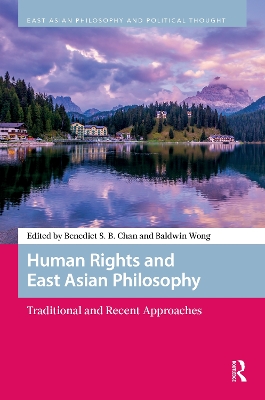
Human rights, viewed as universal moral rights since the 1948 Universal Declaration, are increasingly examined in relation to non-Western traditions. This edited volume explores the intersection of East Asian philosophies - Confucianism, Buddhism, and Daoism - with human rights discourse, examining whether these ancient traditions can accommodate universal values while preserving their core philosophical foundations.
The collection features scholarly analyses of how traditional East Asian thought engages with contemporary human rights, including privacy rights, environmental rights, and epistemic rights. The work demonstrates how these philosophical traditions offer unique interpretations that both challenge and enrich Western paradigm of human rights. The volume provides critical insights into cross-cultural dialogue and the potential for more inclusive global human rights frameworks.
This book serves philosophers, political theorists, human rights scholars, and scholars of Asian intellectual traditions. It appeals to those researching multicultural approaches to human rights, comparative ethics, and the dialogue between tradition and modernity.
Human rights, viewed as universal moral rights since the 1948 Universal Declaration, are increasingly examined in relation to non-Western traditions. This edited volume explores the intersection of East Asian philosophies - Confucianism, Buddhism, and Daoism - with human rights discourse.
Introduction for Human Rights and East Asian Philosophy: Traditional and
Recent Approaches Section 1: Human Rights and Confucian Perspectives
1.
Reconciling International Legal Human Rights and Confucianism: A
Consequential Evaluation to Political Participation and Privacy
2. Confucian
Strong Harmony and Human Rights
3. Confucian Conception of Human Rights
4.
Confucianism on Liberty, Political Participation and the Foundation of Human
Rights: the Hong Kong Perspective from Ho Kai and Hu Liyuan
5. Epistemic
Rights: A Confucian Perspective
6. Epistemic Rights as Human Rights in the
Age of Artificial Intelligence: A Confucian Perspective Section 2: Human
Rights: From the Buddhist and Daoist Perspectives
7. Buddhism and Human
Rights: A Critical Survey
8. Buddhist Doctrine of No-Self and Human Rights:
Compatible or Incompatible?
9. Group Identity and Group Right: A Reflection
Through a Buddhist Lens
10. Zhuangzi, Freedom, and the Ability to Change
Perspectives: A Daoist View of the Right to Education
11. A Daoist and
Confucian Approach to the Environmental Right of Future Generations
Benedict S. B. Chan is an associate dean of the Faculty of Arts and Social Sciences, the director of the Centre for Applied Ethics, and an associate professor in the Department of Religion and Philosophy at Hong Kong Baptist University. He is a co-editor of the books Social and Ethical Considerations of AI in East Asia and Beyond (2025), Warfare Ethics in Comparative Perspective: China and the West (2024), Building Chinese Bioethics: Exploring the Prevailing Technologies [ In Chinese] (2024), and Whole Person Education in East Asian Universities: Perspectives from Philosophy and Beyond (2022).
Baldwin Wong is an assistant professor in the Department of Religion and Philosophy and a research fellow in the Centre for Applied Ethics at Hong Kong Baptist University. His academic interests lie mainly in public justification and Confucianism. His works have been published in American Journal of Political Science, Journal of Politics, Journal of Applied Philosophy, Economics & Philosophy, etc.

 Lisainfo e-raamatute kohta