Muutke küpsiste eelistusi

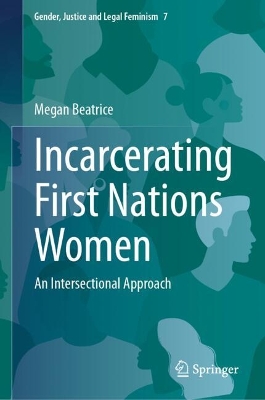
E-raamat: Incarcerating First Nations Women: An Intersectional Approach

  • Formaat - PDF+DRM
  • Hind: 147,58 €*
  • * hind on lõplik, st. muud allahindlused enam ei rakendu
  • Lisa ostukorvi
  • Lisa soovinimekirja
  • See e-raamat on mõeldud ainult isiklikuks kasutamiseks. E-raamatuid ei saa tagastada.

DRM piirangud

  • Kopeerimine (copy/paste):

    ei ole lubatud

  • Printimine:

    ei ole lubatud

  • Kasutamine:

    Digitaalõiguste kaitse (DRM)
    Kirjastus on väljastanud selle e-raamatu krüpteeritud kujul, mis tähendab, et selle lugemiseks peate installeerima spetsiaalse tarkvara. Samuti peate looma endale  Adobe ID Rohkem infot siin. E-raamatut saab lugeda 1 kasutaja ning alla laadida kuni 6'de seadmesse (kõik autoriseeritud sama Adobe ID-ga).

    Vajalik tarkvara
    Mobiilsetes seadmetes (telefon või tahvelarvuti) lugemiseks peate installeerima selle tasuta rakenduse: PocketBook Reader (iOS / Android)

    PC või Mac seadmes lugemiseks peate installima Adobe Digital Editionsi (Seeon tasuta rakendus spetsiaalselt e-raamatute lugemiseks. Seda ei tohi segamini ajada Adober Reader'iga, mis tõenäoliselt on juba teie arvutisse installeeritud )

    Seda e-raamatut ei saa lugeda Amazon Kindle's. 

This book presents the complex intersections of race, gender, and colonialism and their profound impact on the incarceration of First Nations women in Australia. By extending Kimberlé Crenshaws intersectional framework, it addresses the unique and often overlooked experiences of this population.


The book explores the intricate relationships between interpersonal, structural, and colonial violence, demonstrating how these forms of violence not only emerge from but also perpetuate existing power structures. By adapting Crenshaws lens to the specific context of First Nations women, it highlights the intersecting disadvantages of race, gender, and colonialism, offering a fresh and nuanced perspective on the issue of over-incarceration. Central to this analysis is the role of race. Using Critical Race Theory, the book underscores how racial dynamics are integral to understanding the over-incarceration of First Nations people. It also employs Feminist Legal Theory to scrutinize gender as a distinct point of disadvantage for First Nations women, distinguishing their experiences from those of First Nations men and the broader population.


The book argues that colonialism must be considered a critical factor in this context. Through the lens of Post-Colonial theory, it examines how colonial legacies continue to influence the over-incarceration of First Nations women. The carceral experiences of these women are situated at the intersections of systemic, colonial, and interpersonal violence, with themes such as biopolitics, necropolitics, and homo sacer providing a deeper understanding of their criminalization and incarceration.


By bringing together these diverse theoretical perspectives, the book offers a comprehensive and intersectional analysis of the over-incarceration crisis, shedding light on the unique challenges faced by First Nations women in Australia and advocating for more informed and equitable approaches to justice.
THE PROBLEM.- INTRODUCTION.- CURRENT VIEWS, OR THE NEED FOR
REIMAGINATION.- HISTORY OF THE PRESENT, OR HOW TO EFFECT A PARADIGM SHIFT.-
THEORIES OF VIOLENCE.- INTERSECTIONALITY.- CRITICAL RACE THEORY.- FEMINIST
LEGAL THEORY.- POST-COLONIAL THEORY.- VERONICA NELSON.- TO CONCLUDE.
Megan Beatrice is a Lecturer in Law at Deakin University in Melbourne, Victoria, Australia. She obtained her PhD from RMIT University in the same city in 2025. Her research focuses on the intersectional analysis of the over-incarceration of First Nations women, extending the traditional two-point intersection of race and gender to include a third point - colonialism. She recently worked with author James Gilchrist Stewart on the publication of his book, The Rise and Fall of Critical Legal Studies, taking on proof reading and editing, as well as technical aspects including referencing and compiling an index.   Megans research generally takes a (post-structural) Feminist approach to gendered issues in criminal justice and the law. She has published on the topic in highly ranked journals, including the Monash University Law Review, the International Journal for the Semiotics of Law - Revue internationale de Semiotique juridique, the Adelaide Law Review, and Law, Culture and the Humanities.