Muutke küpsiste eelistusi

E-raamat: Incorrigibles: Eugenics and Sterilization in the Kansas Industrial School for Girls

  • Formaat: PDF+DRM
  • Ilmumisaeg: 01-Oct-2023
  • Kirjastus: University of Nebraska Press
  • Keel: eng
  • ISBN-13: 9781496237101
  • Formaat - PDF+DRM
  • Hind: 46,09 €*
  • * hind on lõplik, st. muud allahindlused enam ei rakendu
  • Lisa ostukorvi
  • Lisa soovinimekirja
  • See e-raamat on mõeldud ainult isiklikuks kasutamiseks. E-raamatuid ei saa tagastada.
  • Formaat: PDF+DRM
  • Ilmumisaeg: 01-Oct-2023
  • Kirjastus: University of Nebraska Press
  • Keel: eng
  • ISBN-13: 9781496237101

DRM piirangud

  • Kopeerimine (copy/paste):

    ei ole lubatud

  • Printimine:

    ei ole lubatud

  • Kasutamine:

    Digitaalõiguste kaitse (DRM)
    Kirjastus on väljastanud selle e-raamatu krüpteeritud kujul, mis tähendab, et selle lugemiseks peate installeerima spetsiaalse tarkvara. Samuti peate looma endale  Adobe ID Rohkem infot siin. E-raamatut saab lugeda 1 kasutaja ning alla laadida kuni 6'de seadmesse (kõik autoriseeritud sama Adobe ID-ga).

    Vajalik tarkvara
    Mobiilsetes seadmetes (telefon või tahvelarvuti) lugemiseks peate installeerima selle tasuta rakenduse: PocketBook Reader (iOS / Android)

    PC või Mac seadmes lugemiseks peate installima Adobe Digital Editionsi (Seeon tasuta rakendus spetsiaalselt e-raamatute lugemiseks. Seda ei tohi segamini ajada Adober Reader'iga, mis tõenäoliselt on juba teie arvutisse installeeritud )

    Seda e-raamatut ei saa lugeda Amazon Kindle's. 

""The Incorrigibles" explores the relationship between Progressive social welfare institutions and eugenics, which, in the mid-1930s, justified the sterilization of fifty-one juvenile girls from the Girls' Industrial School in Beloit, Kansas"--

Between September 1935 and June 1936, sixty-two girls from a reformatory in north-central Kansas were sterilized in the name of eugenics. None of the girls were habitual criminals, had multiple children, were living on social welfare, or were found to have IQs below seventy; in other words, almost none of them fit the categories usually described by eugenicists as justification for sterilization or covered by Kansas’s eugenic sterilization law. Yet no one at the time—including the reform school superintendent who ordered the procedures performed—had trouble defending the sterilizations as eugenically minded. The general public, however, found the justifications significantly more controversial after the story hit the newspapers.

In The Incorrigibles Ry Marcattilio-McCracken interrogates the overlooked history of eugenics in Kansas. He argues that eugenics developed alongside Progressive social welfare reforms in public health, criminal deterrence, child welfare, and juvenile delinquency. Between 1890 and 1955, ideas about rural degenerationism and hereditarianism infused the mission of “progressive” reformers, who linked delinquency, incorrigibility, and immorality to inheritable traits. Marcattilio-McCracken shows how the era’s institutional overcrowding, landmark Supreme Court cases, and the economic downturn of the Great Depression contributed to the sterilization of the students from the Girls’ Industrial School in Beloit, Kansas.

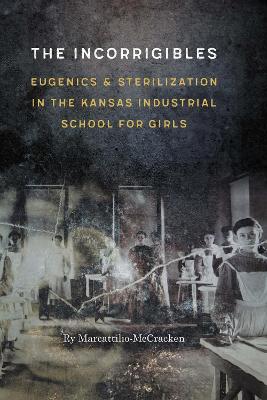
The Incorrigibles explores the relationship between Progressive social welfare institutions and eugenics, which, in the mid-1930s, justified the sterilization of fifty-one juvenile girls from the Girls’ Industrial School in Beloit, Kansas.

Arvustused

An important contribution to the large corpus on eugenics but especially to the expanding niche of case studies of the application of eugenic ideas in particular contexts. Marcattilio-McCrackens book provides a well-documented and contextualized case study that demonstrates how pseudoscientific theories of eugenics were reified into policy and translated into action, fundamentally altering the lives of innocent girls. Deemed incorrigibles by the state, the girls were denied the ability to reproduce-a fundamental human right.-Marsha L. Richmond, coeditor in chief of the Journal of the History of Biology

List of Illustrations
List of Tables
Acknowledgments
Introduction
1. The Waters Must Be Purified at Their Source
2. To Stem the Ever-Increasing Tide
3. Deprived or Depraved?
4. September 1935June 1936
5. Aftermath
6. The Beloit Case in Context
Conclusion
Notes
Bibliography
Index
Ry Marcattilio-McCracken is an associate director for research at the Institute for Local Self-Reliance. He is also an adjunct professor of history at Oklahoma State University.