Muutke küpsiste eelistusi

E-raamat: Indigenous Enlightenment: Printing and Education in Evangelical Colonialism, 1790-1850

  • Formaat: PDF+DRM
  • Ilmumisaeg: 01-Dec-2023
  • Kirjastus: University of Nebraska Press
  • Keel: eng
  • ISBN-13: 9781496237972
  • Formaat - PDF+DRM
  • Hind: 79,36 €*
  • * hind on lõplik, st. muud allahindlused enam ei rakendu
  • Lisa ostukorvi
  • Lisa soovinimekirja
  • See e-raamat on mõeldud ainult isiklikuks kasutamiseks. E-raamatuid ei saa tagastada.
  • Formaat: PDF+DRM
  • Ilmumisaeg: 01-Dec-2023
  • Kirjastus: University of Nebraska Press
  • Keel: eng
  • ISBN-13: 9781496237972

DRM piirangud

  • Kopeerimine (copy/paste):

    ei ole lubatud

  • Printimine:

    ei ole lubatud

  • Kasutamine:

    Digitaalõiguste kaitse (DRM)
    Kirjastus on väljastanud selle e-raamatu krüpteeritud kujul, mis tähendab, et selle lugemiseks peate installeerima spetsiaalse tarkvara. Samuti peate looma endale  Adobe ID Rohkem infot siin. E-raamatut saab lugeda 1 kasutaja ning alla laadida kuni 6'de seadmesse (kõik autoriseeritud sama Adobe ID-ga).

    Vajalik tarkvara
    Mobiilsetes seadmetes (telefon või tahvelarvuti) lugemiseks peate installeerima selle tasuta rakenduse: PocketBook Reader (iOS / Android)

    PC või Mac seadmes lugemiseks peate installima Adobe Digital Editionsi (Seeon tasuta rakendus spetsiaalselt e-raamatute lugemiseks. Seda ei tohi segamini ajada Adober Reader'iga, mis tõenäoliselt on juba teie arvutisse installeeritud )

    Seda e-raamatut ei saa lugeda Amazon Kindle's. 

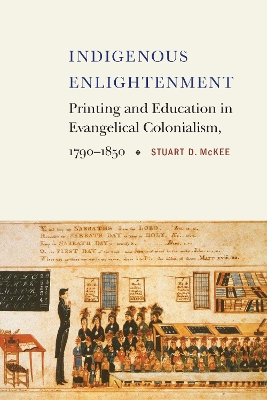
In Indigenous Enlightenment Stuart D. McKee examines the methodologies, tools, and processes that British and American educators developed to inculcate Indigenous cultures of reading and learning between 1790 and 1850.

In Indigenous Enlightenment Stuart D. McKee examines the methodologies, tools, and processes that British and American educators developed to inculcate Indigenous cultures of reading. Protestant expatriates who opened schools within British and U.S. colonial territories between 1790 and 1850 shared the conviction that a beneficent government should promote the enlightenment of its colonial subjects. It was the aim of evangelical enlightenment to improve Indigenous peoples’ welfare through the processes of Christianization and civilization and to transform accepting individuals into virtuous citizens of the settler-colonial community. Many educators quickly discovered that their teaching efforts languished without the means to publish books in the Indigenous languages of their subject populations. While they could publish primers in English by shipping manuscripts to printers in London or Boston, books for Indigenous readers gained greater accuracy and influence when they stationed a printer within the colony.

With a global perspective traversing Western colonial territories in the U.S.-Mexico borderlands, the South Pacific, Madagascar, India, and China, Indigenous Enlightenment illuminates the challenges that British and American educators faced while trying to coerce Indigenous children and adults to learn to read. Indigenous laborers commonly supported the tasks of editing, printing, and dissemination and, in fact, dominated the workforce at most colonial presses from the time printing began. Yet even in places where schools and presses were in synchronous operation, missionaries found that Indigenous peoples had their own intellectual systems, and most did not learn best with Western methods.

Arvustused

Indigenous Enlightenment makes an important contribution to historiographical knowledge of education, missionary work, and printing from North America to the Southwest Pacific. Stuart McKees comparative approach brings into focus the ideals that inspired missionary education and the comparative challenges of transporting the printing technologies that complemented work in school rooms. Orthographic detail is a key feature and strength of this book.-Gregory D. Smithers, author of The Cherokee Diaspora: An Indigenous History of Migration, Resettlement, and Identity

List of Illustrations
Acknowledgments
Introduction
1. The Accession to Western Civility
Part
1. A Cry for Books and Teachers: The Scheme of Indigenous Schooling
2. The Foreign Mission School
3. The Central School of Imerina
4. Charity Schools and Common Schools
5. Pathshalas
Part
2. Learning the Indigenous Languages: Printing in the South Pacific,
17971836
6. Ako
7. Haapii
Part
3. An Uneasy Conflation of Cultures: Printing in Bengal, 17751835
8. Learning to Print
9. Printing to Learn
Part
4. A Civilization Gone Stagnant: Printing for the People of China,
180535
10. Under Cover
11. Under Contract
Part
5. In a Savage Country: Printing at the U.S. Borderlands, 182550
12. Making News
13. Making Do
Afterword
Notes
Bibliography
Index
Stuart D. McKee is an associate professor of design at the University of San Francisco, where he teaches the history and practice of typography and publication design.