Muutke küpsiste eelistusi

E-raamat: Intimate Visualities and the Politics of Fandom in India

  • Formaat: EPUB+DRM
  • Sari: Asian Visual Cultures
  • Ilmumisaeg: 01-Oct-2025
  • Kirjastus: Amsterdam University Press
  • Keel: eng
  • ISBN-13: 9781040791950
  • Formaat - EPUB+DRM
  • Hind: 59,79 €*
  • * hind on lõplik, st. muud allahindlused enam ei rakendu
  • Lisa ostukorvi
  • Lisa soovinimekirja
  • See e-raamat on mõeldud ainult isiklikuks kasutamiseks. E-raamatuid ei saa tagastada.
  • Formaat: EPUB+DRM
  • Sari: Asian Visual Cultures
  • Ilmumisaeg: 01-Oct-2025
  • Kirjastus: Amsterdam University Press
  • Keel: eng
  • ISBN-13: 9781040791950

DRM piirangud

  • Kopeerimine (copy/paste):

    ei ole lubatud

  • Printimine:

    ei ole lubatud

  • Kasutamine:

    Digitaalõiguste kaitse (DRM)
    Kirjastus on väljastanud selle e-raamatu krüpteeritud kujul, mis tähendab, et selle lugemiseks peate installeerima spetsiaalse tarkvara. Samuti peate looma endale  Adobe ID Rohkem infot siin. E-raamatut saab lugeda 1 kasutaja ning alla laadida kuni 6'de seadmesse (kõik autoriseeritud sama Adobe ID-ga).

    Vajalik tarkvara
    Mobiilsetes seadmetes (telefon või tahvelarvuti) lugemiseks peate installeerima selle tasuta rakenduse: PocketBook Reader (iOS / Android)

    PC või Mac seadmes lugemiseks peate installima Adobe Digital Editionsi (Seeon tasuta rakendus spetsiaalselt e-raamatute lugemiseks. Seda ei tohi segamini ajada Adober Reader'iga, mis tõenäoliselt on juba teie arvutisse installeeritud )

    Seda e-raamatut ei saa lugeda Amazon Kindle's. 

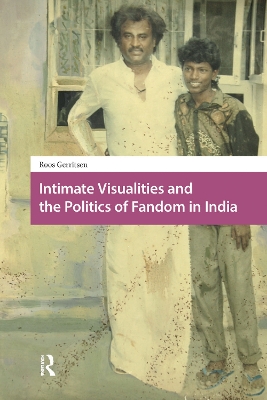
This book is an ethnographic analysis of the familial life worlds of fans of a movie star named Rajinikanth as well as his appropriation into networks of patronage, praise and social mobility via images.

In Intimate Visualities and the Politics of Fandom in India, Gerritsen explores the circulation of images of a movie star named Rajinikanth. Cities and towns in the south Indian state Tamil Nadu are consistently ornamented with huge billboards, murals and myriad posters featuring political leaders as well as movie stars. A selective part of these images is put up by their fan clubs. Tamil movie fans typically manifest themselves by putting up images of their star in public spaces and by generating a plethora of images in their homes. Gerritsen argues that these images are a crucial part of the everyday affective modes of engagement with family members and film stars but they are also symbolizing the political realm in which fans situate themselves. At the same time, Gerritsen shows how these image productions seem to concur with other visual regimes articulated in government restrictions, world class imaginaries and upper class moralities as presented on India's urban streets. This book contributes to an understanding of the ways in which visual technologies are deployed at the level of the grassroots or vernacular politics and how they are part of negotiations of power as well as of family life. This book gives attention to the work of images themselves. The images are neither taken for granted illustrations brought in and reflecting social life going on elsewhere nor merely representations. Instead, the book puts the images to work, ethnographically and theoretically, by showing that the various possibilities, dynamics and limitations of fandom are not just displayed in urban spaces but in fact played out there and therefore creating these spaces. It gives acute attention to images as representation as well as its material form. This book provides theoretical insights to the understudied connection of the sensuous and the political, the intimate and the public. It takes images in both public spaces and mundane everyday spaces as main feature of investigation and theorizes the predicaments of categories of public and private spheres and distinct image regimes.

Arvustused

"Roos Gerritsens Intimate Visualities and the Politics of Fandom in India offers incomparable insight into the politics of Kollywood, the aspirations of its stars and fans. [ ...] [ The book] is an important addition of a growing body of work that investigates Indian urban change." - Michiel Baas, newbooks.asia (2021)

"Gerritsen's rich ethnography offers readers a compelling look into the passionate world of 'superstar' Rajinikanth's fans. A fascinating, vivid portrait of the myriad practices and web of connections that bring together spectatorship, visual practices, performativity, play and desire shaping fans' lives at the intersection of fantasy and reality, this volume is an insightful and thoughtful contribution to scholarship on fans, cinema and public culture in India." - Lakshmi Srinivas, author of House Full: Indian Cinema and the Active Audience

Acknowledgements 13(4)
Notes on language and figures 17(2)
Introduction 19(36)
Fans - cinema - politics: a concise history
25(9)
Everyday politics
34(4)
Cinematic audiences in South India
38(2)
Affective images: Intimate publics and public intimacy
40(6)
Spectacular icons, public spaces, visual strategies
46(2)
This book
48(7)
1 Keeping in control
55(30)
The figure of the fan in the tamil film industry Tamil film fan clubs
59(3)
The figure of the fan
62(4)
How it all started
66(6)
Film-watching
72(6)
The (too) active audience
78(2)
Vigilantes and keeping in control
80(5)
2 Intimacy on display
85(30)
Film stars, images, and everyday life The household and intimacy
88(6)
Tactical images, proximate celebrities
94(2)
Family images, family lives
96(6)
Residues of encounters
102(9)
Mimesis and its limits
111(4)
3 Vexed veneration: the politics of fandom
115(42)
Shaping the figure of the fan
118(5)
Making visible: Altruism and politicking
123(4)
Praise
127(3)
Gendered fandom
130(9)
Style and the power of fan collectivity
139(4)
Vexed veneration: The politics of Rajinikanth
143(6)
From fan club to party politics and back again: Vijayakanth
149(2)
The (im)possibility and (un)desirability of politicking
151(6)
4 Public intimacies and collective imaginaries
157(32)
Cinematic geographies
161(3)
The downfall of painted images
164(2)
The painted image
166(6)
Materiality and affect
172(7)
The limits of star imagery
179(5)
Visual presencing
184(5)
5 Chennai beautiful
189(36)
Shifting urban landscapes and the politics of spectacle Aspirations for the future, nostalgia for the past
193(4)
Reflecting the essence of Tamil culture?
197(11)
Shifting publics
208(5)
The unruly potential of images
213(9)
Conclusion
222(6)
Epilogue 225(16)
The cinema
228(4)
Loss
232(2)
Fan mimicry
234(4)
New media, new politics?
238(3)
References 241(12)
Index 253
Dr. Roos Gerritsen is a media anthropologist writing on popular culture, photography, and cinema in India. She holds a PhD in Cultural Anthropology from Leiden University and has been an assistant professor at Heidelberg University. She has published among others in Ethnos and Visual Anthropology.