Muutke küpsiste eelistusi

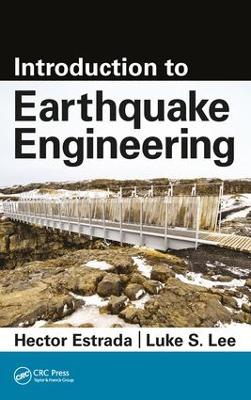
E-raamat: Introduction to Earthquake Engineering

(University of the Pacific, Stockton, California, USA), (University of the Pacific, Stockton, California, USA)
  • Formaat: EPUB+DRM
  • Ilmumisaeg: 18-May-2017
  • Kirjastus: CRC Press Inc
  • Keel: eng
  • ISBN-13: 9781351695268
Teised raamatud teemal:
  • Formaat - EPUB+DRM
  • Hind: 162,50 €*
  • * hind on lõplik, st. muud allahindlused enam ei rakendu
  • Lisa ostukorvi
  • Lisa soovinimekirja
  • See e-raamat on mõeldud ainult isiklikuks kasutamiseks. E-raamatuid ei saa tagastada.
  • Raamatukogudele
  • Formaat: EPUB+DRM
  • Ilmumisaeg: 18-May-2017
  • Kirjastus: CRC Press Inc
  • Keel: eng
  • ISBN-13: 9781351695268
Teised raamatud teemal:

DRM piirangud

  • Kopeerimine (copy/paste):

    ei ole lubatud

  • Printimine:

    ei ole lubatud

  • Kasutamine:

    Digitaalõiguste kaitse (DRM)
    Kirjastus on väljastanud selle e-raamatu krüpteeritud kujul, mis tähendab, et selle lugemiseks peate installeerima spetsiaalse tarkvara. Samuti peate looma endale  Adobe ID Rohkem infot siin. E-raamatut saab lugeda 1 kasutaja ning alla laadida kuni 6'de seadmesse (kõik autoriseeritud sama Adobe ID-ga).

    Vajalik tarkvara
    Mobiilsetes seadmetes (telefon või tahvelarvuti) lugemiseks peate installeerima selle tasuta rakenduse: PocketBook Reader (iOS / Android)

    PC või Mac seadmes lugemiseks peate installima Adobe Digital Editionsi (Seeon tasuta rakendus spetsiaalselt e-raamatute lugemiseks. Seda ei tohi segamini ajada Adober Reader'iga, mis tõenäoliselt on juba teie arvutisse installeeritud )

    Seda e-raamatut ei saa lugeda Amazon Kindle's. 

This book is intended primarily as a textbook for students studying structural engineering. It covers three main areas in the analysis and design of structural systems subjected to seismic loading: basic seismology, basic structural dynamics, and code-based calculations used to determine seismic loads from an equivalent static method and a dynamics-based method. It provides students with the skills to determine seismic effects on structural systems, and is unique in that it combines the fundamentals of structural dynamics with the latest code specifications. Each chapter contains electronic resources: image galleries, PowerPoint presentations, a solutions manual, etc.

Arvustused

"a very practical and useful book for introducing earthquake engineering to college level students." Jay Lin, AECOM, Oakland, California, USA

"An invaluable resource of encyclopedic information and academic/technical knowledge that takes the reader step-by-step to the concept of earthquake engineering, its impact and our mitigation measures through mathematics." Daniel Tsavdaridis, University of Leeds, United Kingdom

" the book contents fit nicely with senior-level students that would introduce and engage them to learn more about earthquake engineering. The authors did a great job in introducing the concepts involved in earthquake engineering without sacrificing the needed rigor to tackle structural dynamics topics. The illustrations in this textbook are very effective." Amjad J. Aref, University of Buffalo, New York, USA

"This book fully covers the course content of my course, it is simple and does not confuse the students with a lot of extra information. I really like the idea of the solutions to example problems prepared using computer programming methods." Constantinos Repapis, Piraeus University of Applied Sciences, Aigaleo, Greece

"The book has been written in plain English explaining in details phenomena that could be challenging for beginners. It also expounded the different types of earthquakes and their origins, similarities and differences. The book is designed for engineering students but I believe that it includes some good information for students from different backgrounds." Nebil Achour, Anglia Ruskin University, Cambridge, United Kingdom

"Technically, this book is admirable the applied mathematics used to describe how structural systems respond to dynamic actions never fail to impress. The books text and arrangement leads the reader step by step through a hugely complex subject, and the distillation of that subject into a relatively short work is equally impressive. Its potential wider readership outside the US student population ranges from the many engineers who are involved in the seismic qualification of structures and who wish to better understand the dynamic analysis software they regularly use, to those from other countries who are considering an extended professional assignment within the USA. The former will find it a handy aide-memoire to have on their bookshelf and the latter will find it simply invaluable." Structures and Buildings, February 2018

Preface ix
Acknowledgements xi
Authors xiii
Chapter 1 Introduction
1(18)
1.1 Structural Effects of Earthquakes
2(6)
1.1.1 Ground Failures
2(3)
1.1.2 Indirect Effects of Earthquakes
5(2)
1.1.3 Ground Shaking
7(1)
1.2 Types of Earthquakes
8(6)
1.2.1 Man-Made Earthquakes
9(2)
1.2.2 Volcanic Earthquakes
11(1)
1.2.3 Tectonic Earthquakes
11(3)
1.3 History of the Development of Mitigation Strategies for the Effects of Seismic Hazards
14(5)
References
17(2)
Chapter 2 Engineering Seismology Overview
19(18)
2.1 Seismology Terminology
19(4)
2.1.1 Elastic Rebound Theory: Tectonic Plate Movement
21(1)
2.1.2 Seismic Waves
21(2)
2.2 Measuring Earthquakes
23(6)
2.2.1 Earthquake Intensity
23(2)
2.2.2 Earthquake Magnitude
25(4)
2.3 Effects of Earthquakes on Structures
29(5)
2.3.1 Earthquake Characteristics
29(2)
2.3.2 Site Characteristics
31(1)
2.3.3 Structural Characteristics
32(2)
2.4 Earthquake Hazard Assessment
34(2)
2.5 Earthquake Prediction
36(1)
Problems
36(1)
References
36(1)
Chapter 3 Single-Degree-of-Freedom Structural Dynamic Analysis
37(54)
3.1 Undamped Single-Degree-of-Freedom System
37(27)
3.1.1 Free Vibration Response of Undamped Systems
38(4)
3.1.2 Structural Weight
42(4)
3.1.3 Structural Stiffness
46(14)
3.1.4 Approximate Structural Period
60(1)
3.1.5 Time-Dependent Forced Undamped Vibration Response
61(3)
3.2 Damped Single-Degree-of-Freedom System
64(19)
3.2.1 Free Vibration Response of Damped Systems
65(6)
3.2.2 Structural Damping
71(2)
3.2.3 Time-Dependent Forced Damped Vibration Response
73(5)
3.2.4 Time-Dependent Support Accelerations
78(5)
3.3 Base Shears and Stresses Caused by Time-Dependent Forces and Support Excitations
83(8)
Problems
86(4)
References
90(1)
Chapter 4 Response to General Loading
91(32)
4.1 Response of an SDOF System to an Impulse
91(3)
4.2 General Forcing Function
94(8)
4.3 Shock Spectra
102(9)
4.4 Response to Ground Motion
111(3)
4.5 Direct Integration Methods
114(9)
4.5.1 Nigam-Jennings Algorithm (Explicit)
114(3)
4.5.2 Central Difference Method (Explicit)
117(3)
4.5.3 Newmark's Beta Method for Linear Systems (Implicit)
120(1)
Problems
121(1)
Reference
122(1)
Chapter 5 Response Spectrum Analysis of SDOF System
123(28)
5.1 Elastic Response Spectrum
123(17)
5.1.1 Elastic Design Response Spectrum
132(8)
5.2 Inelastic Response Spectrum
140(11)
5.2.1 Inelastic Design Response Spectrum
143(3)
Problems
146(3)
References
149(2)
Chapter 6 Generalized SDOF System Analysis
151(18)
6.1 Discrete System (Shear Buildings)
152(10)
6.1.1 Equation of Motion
152(5)
6.1.2 Generalized Participation Factor, Frequency, and Natural Period
157(1)
6.1.3 Deflections, Base Shear, and Moments Using Participation Factors and Response Spectra
157(5)
6.2 Generalized SDOF Continuous System
162(7)
6.2.1 Equation of Motion
162(1)
6.2.2 Generalized Participation Factor, Frequency, and Natural Period
163(1)
6.2.3 Deflections, Base Shear, and Moments Using Participation Factors and Response Spectra
163(4)
Problems
167(1)
References
168(1)
Chapter 7 Multi-Degree-of-Freedom System Analysis
169(34)
7.1 Equations of Motion for an MDOF System
171(17)
7.1.1 Periods and Mode Shapes for an MDOF System
172(8)
7.1.2 Participation Factors for an MDOF System
180(2)
7.1.3 Deflections, Base Shear, and Moments Using Participation Factors and Response Spectra
182(6)
7.2 Response Spectrum Analysis Method Summary
188(15)
Problems
199(2)
References
201(2)
Chapter 8 Seismic Code Provisions
203(44)
8.1 Structural Design Philosophies
203(4)
8.1.1 Allowable Stress Design
204(2)
8.1.2 Load and Resistance Factor Design
206(1)
8.1.3 Allowable Seismic Force-Resisting System
206(1)
8.2 Overview of Seismic Design Codes
207(1)
8.3 Seismic Load Combinations
208(5)
8.3.1 Redundancy Factor, ρ
210(1)
8.3.2 Overstrength Factor Ω0 and other Seismic Force-Resisting System Parameters
211(2)
8.4 Overview of Seismic Load Analysis Procedures
213(7)
8.4.1 Design Response Spectrum
213(6)
8.4.2 Permitted Lateral Analysis Procedures
219(1)
8.5 Earthquake Loads Based on ASCE-7 Equivalent Lateral Force Procedure
220(9)
8.6 Modal Response Spectrum Analysis
229(11)
8.7 Introduction to Seismic Response History Procedures
240(7)
Problems
241(5)
References
246(1)
Index 247
Dr. Hector Estrada, P.E. is currently Professor of Civil Engineering at University of the Pacific (Pacific); where he also served as Chair of the Civil Engineering Department. Prior to joining Pacific, Professor Estrada was chair of the Department of Civil and Architectural Engineering at Texas A&M University-Kingsville. Dr. Estrada has also had visiting research appointments at NASA, Texas Tech University, and the US Army Engineer Research and Development Center Construction Engineering Research Laboratory. His teaching interests include structural engineering and mechanics, the design of concrete, steel, and timber structures, structural dynamics, and earthquake engineering. He has published on structural engineering and engineering education in various peer-reviewed journals, conference proceedings, and presented research work at various technical conferences. He has published a book on drafting and design of structural steel buildings, and several book chapters. He has served as reviewer for a number of journals, conferences, book publishers, and funding agencies. Professor Estrada received his B.S. (with honors), M.S., and Ph.D. all in Civil Engineering from the University of Illinois at Urbana-Champaign.

Dr. Luke Lee, Ph.D., P.E. is currently Associate Professor of Civil Engineering at University of the Pacific where he teaches courses in solid mechanics, structural dynamics and health monitoring, structural design, and engineering risk analysis. He has authored and co-authored numerous journal articles, conference papers, and book chapters in composite materials, structural health monitoring, service life estimation, and engineering pedagogy. Dr. Lee received his B.S. in Civil Engineering from University of California, Los Angeles, M.S. in Civil Engineering from University of California, Berkeley, and Ph.D. in Structural Engineering from University of California, San Diego.