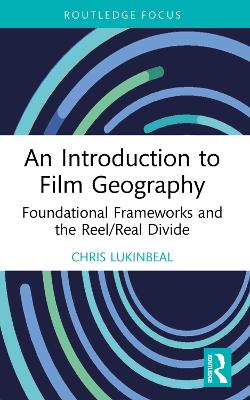
This foundational text establishes a cohesive, systematic framework for film geography. It documents the transactions between geography and film, specifically emphasizing the resulting ontological distinction between the cinematic "reel" world and the lived "real" world.
This foundational text establishes a cohesive, systematic framework for film geography. It integrates theories of transactionalism and phenomenology with core elements of communication (Source, Medium, Receiver) to document the transactions between geography and film, specifically emphasizing the resulting ontological distinction between the cinematic "reel" world and the lived "real" world.
This book provides a holistic framework for defining the scope of film geography and answering two core questions: what areas of film studies pertain to geography, and what significance does film research hold for geography. It offers a clear, comprehensive overview of the field, especially for understanding film/geography interrelations. This is delivered through a unique methodology that maps these interactions onto the basic elements of communication. This modeling exercise serves as a conceptual framework to document and explain the various ways geography and film are interconnected. The work emphasizes the significant role that filmic representations play in shaping our attitudes toward place and influencing human transactions with the environment.
Aimed at scholars and students interested in humanistic geography, media studies, and film theory, this book serves as an indispensable starting point for academic inquiry.
1. Situating A Foundational Text Of The Interdisciplinary Field Of Film
Geography
2. A Geography In Film, A Geography Of Film
3. Media, Symbology,
Postmodernity: The Significance Of Filmic Representation To Geography
4.
Communication Models And Transactionalism
5. The Source
6. The Medium
7. The
Receiver
8. Major Trends In Geographic Research On Film
9. Conclusion
Chris Lukinbeal is a Professor of Geography and Director of the Geographic Information Systems Technology programs at the University of Arizona. He has made foundational contributions to the fields of media geography, film geography, and cartographic humanities. Holding a PhD in Geography from San Diego State University and the University of California, Santa Barbara, his work bridges the social sciences, the humanities, and spatial technologies. He is widely recognized for pioneering research in cinematic landscapes and media geographies, having authored 80 scholarly publications. His scholarship investigates how visual mediaespecially filmshapes, reflects, and reconfigures geographic knowledge, spatial practices and imaginaries.

 Lisainfo e-raamatute kohta