Muutke küpsiste eelistusi

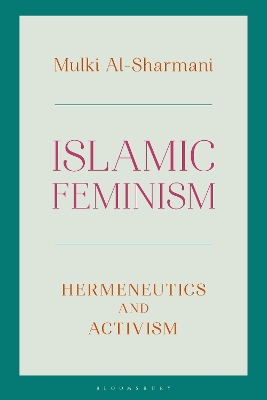
E-raamat: Islamic Feminism: Hermeneutics and Activism

(University of Helsinki, Finland)
  • Formaat: 264 pages
  • Ilmumisaeg: 14-Nov-2024
  • Kirjastus: Zed Books Ltd
  • Keel: eng
  • ISBN-13: 9781783606368
  • Formaat - EPUB+DRM
  • Hind: 105,30 €*
  • * hind on lõplik, st. muud allahindlused enam ei rakendu
  • Lisa ostukorvi
  • Lisa soovinimekirja
  • See e-raamat on mõeldud ainult isiklikuks kasutamiseks. E-raamatuid ei saa tagastada.
  • Formaat: 264 pages
  • Ilmumisaeg: 14-Nov-2024
  • Kirjastus: Zed Books Ltd
  • Keel: eng
  • ISBN-13: 9781783606368

DRM piirangud

  • Kopeerimine (copy/paste):

    ei ole lubatud

  • Printimine:

    ei ole lubatud

  • Kasutamine:

    Digitaalõiguste kaitse (DRM)
    Kirjastus on väljastanud selle e-raamatu krüpteeritud kujul, mis tähendab, et selle lugemiseks peate installeerima spetsiaalse tarkvara. Samuti peate looma endale  Adobe ID Rohkem infot siin. E-raamatut saab lugeda 1 kasutaja ning alla laadida kuni 6'de seadmesse (kõik autoriseeritud sama Adobe ID-ga).

    Vajalik tarkvara
    Mobiilsetes seadmetes (telefon või tahvelarvuti) lugemiseks peate installeerima selle tasuta rakenduse: PocketBook Reader (iOS / Android)

    PC või Mac seadmes lugemiseks peate installima Adobe Digital Editionsi (Seeon tasuta rakendus spetsiaalselt e-raamatute lugemiseks. Seda ei tohi segamini ajada Adober Reader'iga, mis tõenäoliselt on juba teie arvutisse installeeritud )

    Seda e-raamatut ei saa lugeda Amazon Kindle's. 

Shortlisted for the 2025 Muslim World Book Award.

Mulki Al-Sharmani undertakes a close textual analysis of the hermeneutics of selected Islamic feminism scholars as they engage with the Quran, Hadith, and different textual genres in Islamic interpretive tradition. She focuses on the relevant works of nine prominent scholars located in North America, Egypt, Morocco, and South Africa.

Bringing their works into conversation with one another, Islamic Feminism critically examines the epistemological and methodological contributions and challenges of these scholars. Al-Sharmani shows how these scholars engagements with the question of gender also yields new insights into the interplay between Islamic theology, ethics, and law. Drawing on extensive multi-sited ethnographic research, Al-Sharmani examines the societal significance and limits of the studied scholarship and how it informs and is informed by multidimensional Muslim gender activism in both global and local contexts. Towards the latter aim, Al-Sharmani focuses on two case studies: the global movement Musawah, and Egyptian Islamic feminism in the aftermath of the 2011 Revolution.

Arvustused

The book is a brilliant introduction and conceptualization of the interdisciplinary field of Islamic feminism. Sharmani spotlights the scholarship and trajectories of nine women scholars from the global south and north, whose hermeneutical engagements with the Islamic interpretive tradition constitute important contributions to reformist knowledge building projects and gender activism. * Hoda Elsadda, Cairo University, Egypt * Weve been waiting for this! Developing consistently through the past 40 years, Muslim feminist thought is well deserving of an analytic synthesis that discerns its historical and more recent threads, demonstrates its social and real-life impacts in shaping present realities and forecasting the needs for feminist Muslim future. Mulki Al-Sharmani has done just this; with deep insight, keen analysis and wisdom drawn from her own engagement in Muslim feminist scholarship and activism, she offers a much-needed presentation of key moments, ideas and actions that are shaping the landscape of Muslim feminist thought. The backstory of the book, which is the necessary connections of scholarship with social action, epistemology and methodology, hermeneutics and activism, confirms the feminist politics that cradle Al-Sharmanis rich and much needed work. This book will provide young scholars with a clear trajectory of what has been and a promising forecast for what can still come. * Fatima Seedat, University of Cape Town, South Africa * Written by an eminent scholar-activist and Islamic feminist herself, this book beautifully and confidently navigates the artificial boundary between normative and analytical approaches to Muslim womens studies and offers a guiding map to understanding Islamic feminism as a movement that simultaneously produces knowledge and engages in activist change of Muslim societies and communities. An extremely valuable resource. * Juliane Hammer, UNC Chapel Hill. USA *

Muu info

An incisive study of Islamic feminist scholarship and of the role of ordinary Muslim women in shaping Islamic attitudes, which upends many of our preconceptions about the religion

Preface
Acknowledgments
Introduction: Islamic Feminism: Tradition and Interpretation
Chapter 1: Muslim Feminist Engagements with the Qur'an
Chapter 2: Genealogical Readings and Intertextuality
Chapter 3: The Gender Question in Fiqh Tradition
Chapter 4: Prophetic Sunnah: Challenges and Promises of Islamic Feminist Engagements
Chapter 5: Sufi Thought and Islamic Legal Tradition: Revisiting the Gender Question
Chapter 6: Islamic Feminism: Guiding Ethical and Hermeneutical Principles
Chapter 7: Islamic Feminism and the Politics of Social Transformation
Chapter 8: Ordinary Muslim Women Revisiting Spousal Roles and Rights: Unearthing the 'Ethical' in Islamic Law
Conclusion: Final Reflections
Mulki Al-Sharmani is Professor of Islamic Studies at the University of Helsinki, Finland.