Muutke küpsiste eelistusi

E-raamat: Land, Faith and the Crofting Community: Christianity and Social Criticism in the Highlands of Scotland 1843-1893

(Free Presbyterian Church of Scotland)
  • Formaat - PDF+DRM
  • Hind: 24,69 €*
  • * hind on lõplik, st. muud allahindlused enam ei rakendu
  • Lisa ostukorvi
  • Lisa soovinimekirja
  • See e-raamat on mõeldud ainult isiklikuks kasutamiseks. E-raamatuid ei saa tagastada.

DRM piirangud

  • Kopeerimine (copy/paste):

    ei ole lubatud

  • Printimine:

    ei ole lubatud

  • Kasutamine:

    Digitaalõiguste kaitse (DRM)
    Kirjastus on väljastanud selle e-raamatu krüpteeritud kujul, mis tähendab, et selle lugemiseks peate installeerima spetsiaalse tarkvara. Samuti peate looma endale  Adobe ID Rohkem infot siin. E-raamatut saab lugeda 1 kasutaja ning alla laadida kuni 6'de seadmesse (kõik autoriseeritud sama Adobe ID-ga).

    Vajalik tarkvara
    Mobiilsetes seadmetes (telefon või tahvelarvuti) lugemiseks peate installeerima selle tasuta rakenduse: PocketBook Reader (iOS / Android)

    PC või Mac seadmes lugemiseks peate installima Adobe Digital Editionsi (Seeon tasuta rakendus spetsiaalselt e-raamatute lugemiseks. Seda ei tohi segamini ajada Adober Reader'iga, mis tõenäoliselt on juba teie arvutisse installeeritud )

    Seda e-raamatut ei saa lugeda Amazon Kindle's. 

This book probes the deep-rooted links between the land, the people and the religious culture of the Scottish Highlands and Islands in the nineteenth century. The responses of the clergy to the social crisis which enveloped the region have often been characterised as a mixture of callous indifference, cowering deference or fatalistic passivity. Allan MacColl's pioneering research challenges such stereotypical representations of Highland ministers head-on.
Land, Faith and the Crofting Community is the first full-scale examination of Christian social teaching in the nineteenth-century Gaidhealtachd and addresses a major gap in the historical understanding of Gaelic society.

Seeking to lay bare the existing myths by a wide-ranging analysis of all the denominational, theological and social factors at play, this study boldly overturns the received scholarly and popular interpretations. A ground-breaking work, it explores a substantial but under-utilised field of evidence and questions whether or not Highland Christians--both clergy and laity--were committed to land reform as an engine of social improvement and conciliation.

The Christian contribution to the development of a distinctively Highland identity--which found expression during the Crofters' War of the 1880s--is delineated, while wider links between theology and social philosophy are examined from beyond the perspective of the Highlands.

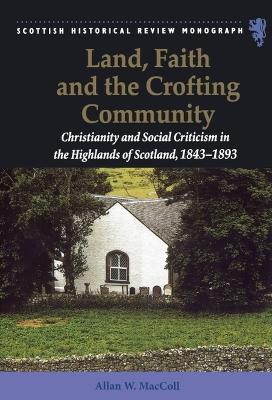
Probes the deep-rooted links between the land, the people and the religious culture of the Scottish Highlands and Islands in the nineteenth century.

This book probes the deep-rooted links between the land, the people and the religious culture of the Scottish Highlands and Islands in the nineteenth century. The responses of the clergy to the social crisis which enveloped the region have often been characterised as a mixture of callous indifference, cowering deference or fatalistic passivity. Allan MacColl’s pioneering research challenges such stereotypical representations of Highland ministers head-on. Land, Faith and the Crofting Community is the first full-scale examination of Christian social teaching in the nineteenth-century Gaidhealtachd and addresses a major gap in the historical understanding of Gaelic society. Seeking to lay bare the existing myths by a wide-ranging analysis of all the denominational, theological and social factors at play, this study boldly overturns the received scholarly and popular interpretations. A ground-breaking work, it explores a substantial but under-utilised field of evidence and questions whether or not Highland Christians – both clergy and laity – were committed to land reform as an engine of social improvement and conciliation. The Christian contribution to the development of a distinctively Highland identity – which found expression during the Crofters’ War of the 1880s – is delineated, while wider links between theology and social philosophy are examined from beyond the perspective of the Highlands.

Arvustused

A pioneering re-assessment of Christian social teaching in the Highlands and islands during the later nineteenth century. Northern History This book, then, is simultaneously an important addition to historical scholarship and an intriguing contribution to current debate as to how Highland society came to be the way it is. That is why, in the Highlands especially, Allan MacColl deserves the widest possible readership! This is an outstandingly good book. -- James Hunter, UHI Centre for History Scottish Historical Review A pioneering re-assessment of Christian social teaching in the Highlands and islands during the later nineteenth century. This book, then, is simultaneously an important addition to historical scholarship and an intriguing contribution to current debate as to how Highland society came to be the way it is. That is why, in the Highlands especially, Allan MacColl deserves the widest possible readership! This is an outstandingly good book.

Acknowledgements vi
Abbreviations viii
Introduction 1(18)
The Free Course of Providence: Presbyterian Social Thought in the Age of Disruption and Destitution
19(39)
A Peculiar People: Highland Religion and Identity
58(38)
`The Crofters' War': Genesis 1880-3
96(30)
The Escalation of Agitation
126(30)
Politics, Presbyteries and `The Prophet'
156(23)
`The Crofters' War': Disunity and Disorder 1886-8
179(33)
Conclusion 212(8)
Bibliography 220(14)
Index 234


Allan MacColl, a native of Lochaber, was educated at the Universities of Edinburgh and Cambridge and is currently a student for the ministry in the Free Presbyterian Church of Scotland. His research has focused on the interplay of religion and culture in the Gaelic world. Dr MacColls forthcoming publication Sith na Doire is the long-anticipated edition of the Gaelic poetry of the late Donald MacColl, Acharacle, Argyll.