Muutke küpsiste eelistusi

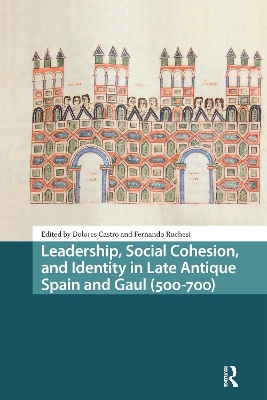
E-raamat: Leadership, Social Cohesion, and Identity in Late Antique Spain and Gaul (500-700)

Edited by , Edited by
Teised raamatud teemal:
  • Formaat - PDF+DRM
  • Hind: 59,79 €*
  • * hind on lõplik, st. muud allahindlused enam ei rakendu
  • Lisa ostukorvi
  • Lisa soovinimekirja
  • See e-raamat on mõeldud ainult isiklikuks kasutamiseks. E-raamatuid ei saa tagastada.
Teised raamatud teemal:

DRM piirangud

  • Kopeerimine (copy/paste):

    ei ole lubatud

  • Printimine:

    ei ole lubatud

  • Kasutamine:

    Digitaalõiguste kaitse (DRM)
    Kirjastus on väljastanud selle e-raamatu krüpteeritud kujul, mis tähendab, et selle lugemiseks peate installeerima spetsiaalse tarkvara. Samuti peate looma endale  Adobe ID Rohkem infot siin. E-raamatut saab lugeda 1 kasutaja ning alla laadida kuni 6'de seadmesse (kõik autoriseeritud sama Adobe ID-ga).

    Vajalik tarkvara
    Mobiilsetes seadmetes (telefon või tahvelarvuti) lugemiseks peate installeerima selle tasuta rakenduse: PocketBook Reader (iOS / Android)

    PC või Mac seadmes lugemiseks peate installima Adobe Digital Editionsi (Seeon tasuta rakendus spetsiaalselt e-raamatute lugemiseks. Seda ei tohi segamini ajada Adober Reader'iga, mis tõenäoliselt on juba teie arvutisse installeeritud )

    Seda e-raamatut ei saa lugeda Amazon Kindle's. 

1. The work brings together current research on areas that have received growing interest in recent years, encouraging international communication and cooperation. 2. It provides a comparative approach that allows the study of relevant processes within the Mediterranean context. 3. It reflects the convergence of ongoing investigations on relevant themes that are still the subject of intense discussion amongst scholars, and continue to raise key questions about the past but also about the present. The replacement of the Roman Empire in the West with emerging kingdoms like Visigothic Spain and Merovingian Gaul resulted in new societies, but without major population displacement. Societies changed because identities shifted and new points of cohesion formed under different leaders and leadership structures. This volume examines two kingdoms in the post-Roman west to understand how this process took shape. Though exhibiting striking continuities with the Roman past, Gaul and Spain emerged as distinctive, but not isolated, political entities that forged different strategies and drew upon different resources to strengthen their unity, shape social ties, and consolidate their political status.

Arvustused

"This volumes express aim is to add to discussions of post-Roman leaderships, identities, and social cohesion, particularly in terms of cultural structures and institutions in Gaul and Iberia. The greatest contributions of this work are to diversify what is studied and how, with successful coverage of both Merovingians and Visigoths, in both Gaul and Iberia, offering readers useful insights for future comparative and de-centralising work." Erica Buchberger, Al-Mas.q, issue 681, 2024.

Introduction 7(22)
Dolores Castro
Fernando Ruchesi
1 Building Leadership, Forging Cohesion: Bishops and Charity in Late Antiquity
29(34)
Dolores Castro
2 The Logic of Control: Postulating a Visigothic Ontology of Human Being
63(40)
Michael J. Kelly
3 Ritual Communities and Social Cohesion in Merovingian Gaul
103(28)
Alexander O'Hara
4 Constructing New Leaders: Bishops in Visigothic Hispania Tarraconensis (Fifth to Seventh Centuries)
131(28)
Meritxell Perez Martinez
5 Coexisting Leaderships in the Visigothic Cities: A `Coopetitive' Model
159(26)
Pablo Poveda Arias
6 Leadership and Social Cohesion in Merovingian Gaul and Visigothic Spain: The Case of Military Groups
185(30)
Fernando Ruchesi
7 Between Rome and Toulouse: The Catholic Episcopate in the regnum Tolosanum (418-507)
215(40)
Christian Stadermann
Index 255
Dolores Castro received her PhD in 2017 from Universidad de Buenos Aires. She is assistant lecturer at Universidad de General Sarmiento, Argentina. Her current research explores the fields of religion and political power in Late Antiquity and the Early Middle Ages, with particular focus on the Visigothic period. Fernando Ruchesi received his PhD at the Universidad de Buenos Aires in 2015. At present he works as a Researcher at the Universitat de Lleida, Spain. His research focuses on the development of social cohesion in Merovingian Gaul and Visigothic Spain, with particular emphasis on the Northeast of the Iberian peninsula.