Muutke küpsiste eelistusi

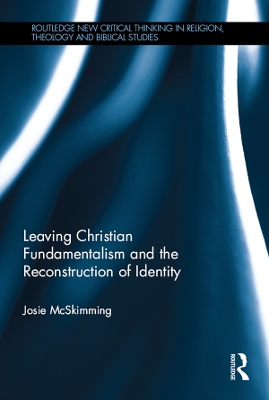
E-raamat: Leaving Christian Fundamentalism and the Reconstruction of Identity

Teised raamatud teemal:
  • Formaat - EPUB+DRM
  • Hind: 68,89 €*
  • * hind on lõplik, st. muud allahindlused enam ei rakendu
  • Lisa ostukorvi
  • Lisa soovinimekirja
  • See e-raamat on mõeldud ainult isiklikuks kasutamiseks. E-raamatuid ei saa tagastada.
Teised raamatud teemal:

DRM piirangud

  • Kopeerimine (copy/paste):

    ei ole lubatud

  • Printimine:

    ei ole lubatud

  • Kasutamine:

    Digitaalõiguste kaitse (DRM)
    Kirjastus on väljastanud selle e-raamatu krüpteeritud kujul, mis tähendab, et selle lugemiseks peate installeerima spetsiaalse tarkvara. Samuti peate looma endale  Adobe ID Rohkem infot siin. E-raamatut saab lugeda 1 kasutaja ning alla laadida kuni 6'de seadmesse (kõik autoriseeritud sama Adobe ID-ga).

    Vajalik tarkvara
    Mobiilsetes seadmetes (telefon või tahvelarvuti) lugemiseks peate installeerima selle tasuta rakenduse: PocketBook Reader (iOS / Android)

    PC või Mac seadmes lugemiseks peate installima Adobe Digital Editionsi (Seeon tasuta rakendus spetsiaalselt e-raamatute lugemiseks. Seda ei tohi segamini ajada Adober Reader'iga, mis tõenäoliselt on juba teie arvutisse installeeritud )

    Seda e-raamatut ei saa lugeda Amazon Kindle's. 

There is an increasing interest in the influence of religious fundamentalism upon people’s motivation, identity and decision-making. Leaving Christian Fundamentalism and the Re-construction of Identity details the stories of those who have left Christian fundamentalist churches and how they change after they have left. It considers how the previous fundamentalist identity is shaped by aspects of church teaching and discipline that are less authoritarian and coercive, and more subtle and widely spread throughout the church body. That is, individuals are understood as not only subject to a form of judgment, but also exercise it, with everyone seemingly complicit in maintaining the stability of the church organisation. This book provocatively illustrates that the reasons for leaving an evangelical Christian church may be less about what happens outside the church in terms of the lures and attractions of the secular world, and more about the experience within the community itself.
List of figures
viii
Preface ix
Acknowledgements x
Introduction 1(14)
1 The historical emergence of Christian fundamentalism as a social movement
15(26)
2 Method of enquiry
41(22)
3 Introducing the participants and journeys of change and renewal I
63(16)
4 Journeys of change and renewal II
79(24)
5 The shaping of identity through the lens of truth
103(24)
6 The shaping of identity through the lens of power
127(30)
7 The shaping of identity through the lens of the self: the resistance and anti-pastoral revolt of docile bodies
157(34)
8 Narratives of laughter and a new ideological becoming
191(15)
9 Co-construction: what is the role of the interviewer in the construction of identity stories?
206(31)
Conclusion
227(10)
Appendix 237(2)
Bibliography 239(19)
Index 258
Josie McSkimming is a former church insider of the Sydney evangelical church, and has spent many years counselling Christians about their personal experience of Christian fundamentalism and its effects on their sense of identity. She has described her research into the identity change of those who exit Christian fundamentalism in the recently published book, Constructing Narratives of Continuity and Change (edited by Hazel Reid and Linden West, Routledge, 2014), as well as other articles about how her own exit from fundamentalism affects her therapeutic work with Christian clients.