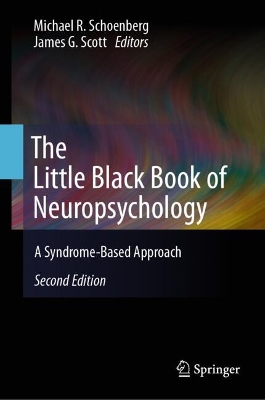
This 2nd Edition of the Little Black Book of Neuropsychology: A Syndrome-Based Approach offers a long overdue revision of this pinnacle text in clinical neuropsychology. Neuropsychology is a field that is critical to psychology, neurology, neurosurgery and psychiatry and is expanding at an unparalleled rate. Considerable advancements continue to be made in neuropsychological assessment, with application to the understanding of diagnosing and managing trauma and illness affecting the central nervous system. Simultaneously, neuropsychological research has made remarkable progress in unraveling the cellular and systematic functions of the human nervous system. The interaction between neuropsychology and neuroscience is driving an emphasis on evidenced-based neuropsychology practice. This 2nd edition of The Little Black Book of Neuropsychology: A Syndrome-Based Approach provides students, clinicians, and researchers with updated information for this rapidly advancing field. The text updates the original in assessment, diagnosis, research and clinical practice critical to clinicians, educators and researchers in the area of Brain-Behavior relationships and disease.
Part I: Neuropsychology General Issues: The Neuropsychological
Referral.- Medical Records.- Basic Neuroanatomy.- Basic components of a
Neuropsychological Evaluation.- Part II: Neuropsychological Domains: Arousal:
The drowsy, lethargic, or stuporous patient.- Attention/Concentration
Problems: The distractible patient.- Inattention/Neglect Syndromes.- Language
Problems.- Learning and Memory: The Forgetful Patient.-
Visuospatial/Visuoconstructional Problems.- Apraxias.- Agnosias.- Executive
Functions (problem solving, abstraction, sequencing, inhibition,
self-monitoring, planning, and initiation).- Emotional/Mood.- Episodic
Neurological Dysfunction.- Part III: Specific Neurological Diseases:
Aphasia.- Cerebrovascular Disease and Stroke.- Dementia.- Seizures/Epilepsy.-
Somatization Disorders, blackout spells, fits/convulsions.- Parkinsons
Disease and other movement disorders.- Multiple Sclerosis and Other
Demyelinating Disorders.- Traumatic Brain Injury and Concussion.-
Infections.- Neoplasms/Neoplastic Syndromes .- Psychiatric depression and
anxiety.- Part IV: Special Considerations: Medicolegal exposure.- Reporting
Test performance/scores.- Limitations.- Answering Referral Questions.-
Placement issues.
Mike R. Schoenberg, Ph.D., is Professor of neurosurgery, Brain and Spine Director, Division of Neuropsychology and Professor of Neurology at the University of South Florida, Morisani College of Medicine. He completed a two year post-doctoral fellowship in clinical neuropsychology at the University of Oklahoma Health Sciences Center and an internship at the University of Kansas School of Medicine, Wichita. He provides academic support and supervision in clinical neuropsychology to medical students, medical residents and psychology trainees, and conducts research in clinical neuropsychology.
James G. Scott, PhD is a Presidential Professor Emeritus at the University of Oklahoma Health Sciences Center, College of Medicine. He has taught medical students, residents and psychology interns and postdoctoral residents in neuropsychology for the past 35 years. He completed his doctorate at Texas A&M University, Internship at Tulane Medical School and a two-year Fellowship in Neuropsychology at the University of Oklahoma Health Sciences Center Department of Psychiatry and Behavioral Sciences. He is a fellow of the National Acadamy of Neuropsychology and has provided clinical care to thousands of patients and served professional organizations in Neuropsychology locally and nationally for many years. He remains active in teaching, research and clinical service in the Department of Psychiatry and Behavioral Sciences at the University of Oklahoma Health Sciences Center.

 Lisainfo e-raamatute kohta