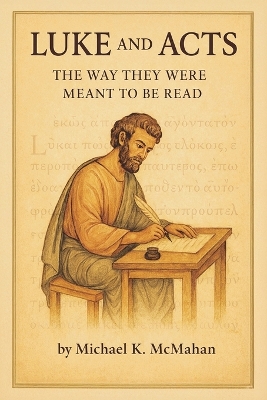
Luke and Acts, The Way They Were Meant To Be Read is intended to help readers understand the gospel and the birth of the Christian faith. Luke's letter to Theophilus, whom he identifies as his good friend was originally a unified document. The name suggests either a person who was named or renamed to express or indicate his belief in God, or perhaps to a community of God-believers, as Theo (God) and philus (Believer) would suggest. We do not know. When the Bible was first generally organized in about 300 AD, Luke's letter was inconveniently split into two parts, and the Gospel of John was placed between them. This is not how Luke intended his letter to be read. In writing Luke and Acts, The Way They Were Meant To Be Read, the author has attempted to be faithful to Luke's intent and his actual words as far as we know them and provide clarity of meaning for modern readers. He hopes he has done this well. Luke was a close secondhand witness to the gospel and often a firsthand participant in the development of the first-century Christian church. In his descriptions of Paul's travels throughout Asia Minor, Luke occasionally switches from third person to first subtlety making the point that he was with Paul at these times. In 2 Timothy 4:11, Paul, imprisoned in Rome, says, Only Luke is with me now "e;As for structure, references to chapters and verses have been omitted, but the letter is divided into seven sections and includes subheadings for the reader. These divisions are intended to help readers identify topics of interest for Bible studies or other purposes. Read Luke's classic and powerful letter as he intended. Experience the gospel and the birth of the Christian church in the words of a physician, a historian, a theologian, and a person deeply committed to following Jesus.

 Lisainfo e-raamatute kohta