Muutke küpsiste eelistusi

E-raamat: Mechanics of Rubber Bearings for Seismic and Vibration Isolation

(University of California at Berkeley), (Univerisity of California at Berkeley)
  • Formaat: EPUB+DRM
  • Ilmumisaeg: 24-Aug-2011
  • Kirjastus: John Wiley & Sons Inc
  • Keel: eng
  • ISBN-13: 9781119972808
Teised raamatud teemal:
  • Formaat - EPUB+DRM
  • Hind: 123,44 €*
  • * hind on lõplik, st. muud allahindlused enam ei rakendu
  • Lisa ostukorvi
  • Lisa soovinimekirja
  • See e-raamat on mõeldud ainult isiklikuks kasutamiseks. E-raamatuid ei saa tagastada.
  • Raamatukogudele
  • Formaat: EPUB+DRM
  • Ilmumisaeg: 24-Aug-2011
  • Kirjastus: John Wiley & Sons Inc
  • Keel: eng
  • ISBN-13: 9781119972808
Teised raamatud teemal:

DRM piirangud

  • Kopeerimine (copy/paste):

    ei ole lubatud

  • Printimine:

    ei ole lubatud

  • Kasutamine:

    Digitaalõiguste kaitse (DRM)
    Kirjastus on väljastanud selle e-raamatu krüpteeritud kujul, mis tähendab, et selle lugemiseks peate installeerima spetsiaalse tarkvara. Samuti peate looma endale  Adobe ID Rohkem infot siin. E-raamatut saab lugeda 1 kasutaja ning alla laadida kuni 6'de seadmesse (kõik autoriseeritud sama Adobe ID-ga).

    Vajalik tarkvara
    Mobiilsetes seadmetes (telefon või tahvelarvuti) lugemiseks peate installeerima selle tasuta rakenduse: PocketBook Reader (iOS / Android)

    PC või Mac seadmes lugemiseks peate installima Adobe Digital Editionsi (Seeon tasuta rakendus spetsiaalselt e-raamatute lugemiseks. Seda ei tohi segamini ajada Adober Reader'iga, mis tõenäoliselt on juba teie arvutisse installeeritud )

    Seda e-raamatut ei saa lugeda Amazon Kindle's. 

"Mechanics of Rubber Bearings collates in a compact form all of the information on the mechanics of the increasingly important technology of multi-layer rubber bearings"--

"Mechanics of Rubber Bearings for Seismic and Vibration Isolation collates in a compact form all of the information on the mechanics of the increasingly important technology of multi-layer rubber bearings. It explores a unique & comprehensive combination of relevant topics, covering all prerequisite fundamental theory and providing a number of closed form solutions to various boundary value problems as well as a comprehensive historical overview on the use of this technique.The authors progress logicallythrough increasingly complex analyses; many of the results presented are new and are needed for a proper understanding of these bearings and for the design and analysis of vibration isolation or seismic isolation systems. The advantages afforded by adopting these natural rubber systems"otheir cost effectiveness, simplicity, and reliability"is clearly explained to designers and users of this emerging technology, bringing into focus the design and specification of bearings for buildings, bridges and industrial structures"--

Provided by publisher.

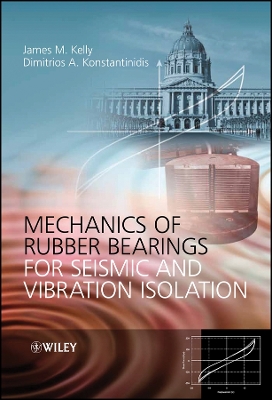
Mechanics of Rubber Bearings for Seismic and Vibration Isolation collates in a compact form all of the information on the mechanics of the increasingly important technology of multi-layer rubber bearings. It explores a unique & comprehensive combination of relevant topics, covering all prerequisite fundamental theory and providing a number of closed form solutions to various boundary value problems as well as a comprehensive historical overview on the use of this technique.

The authors progress logically through increasingly complex analyses; many of the results presented are new and are needed for a proper understanding of these bearings and for the design and analysis of vibration isolation or seismic isolation systems. The advantages afforded by adopting these natural rubber systems„otheir cost effectiveness, simplic¬ity, and reliability„ois clearly explained to designers and users of this emerging technology, bringing into focus the design and specification of bearings for buildings, bridges and industrial structures.

About the Authors ix
Preface xiii
1 History of Multilayer Rubber Bearings
1(18)
2 Behavior of Multilayer Rubber Bearings under Compression
19(26)
2.1 Introduction
19(1)
2.2 Pure Compression of Bearing Pads with Incompressible Rubber
19(11)
2.2.1 Infinite Strip Pad
24(1)
2.2.2 Circular Pad
25(1)
2.2.3 Rectangular Pad (with Transition to Square or Strip)
26(1)
2.2.4 Annular Pad
27(3)
2.3 Shear Stresses Produced by Compression
30(3)
2.4 Pure Compression of Single Pads with Compressible Rubber
33(12)
2.4.1 Infinite Strip Pad
33(3)
2.4.2 Circular Pad
36(3)
2.4.3 Rectangular Pad
39(1)
2.4.4 Annular Pad
40(5)
3 Behavior of Multilayer Rubber Bearings under Bending
45(18)
3.1 Bending Stiffness of Single Pad with Incompressible Rubber
45(7)
3.1.1 Infinite Strip Pad
47(1)
3.1.2 Circular Pad
48(1)
3.1.3 Rectangular Pad
49(2)
3.1.4 Annular Pad
51(1)
3.2 Bending Stiffness of Single Pads with Compressible Rubber
52(11)
3.2.1 Infinite Strip Pad
52(2)
3.2.2 Circular Pad
54(3)
3.2.3 Rectangular Pad
57(1)
3.2.4 Annular Pad
58(5)
4 Steel Stress in Multilayer Rubber Bearings under Compression and Bending
63(20)
4.1 Review of the Compression and Bending of a Pad
64(1)
4.2 Steel Stresses in Circular Bearings with Incompressible Rubber
65(8)
4.2.1 Stress Function Solution for Pure Compression
68(3)
4.2.2 Stress Function Solution for Pure Bending
71(2)
4.3 Steel Stresses in Circular Bearings with Compressible Rubber
73(5)
4.3.1 Stress Function Solution for Pure Compression
73(3)
4.3.2 Stress Function Solution for Pure Bending
76(2)
4.4 Yielding of Steel Shims under Compression
78(5)
4.4.1 Yielding of Steel Shims for the Case of Incompressible Rubber
78(1)
4.4.2 Yielding of Steel Shims for the Case of Compressible Rubber
79(4)
5 Buckling Behavior of Multilayer Rubber Isolators
83(30)
5.1 Stability Analysis of Bearings
83(7)
5.2 Stability Analysis of Annular Bearings
90(1)
5.3 Influence of Vertical Load on Horizontal Stiffness
91(4)
5.4 Downward Displacement of the Top of a Bearing
95(5)
5.5 A Simple Mechanical Model for Bearing Buckling
100(8)
5.5.1 Postbuckling Behavior
104(2)
5.5.2 Influence of Compressive Load on Bearing Damping Properties
106(2)
5.6 Rollout Stability
108(2)
5.7 Effect of Rubber Compressibility on Buckling
110(3)
6 Buckling of Multilayer Rubber Isolators in Tension
113(16)
6.1 Introduction
113(2)
6.2 Influence of a Tensile Vertical Load on the Horizontal Stiffness
115(2)
6.3 Vertical Displacement under Lateral Load
117(3)
6.4 Numerical Modelling of Buckling in Tension
120(9)
6.4.1 Modelling Details
120(2)
6.4.2 Critical Buckling Load in Compression and Tension
122(7)
7 Influence of Plate Flexibility on the Buckling Load of Multilayer Rubber Isolators
129(30)
7.1 Introduction
129(1)
7.2 Shearing Deformations of Short Beams
130(9)
7.3 Buckling of Short Beams with Warping Included
139(7)
7.4 Buckling Analysis for Bearing
146(7)
7.5 Computation of Buckling Loads
153(6)
8 Frictional Restraint on Unbonded Rubber Pads
159(18)
8.1 Introduction
159(1)
8.2 Compression of Long Strip Pad with Frictional Restraint
160(3)
8.3 The Effect of Surface Slip on the Vertical Stiffness of an Infinite Strip Pad
163(6)
8.4 The Effect of Surface Slip on the Vertical Stiffness of a Circular Pad
169(8)
9 Effect of Friction on Unbonded Rubber Bearings
177(16)
9.1 Introduction
178(2)
9.2 Bearing Designs and Rubber Properties
180(1)
9.3 Ultimate Displacement of Unbonded Bearings
180(4)
9.4 Vertical Stiffness of Unbonded Rubber Bearings with Slip on their Top and Bottom Supports
184(9)
Appendix: Elastic Connection Device for One or More Degrees of Freedom 193(16)
References 209(4)
Photograph Credits 213(2)
Author Index 215(2)
Subject Index 217
James M Kelly & Dimitrios A Konstantinidis, University of California at Berkeley, USA James M Kelly is a Professor in the Graduate School, Department of Civil and Environmental Engineering, Division of Structural Engineering Mechanics and Materials at the University of California at Berkeley, and a Participating Faculty Member at the Earthquake Engineering Research Center, University of California at Berkeley. He has authored over 300 refereed journal papers and 2 books, Earthquake-Resistant Design with Rubber 2nd ed 1996 (Springer Verlag) and Design of Seismic Isolated Structures, 1999, Wiley. He has led the way in experimental investigations of elastomeric seismic isolation bearings by conducting many pioneering studies of seismically isolated structures and structures with energy dissipators. In testing hundreds of bearings he achieved numerous advances, including the application of high-damping rubber for seismic isolation bearings - used in the first U.S. isolated building and in more than 100 structures around the world and the understanding of the dynamic and ultimate behavior of elastomeric seismic isolation at large deformation.

Dimitrios A Konstantinidis is a Postdoctoral Researcher on health monitoring at University of California, Berkeley, working on the development and testing of a reliable scheme for monitoring the health of fluid viscous dampers in bridges via wireless communication.