Muutke küpsiste eelistusi

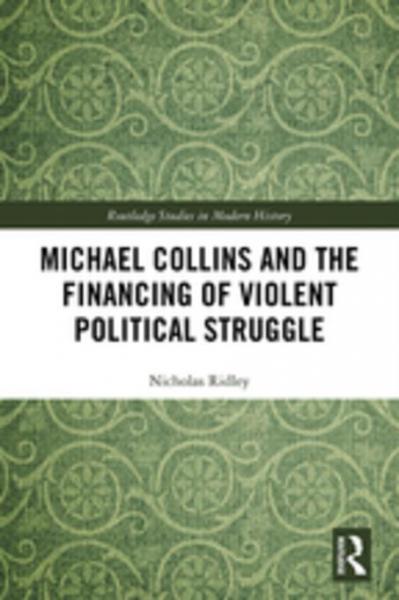
E-raamat: Michael Collins and the Financing of Violent Political Struggle

(London Metropolitan University, UK)
  • Formaat - EPUB+DRM
  • Hind: 77,99 €*
  • * hind on lõplik, st. muud allahindlused enam ei rakendu
  • Lisa ostukorvi
  • Lisa soovinimekirja
  • See e-raamat on mõeldud ainult isiklikuks kasutamiseks. E-raamatuid ei saa tagastada.

DRM piirangud

  • Kopeerimine (copy/paste):

    ei ole lubatud

  • Printimine:

    ei ole lubatud

  • Kasutamine:

    Digitaalõiguste kaitse (DRM)
    Kirjastus on väljastanud selle e-raamatu krüpteeritud kujul, mis tähendab, et selle lugemiseks peate installeerima spetsiaalse tarkvara. Samuti peate looma endale  Adobe ID Rohkem infot siin. E-raamatut saab lugeda 1 kasutaja ning alla laadida kuni 6'de seadmesse (kõik autoriseeritud sama Adobe ID-ga).

    Vajalik tarkvara
    Mobiilsetes seadmetes (telefon või tahvelarvuti) lugemiseks peate installeerima selle tasuta rakenduse: PocketBook Reader (iOS / Android)

    PC või Mac seadmes lugemiseks peate installima Adobe Digital Editionsi (Seeon tasuta rakendus spetsiaalselt e-raamatute lugemiseks. Seda ei tohi segamini ajada Adober Reader'iga, mis tõenäoliselt on juba teie arvutisse installeeritud )

    Seda e-raamatut ei saa lugeda Amazon Kindle's. 

Michael Collins was a pivotal figure in the Irish struggle for independence and his legacy has resonated ever since. Whilst Collins’ role as a guerrilla leader and intelligence operative is well documented, his actions as the clandestine Irish government Minister of Finance have been less studied. The book analyses how funds were raised and transferred in order that the IRA could initiate and sustain the military struggle, and lay the financial foundations of an Irish state.

Nicholas Ridley examines the legacy of these actions by comparing Collins’ modus operandi for raising and transferring clandestine funds to those of more modern groups engaged in political violence, as well as the laying of foundations for Irish financial and fiscal regulation.

Arvustused

"The comparative analysis of terrorist financing will be of value to both practitioners and academics."

Dr Anthony Richard, Reader in Criminology University of East London

"It has become somewhat twee to speak of the need to inform present day actions by referring to the historical past. However, as Dr Ridley ably demonstrates, through his comprehensive and lucid analysis of Michael Collins, there is clearly a great deal to learn about the characteristics and mitigation of modern day terrorist financing from an exploration of the life of arguably one of its earliest proponents."

Professor Rob McCusker, De Montfort University

"The historical account is fascinating, the analysis of insurgency financing invaluable"

Professor Chizu Nakajima, Institute of Advanced Legal Studies, London

Preface ix
PART I Violent undercurrents: pre-1914 Europe
1(16)
1 Violence in pre-1914 Europe
3(10)
2 Ireland: peaceful, patient and hopeful
13(4)
PART II Michael Collins and the struggle for Irish independence
17(66)
3 Cork, London, Dublin: the 1916 debacle
19(10)
4 Collins reorganises the Volunteers ...
29(3)
5 ... and de Valera enlists America
32(6)
6 The Anglo-Irish War 1919--1921
38(16)
7 Collins' Intelligence War
54(15)
8 Treaty and Civil War
69(14)
PART III The sinews of war
83(78)
9 Preparing in London, active in Dublin
85(3)
10 Filling the war chest: the National Loan
88(17)
11 Funds from America, funds in America
105(10)
12 Collins, Minister of Finance
115(25)
13 The Anglo-Irish Treaty: Ireland's fiscal autonomy
140(4)
14 The North
144(6)
15 The sinews of Civil War and the Republicans hamstrung
150(11)
PART IV Later political violence and insurgency and their financing
161(28)
PART V Michael Collins
189(2)
Appendix I Historians and de Valera's US funds 191(10)
Appendix II Collins and Connolly 201(4)
Bibliography 205(5)
Index 210
Nicholas Ridley is Senior Lecturer in Policing and Security at London Metropolitan University. He has previously worked as an Intelligence Analyst at New Scotland Yard, Criminal Intelligence Department and Anti-Terrorist Unit and at Europol.He has been a trainer in intelligence and anti-terrorism for police forces in Africa, and has lectured on combating terrorist financing on courses at NATO Centre of Excellence Defence against Terrorism.