Muutke küpsiste eelistusi
  • Formaat - PDF+DRM
  • Hind: 44,19 €*
  • * hind on lõplik, st. muud allahindlused enam ei rakendu
  • Lisa ostukorvi
  • Lisa soovinimekirja
  • See e-raamat on mõeldud ainult isiklikuks kasutamiseks. E-raamatuid ei saa tagastada.

DRM piirangud

  • Kopeerimine (copy/paste):

    ei ole lubatud

  • Printimine:

    ei ole lubatud

  • Kasutamine:

    Digitaalõiguste kaitse (DRM)
    Kirjastus on väljastanud selle e-raamatu krüpteeritud kujul, mis tähendab, et selle lugemiseks peate installeerima spetsiaalse tarkvara. Samuti peate looma endale  Adobe ID Rohkem infot siin. E-raamatut saab lugeda 1 kasutaja ning alla laadida kuni 6'de seadmesse (kõik autoriseeritud sama Adobe ID-ga).

    Vajalik tarkvara
    Mobiilsetes seadmetes (telefon või tahvelarvuti) lugemiseks peate installeerima selle tasuta rakenduse: PocketBook Reader (iOS / Android)

    PC või Mac seadmes lugemiseks peate installima Adobe Digital Editionsi (Seeon tasuta rakendus spetsiaalselt e-raamatute lugemiseks. Seda ei tohi segamini ajada Adober Reader'iga, mis tõenäoliselt on juba teie arvutisse installeeritud )

    Seda e-raamatut ei saa lugeda Amazon Kindle's. 

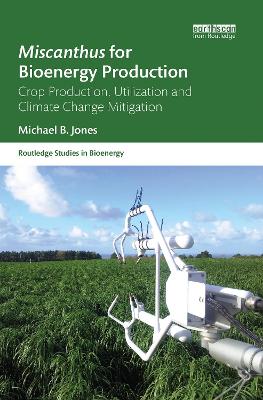
Miscanthus has been enthusiastically promoted as a second generation biomass crop, and this book provides a comprehensive review of this knowledge.

Miscanthus, also known as elephant grass, is a high yielding grass crop that grows over three metres tall, resembles bamboo and produces a crop every year without the need for replanting or fertiliser application . The rapid growth, low mineral content, and high biomass yield of Miscanthus increasingly make it a favourite choice as a biofuel, outperforming switchgrass and other alternatives. There is over 20 years of research evidence to support its promotion as a second generation biomass crop. The author reviews many field measurements of yields as well as the physiology of the crop, and why it is so productive while at the same time requiring low inputs to grow it. It also shows how as a key biofuel crop it can contribute to mitigating climate change and how uptake of the adoption of Miscanthus production can be promoted, particularly in Europe and North America.

The book will be key reading for students taking courses in the areas of Environmental Science and Engineering, Climate Change Impacts, Renewable Energy and Energy Conservation. It will also be of interest to researchers of second generation biomass crops, and policy developers working in biofuel production and utilization.

Arvustused

"The book Miscanthus for Bioenergy Production provides an accessible succinct summary of a large body of research over three decades that started in the late 80s in Denmark and Germany. Mike Jones, one of the scientists involved in the conception of several key EU projects in the 1990s, is a global authority on C4 photosynthesis in perennial grasses. He was part of the delegation in the early 2000s that helped kick-start the large public and private programmes in the US. The chapters in the book progress from the global needs for biomass, the basic biology of Miscanthus and its productive potential and environmental sustainability. Recent developments in breeding and commercial deployment are reviewed with the latest literature and draw also on his personal interactions with those in the global community performing experiments at the different scales to develop the technology pipelines. In the preface he wrote, as scientists we are increasingly encouraged to engage productively with people that make policy. The final chapter discusses the complex policy choices needed to ensure the markets are developed and concludes with future prospects for making a significant biomass contribution to greenhouse gas mitigation in a time when urgent action on climate change is imperative to avert disaster." John Clifton-Brown, Professor, Institute of Biological, Environmental and Rural Sciences, Aberystwyth University

List of illustrations
vi
Preface ix
Glossary and abbreviations xi
1 Bioenergy and its global potential
1(10)
2 Identifying high yielding biomass crops
11(13)
3 Controls of Miscanthus productivity
24(17)
4 Environmental sustainability of Miscanthus
41(16)
5 Breeding to improve Miscanthus
57(15)
6 Commercial uses of Miscanthus biomass
72(14)
7 Policies and markets: The future for Miscanthus
86(14)
Bibliography 100(16)
Index 116
Michael B. Jones is Emeritus Professor of Botany at Trinity College Dublin, The University of Dublin, Ireland.