Muutke küpsiste eelistusi

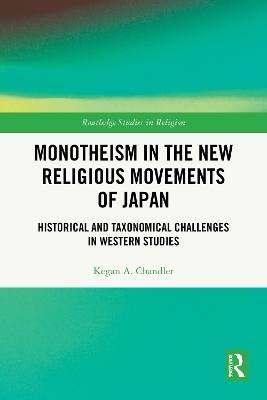
E-raamat: Monotheism in the New Religious Movements of Japan: Historical and Taxonomical Challenges in Western Studies

  • Formaat - EPUB+DRM
  • Hind: 59,79 €*
  • * hind on lõplik, st. muud allahindlused enam ei rakendu
  • Lisa ostukorvi
  • Lisa soovinimekirja
  • See e-raamat on mõeldud ainult isiklikuks kasutamiseks. E-raamatuid ei saa tagastada.
  • Raamatukogudele

DRM piirangud

  • Kopeerimine (copy/paste):

    ei ole lubatud

  • Printimine:

    ei ole lubatud

  • Kasutamine:

    Digitaalõiguste kaitse (DRM)
    Kirjastus on väljastanud selle e-raamatu krüpteeritud kujul, mis tähendab, et selle lugemiseks peate installeerima spetsiaalse tarkvara. Samuti peate looma endale  Adobe ID Rohkem infot siin. E-raamatut saab lugeda 1 kasutaja ning alla laadida kuni 6'de seadmesse (kõik autoriseeritud sama Adobe ID-ga).

    Vajalik tarkvara
    Mobiilsetes seadmetes (telefon või tahvelarvuti) lugemiseks peate installeerima selle tasuta rakenduse: PocketBook Reader (iOS / Android)

    PC või Mac seadmes lugemiseks peate installima Adobe Digital Editionsi (Seeon tasuta rakendus spetsiaalselt e-raamatute lugemiseks. Seda ei tohi segamini ajada Adober Reader'iga, mis tõenäoliselt on juba teie arvutisse installeeritud )

    Seda e-raamatut ei saa lugeda Amazon Kindle's. 

This book calls for a reformation of the image of monotheism in studies of Japanese religions and in the study of religions in general. According to most scholars, “Japan” and “monotheism” mix like oil and water. Whatever Japanese religion is, we are told, the “Western” category of monotheism cannot not be imposed. The predominance of this standard ruling makes critical the study of Japan’s new religious movements (NRMs)—exemplified in this volume by Kurozumikyo, Tenrikyo, and Konkokyo, which have occasionally and controversially been pinned with the monotheism label. However, significant disagreement and confusion have persisted for nearly a century in Western scholarship over precisely how to classify these religions and furthermore over where their monotheism, if it exists, might have come from. Chandler argues that this long history of dissonance in the West is the result of a complex layering of taxonomical, sociocultural, and scholarly issues. Furthermore, he suggests this impasse can be addressed via an updated definition of monotheism that takes into account its nuances and includes new monotheistic subcategories. The book reveals the monotheism of Japan’s NRMs in light of this new framework and through a new historical investigation into Japanese sources of monotheism. It is especially relevant to scholars with an interest in Japanese religions and new religious movements as well as the comparative study of religion and philosophy of religion.


This book calls for a reformation of the image of monotheism in studies of Japanese religions and in the study of religions in general. According to most scholars, ‘Japan’ and ‘monotheism’ mix like oil and water. Whatever Japanese religion is, we are told, the ‘Western’ category of monotheism cannot not be imposed.

Arvustused

In this clear book, Kegan Chandler makes a conceptual intervention in the study of Japanese religions, extending the category of monotheism to cases where people have resisted it and showing how to reflect critically on our scholarly categories without undermining their reference to the world.

Kevin Schilbrack, Appalachian State University, USA

Chandlers book makes significant contributions to the advancement of comparative study, modern Japanese religions, Japanese religious and intellectual history, and other relevant fields. His comparative analysis, supported by thoughtful and clear theoretical bases, makes possible the novelty of bringing together religions so far studied separately.

Higashibaba Ikuo, Tenri University, Japan

1 Introduction: The Challenge of a Japanese Monotheism 2 Western
Studies of Japans NRMs 3 Taxonomy, Normativity, and Philosophy in the Study
of Religions 4 Rehabilitating Monotheism 5 Revisiting Japans New Religious
Movements 6 Western Studies on the Source of NRM Monotheism 7 The Kakure
Kirishitan as NRM Source 8 The Medieval and Early Tokugawa Contributions 9
Conclusion: The Future of Monotheism in Japan. Index
Kegan A. Chandler is an Honorary Research Associate at the Centre for the Study of Asian Religions (CSAR) in the Department for the Study of Religions at the University of Cape Town, South Africa.