Muutke küpsiste eelistusi

E-raamat: Three Mosquitoes

  • Formaat: PDF+DRM
  • Ilmumisaeg: 17-Jun-2025
  • Kirjastus: Johns Hopkins University Press
  • Keel: eng
  • ISBN-13: 9781421451701
  • Formaat - PDF+DRM
  • Hind: 37,70 €*
  • * hind on lõplik, st. muud allahindlused enam ei rakendu
  • Lisa ostukorvi
  • Lisa soovinimekirja
  • See e-raamat on mõeldud ainult isiklikuks kasutamiseks. E-raamatuid ei saa tagastada.
  • Formaat: PDF+DRM
  • Ilmumisaeg: 17-Jun-2025
  • Kirjastus: Johns Hopkins University Press
  • Keel: eng
  • ISBN-13: 9781421451701

DRM piirangud

  • Kopeerimine (copy/paste):

    ei ole lubatud

  • Printimine:

    ei ole lubatud

  • Kasutamine:

    Digitaalõiguste kaitse (DRM)
    Kirjastus on väljastanud selle e-raamatu krüpteeritud kujul, mis tähendab, et selle lugemiseks peate installeerima spetsiaalse tarkvara. Samuti peate looma endale  Adobe ID Rohkem infot siin. E-raamatut saab lugeda 1 kasutaja ning alla laadida kuni 6'de seadmesse (kõik autoriseeritud sama Adobe ID-ga).

    Vajalik tarkvara
    Mobiilsetes seadmetes (telefon või tahvelarvuti) lugemiseks peate installeerima selle tasuta rakenduse: PocketBook Reader (iOS / Android)

    PC või Mac seadmes lugemiseks peate installima Adobe Digital Editionsi (Seeon tasuta rakendus spetsiaalselt e-raamatute lugemiseks. Seda ei tohi segamini ajada Adober Reader'iga, mis tõenäoliselt on juba teie arvutisse installeeritud )

    Seda e-raamatut ei saa lugeda Amazon Kindle's. 
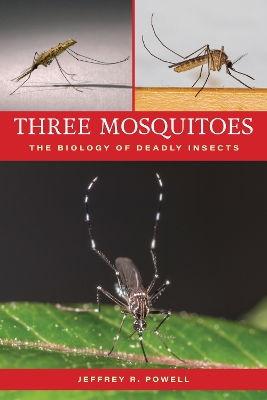
An engaging introduction to mosquitoes unravels the complex biology, evolution, and natural history of these tiny yet formidable creatures.There are more than 3,700 species of mosquitoes in the world, yet most research has focused on three that have had the greatest health impacts on humans: Aedes aegypti, Anopheles gambiae, and Culex pipiens. In Three Mosquitoes, renowned Yale biologist Jeffrey R. Powell provides a comprehensive yet accessible guide to these critical species. Powell discusses the three mosquitoes' complex biology, distributions, taxonomy, and evolutionary histories, along with their ecological and social implications. However, rather than describe each species in isolation, the book is arranged by themes and levels of biological organization (molecular, whole organism, and population). This structure reveals insightful comparisons and highlights important contrasts that might be overlooked if each species were described separately. Within this context, Powell examines mosquito-microbe associations-focusing mainly on the microbes that cause human disease-and past, present, and future efforts to control mosquito populations to reduce disease transmission.Whether you are a student, instructor, an entomologist, or a curious reader, this book offers a fascinating exploration of the genetic, ecological, and behavioral intricacies of mosquitoes that highlights their crucial roles in human history and health.