This book examines the multifaceted evolution of Indian nationalist thought through three critical ideological frameworks that shaped the subcontinent's journey toward independence and beyond.
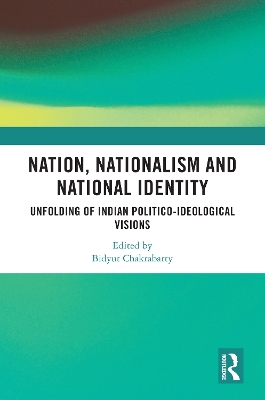
This book examines the multifaceted evolution of Indian nationalist thought through three critical ideological frameworks that shaped the subcontinent's journey toward independence and beyond. Drawing on extensive sources and theoretical frameworks, the volume presents a nuanced understanding of how constitutional liberalism, spiritualism, and identity politics converged to create India's distinctive nationalist discourse. The book demonstrates how Indian nationalism emerged as a unique confluence of Western Enlightenment principles and indigenous intellectual traditions, challenging conventional narratives that view it merely as derivative discourse. Through detailed examination of key figures including Gandhi, Tagore, Ambedkar, Tilak, and Aurobindo, the analysis reveals how constitutional liberalism was indigenized through spiritual frameworks drawn from Vedas, Upanishads, and Bhagavad Gita. The work explores the critical role of identity formation in nationalist mobilization, examining how religious, caste, and gender identities both strengthened and fragmented the independence movement, ultimately leading to partition in 1947.This authoritative study will appeal to students and scholars of political theory, South Asian studies, and comparative politics. Graduate students and researchers examining postcolonial political thought, religious nationalism, and identity politics will find this an essential resource for understanding the complex ideological foundations of modern India.
Introduction
Part I: Unfolding of a Politico-Ideological discourse
Chapter 1: Constitutional Liberalism at its dawn
Chapter 2: Refashioning of Constitutional Liberalism
Part II: Unfolding of a language of protest
Chapter 3: Spiritualizing Nationalism
Chapter 4: Reinvention of a mode of protest: the Gandhian satyagraha
Part III: Refashioning of the Multifaceted India
Chapter 5: Identity as critical to nationalism
Chapter 6: Rearticulating the language of identity in a different mould
Conclusion
Bidyut Chakrabarty is former Vice-Chancellor of Visva Bharati University (2018-2023). Before he was appointed the Vice Chancellor of Visva Bharati in 2018, he served the Department of Political Science, University of Delhi, India, for more than three decades. He obtained his PhD from London School of Economics and has held visiting professorships globally, including the Mahatma Gandhi Chair for Global Nonviolence at James Madison University, Virginia. He has published in many areas of Political Science.

 Lisainfo e-raamatute kohta