Muutke küpsiste eelistusi

E-raamat: Negotiating Gendered Language and Social Identities: Gender, Race and Native Speaker Ideology in Learning Japanese as an Additional Language

  • Formaat: PDF+DRM
  • Ilmumisaeg: 19-Mar-2025
  • Kirjastus: Routledge
  • Keel: eng
  • ISBN-13: 9781040313237
  • Formaat - PDF+DRM
  • Hind: 59,79 €*
  • * hind on lõplik, st. muud allahindlused enam ei rakendu
  • Lisa ostukorvi
  • Lisa soovinimekirja
  • See e-raamat on mõeldud ainult isiklikuks kasutamiseks. E-raamatuid ei saa tagastada.
  • Raamatukogudele
  • Formaat: PDF+DRM
  • Ilmumisaeg: 19-Mar-2025
  • Kirjastus: Routledge
  • Keel: eng
  • ISBN-13: 9781040313237

DRM piirangud

  • Kopeerimine (copy/paste):

    ei ole lubatud

  • Printimine:

    ei ole lubatud

  • Kasutamine:

    Digitaalõiguste kaitse (DRM)
    Kirjastus on väljastanud selle e-raamatu krüpteeritud kujul, mis tähendab, et selle lugemiseks peate installeerima spetsiaalse tarkvara. Samuti peate looma endale  Adobe ID Rohkem infot siin. E-raamatut saab lugeda 1 kasutaja ning alla laadida kuni 6'de seadmesse (kõik autoriseeritud sama Adobe ID-ga).

    Vajalik tarkvara
    Mobiilsetes seadmetes (telefon või tahvelarvuti) lugemiseks peate installeerima selle tasuta rakenduse: PocketBook Reader (iOS / Android)

    PC või Mac seadmes lugemiseks peate installima Adobe Digital Editionsi (Seeon tasuta rakendus spetsiaalselt e-raamatute lugemiseks. Seda ei tohi segamini ajada Adober Reader'iga, mis tõenäoliselt on juba teie arvutisse installeeritud )

    Seda e-raamatut ei saa lugeda Amazon Kindle's. 

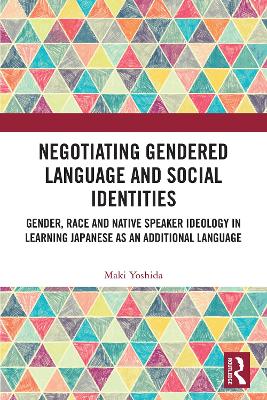
This book explores gendered language and gender identities negotiated by seven tertiary students of Japanese as an additional language (JAL) in Australia. It demonstrates that while participants are familiar with gendered Japanese as linguistic resources, their self-positioned and ascribed ‘learnersness’, ‘non-native-speakerness’ and ‘non-Japaneseness’ both inside and outside classroom contexts greatly impact the targeted negotiations. It argues that these ascribed social identities encourage participants to adopt ‘correct’ (gendered) Japanese; however, what exactly this ‘correctness’ means differs for each JAL participant, depending on their other reflective and perceived social identities—such as gender, age, class, race and English ‘native-speakerness’.

This book draws on the conclusions on the implications of discourses and practices concerning native-speaker status, gender and race in Japanese language education. While the initial focus of the book is on gendered Japanese and gender identity, this book subsequently expands that the participants’ negotiation of gendered Japanese and gender identity is complicatedly intertwined with negotiations of other social identities such as native-speaker status, race, and age, with native-speaker status saliently affecting the way they position themselves and are positioned by their interlocutors. This book analyses the participants’ language resources, spoken and/or written Japanese interactions and one-on-one and focus-group interviews and presents easily understood findings for readers who are interested in SLA, Japanese, language and/or identity studies.

This is the first book to holistically examine Australia-based tertiary students’ Japanese language learning experience and Japanese interactions with regards to (gendered) language, identities and discursive power relations in a global and multilingual world.


This book explores gendered language and gender identities negotiated by seven tertiary students of Japanese as an additional language (JAL) in Australia.

1 Introduction 2 Gendered Japanese, Gender Identities and Gender
Ideologies: Learning Japanese in the Time of Globalisation and Accelerated
Unequal Power Relations 3 JAL Participants Negotiation of Gendered Language
and Gender Identities 4 Language and Gender Ideologies and Learners of
Japanese 5 JAL Participants Social Identities and Discursive Power
RelationsIntersections of Nativeness, Gender, Class, Age and Race
6 Conclusion Appendix 1: Details of pre-recorded interaction Appendix 2:
Questions for JAL participants diary entry Appendix 3: Template of
questionnaire Appendix 4: Gendered linguistic features used as stimuli in
one-on-one semi-structured interviews Appendix 5: Conventions employed for
the transcriptions in the current study
Maki Yoshida is a Lecturer in Global and Language Studies at RMIT University. Her research explores the relationship between social structure, language and (gender) ideologies. It examines how the intersectionality of social categories and discursive power relations impinge on individual speakers negotiation of language and identities.