Muutke küpsiste eelistusi
  • Formaat - PDF+DRM
  • Hind: 54,59 €*
  • * hind on lõplik, st. muud allahindlused enam ei rakendu
  • Lisa ostukorvi
  • Lisa soovinimekirja
  • See e-raamat on mõeldud ainult isiklikuks kasutamiseks. E-raamatuid ei saa tagastada.

DRM piirangud

  • Kopeerimine (copy/paste):

    ei ole lubatud

  • Printimine:

    ei ole lubatud

  • Kasutamine:

    Digitaalõiguste kaitse (DRM)
    Kirjastus on väljastanud selle e-raamatu krüpteeritud kujul, mis tähendab, et selle lugemiseks peate installeerima spetsiaalse tarkvara. Samuti peate looma endale  Adobe ID Rohkem infot siin. E-raamatut saab lugeda 1 kasutaja ning alla laadida kuni 6'de seadmesse (kõik autoriseeritud sama Adobe ID-ga).

    Vajalik tarkvara
    Mobiilsetes seadmetes (telefon või tahvelarvuti) lugemiseks peate installeerima selle tasuta rakenduse: PocketBook Reader (iOS / Android)

    PC või Mac seadmes lugemiseks peate installima Adobe Digital Editionsi (Seeon tasuta rakendus spetsiaalselt e-raamatute lugemiseks. Seda ei tohi segamini ajada Adober Reader'iga, mis tõenäoliselt on juba teie arvutisse installeeritud )

    Seda e-raamatut ei saa lugeda Amazon Kindle's. 
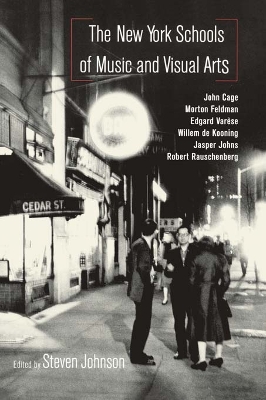
Musicians and artists have always shared mutual interests and exchanged theories of art and creativity. This exchange climaxed just after World War II, when a group of New York-based musicians, including John Cage, Morton Feldman, Earle Brown, and David Tudor, formed friendships with a group of painters. The latter group, now known collectively as either the New York School or the Abstract Expressionists, included Jackson Pollock, Willem deKooning, Robert Motherwell, Mark Rothko, Barnett Newman, Clyfford Still, Franz Kline, Phillip Guston, and William Baziotes. The group also included a younger generation of artists-particularly Robert Rauschenberg and Jasper Johns-that stood somewhat apart from the Abstract Expressionists. This group of painters created what is arguably the first significant American movement in the visual arts. Inspired by the artists, the New York School composers accomplished a similar feat. By the beginning of the 1960s, the New York Schools of art and music had assumed a position of leadership in the world of art. For anyone interested in the development of 20th century art, music, and culture, The New York Schools of Music and Art will make for illuminating reading.

Arvustused

"A welcome addition to the scattered and contradictory information previously published about the New York School, this volume allows the reader to hear directly from many of the musicians and artists who came together in New York during the first half of the 20th century . . . Highly recommended." -- R.L. Wick, University of Colorado at Denver, Choice

General Introduction ix Joseph Auner Introduction A Junction at Eighth Street 1(16) Steven Johnson Getting Rid of the Glue 17(40) The Music of the New York School David Nicholls The Physical and the Abstract 57(18) Varese and the New York School Olivia Mattis Stefan Wolpe and Abstract Expressionism 75(38) Austin Clarkson John Cage and the ``Aesthetic of Indifference 113(22) David W. Bernstein A Question of Order 135(24) Cage, Wolpe, and Pluralism Thomas DeLio Painting by Numbers 159(14) The Intersections of Morton Feldman and David Tudor John Holzaepfel Feldmans Painters 173(44) Jonathan W. Bernard Jasper Johns and Morton Feldman 217(32) What Patterns? Steven Johnson About the Contributors 249(2) Index 251
Stephen Johnson is a Professor of Music at Brigham Young University. He lives in Provo, UT.