Muutke küpsiste eelistusi

E-raamat: Non-Thermal Processing of Functional Foods

Edited by , Edited by (Mata Gujri College), Edited by
  • Formaat: PDF+DRM
  • Ilmumisaeg: 31-Dec-2024
  • Kirjastus: CRC Press
  • Keel: eng
  • ISBN-13: 9781040149560
Teised raamatud teemal:
  • Formaat - PDF+DRM
  • Hind: 208,00 €*
  • * hind on lõplik, st. muud allahindlused enam ei rakendu
  • Lisa ostukorvi
  • Lisa soovinimekirja
  • See e-raamat on mõeldud ainult isiklikuks kasutamiseks. E-raamatuid ei saa tagastada.
  • Raamatukogudele
  • Formaat: PDF+DRM
  • Ilmumisaeg: 31-Dec-2024
  • Kirjastus: CRC Press
  • Keel: eng
  • ISBN-13: 9781040149560
Teised raamatud teemal:

DRM piirangud

  • Kopeerimine (copy/paste):

    ei ole lubatud

  • Printimine:

    ei ole lubatud

  • Kasutamine:

    Digitaalõiguste kaitse (DRM)
    Kirjastus on väljastanud selle e-raamatu krüpteeritud kujul, mis tähendab, et selle lugemiseks peate installeerima spetsiaalse tarkvara. Samuti peate looma endale  Adobe ID Rohkem infot siin. E-raamatut saab lugeda 1 kasutaja ning alla laadida kuni 6'de seadmesse (kõik autoriseeritud sama Adobe ID-ga).

    Vajalik tarkvara
    Mobiilsetes seadmetes (telefon või tahvelarvuti) lugemiseks peate installeerima selle tasuta rakenduse: PocketBook Reader (iOS / Android)

    PC või Mac seadmes lugemiseks peate installima Adobe Digital Editionsi (Seeon tasuta rakendus spetsiaalselt e-raamatute lugemiseks. Seda ei tohi segamini ajada Adober Reader'iga, mis tõenäoliselt on juba teie arvutisse installeeritud )

    Seda e-raamatut ei saa lugeda Amazon Kindle's. 

Functional foods, also known as nutraceuticals, began to gain prominence in the 1980s in Japan as “foods for specified health use” and became more widely recognized in the 1990s as research and interest in foods that could provide specific health benefits beyond essential nutrition grew worldwide. These foods are typically enriched with bioactive components or formulated to contain substances or live microorganisms with a possible health-enhancing or disease-preventing value and at a safe and sufficiently high concentration to achieve the intended benefit.

Usually, the added ingredients are classified as nutrients, dietary fiber, phytochemicals, other substances, or probiotics. The production, storage, and consumer consumption of these functional foods require special attention to preserve quality attributes. The production process of these foods can be classified as conventionally used thermal processing methods and non-thermal alternatives. In addition, these processes may be combined with biological approaches involving enzymatic treatment and fermentation. The various non-thermal processes, such as ultrasounds, high-hydrostatic pressure, vacuum impregnation, high-voltage electrical discharge, cold plasma, pulsed light, ozonation, etc., can be utilized for a product to sustain /preserve quality attributes of the ingredients, long shelf life and sensory qualities.

This book compiles the latest non-thermal processing technologies to develop functional foods. The book discusses bioactivity, bioaccessibility, and bioavailability related to nutrition and functional food ingredients. It has 16 articles on different aspects of non-thermal processing technologies. Chapter 1 has discussed a general overview of emerging technologies, and various non-thermal processing techniques are discussed in Chapters 2–6, 8–9, and 12. Chapters 7, 11, 13, 15, and 16 discuss food safety and preservation. We have discussed the functional foods and bioactive compounds in Chapters 10 and 14.

A few of these reviews discuss the impact of developing non-thermal technologies on several food components (proteins, carbohydrates, lipids, minerals, vitamins, polyphenols, glucosinolates, polyphenols, fragrance compounds, and enzymes) while maintaining the structure and functional properties.

This book is an excellent source of information for professionals, postgraduate students, and researchers in food sciences and chemical engineering.


This book compiles the latest non-thermal processing technologies to develop functional foods. Chapters cover non-thermal technologies, such as ultrasounds, high-hydrostatic pressure, high-voltage electrical discharge, and cold plasma. These techniques process food without damaging the nutritional benefits and sensory qualities.

.Ch 1: Revolutionizing Food Processing: Unveiling the Impact of Emerging Technologies on Nutritional Parameters, Chemical Functional Properties, and Microstructure of food constituents..Ch 2: Exploring Non-Thermal Processing Techniques for Enhancing Nutritional Quality and Shelf Life ...Ch 3: Revolutionizing Food Processing: Harnessing Non-Thermal Technologies for Probiotic and Composite Food Development.Ch 4: Cold Plasma Applications in Food Processing: Enhancing Shelf-life, Decontamination, and Functional Modification for Sustainable and Innovative Solutions.PCh 5: Revolutionizing Food Processing: Unveiling the Potential of High-Pressure Technologies for Sustainable and Nutrient-Rich Fresh Produce..Ch 6: Innovative Approaches for Efficient Extraction of Heat-Labile Bioactive Compounds: A Focus on Novel Technologies in the Era of Health-Promoting Foods. Ch 7: Non-Thermal Processing as a Preservation Tool for Health-Promoting Technologies: A Systematic Review..Ch 8: Advances in improving the efficiency and solubilization of plant extract using supercritical fluid extraction.KCh 9: Advancements in Non-Thermal Processing Techniques for Enhancing Quality and Shelf Stability of Health-Promoting Beverages.Ch 10: Advancing Nutritional Fortification: Cold Plasma Technology in Enhancing Iron and Phytochemical Content of Foods..Ch 11: Revolutionizing Beverage Preservation: A Deep Dive into Non-Thermal Techniques for Extended Shelf Life and Sustainable Industry Practices..Ch 12: Advances in Non-thermal Membrane Processing for Nutrient Recovery in the Dairy Industry: A Comprehensive Review..Ch 13: Advancements in Food Safety: Unveiling the Efficacy of Pulsed Ultraviolet Technology in Disinfection and Enhanced Bioavailability Processesl.Ch 14: Innovative Approaches to Food Processing: Unlocking the Potential of Novel Foods and Non-Thermal Techniques.Ch 15: an advanced Biokinetic Perspective in Pulsed Light Technology for Enhanced Biosafety and Nutrient Preservation..Ch 16: Ozonation Technology: An Adopted Antibacterial Tactic for Meat, Fruit/Fruit Juice and Water Disinfection.

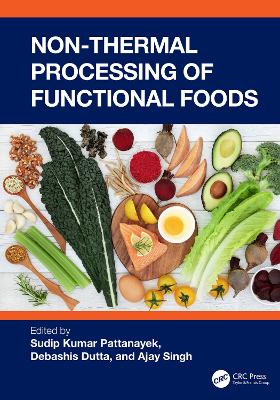
Sudip Kumar Pattanayek is Professor in the Department of Chemical Engineering, Indian Institute of Technology, Delhi (IITD), Hauz Khas, New Delhi, India.

Debashis Dutta is Lecturer in the Department of Food Processing Technology, Mirmadan Mohanlal Government Polytechnic, Plassey, West Bengal, India.

Ajay Singh is Assistant Professor in the Department of Food Technology, Mata Gujri College, Fatehgarh Sahib, Punjab, India.