Muutke küpsiste eelistusi

E-raamat: Normalisation of Exceptional Counterterrorism Powers: Framing The Terrorist Threat in France

  • Formaat - EPUB+DRM
  • Hind: 59,79 €*
  • * hind on lõplik, st. muud allahindlused enam ei rakendu
  • Lisa ostukorvi
  • Lisa soovinimekirja
  • See e-raamat on mõeldud ainult isiklikuks kasutamiseks. E-raamatuid ei saa tagastada.
  • Raamatukogudele

DRM piirangud

  • Kopeerimine (copy/paste):

    ei ole lubatud

  • Printimine:

    ei ole lubatud

  • Kasutamine:

    Digitaalõiguste kaitse (DRM)
    Kirjastus on väljastanud selle e-raamatu krüpteeritud kujul, mis tähendab, et selle lugemiseks peate installeerima spetsiaalse tarkvara. Samuti peate looma endale  Adobe ID Rohkem infot siin. E-raamatut saab lugeda 1 kasutaja ning alla laadida kuni 6'de seadmesse (kõik autoriseeritud sama Adobe ID-ga).

    Vajalik tarkvara
    Mobiilsetes seadmetes (telefon või tahvelarvuti) lugemiseks peate installeerima selle tasuta rakenduse: PocketBook Reader (iOS / Android)

    PC või Mac seadmes lugemiseks peate installima Adobe Digital Editionsi (Seeon tasuta rakendus spetsiaalselt e-raamatute lugemiseks. Seda ei tohi segamini ajada Adober Reader'iga, mis tõenäoliselt on juba teie arvutisse installeeritud )

    Seda e-raamatut ei saa lugeda Amazon Kindle's. 

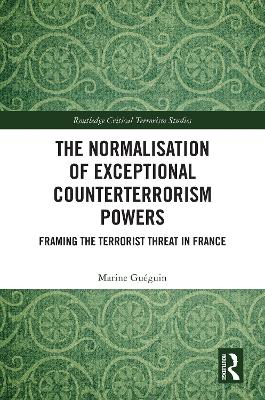
This book investigates the framing of the terrorist threat in France from 2015 to 2020 as an exceptional challenge which requires a special public security response.

The book examines how French political actors framed the terrorist threat in French political discourse from an exceptional challenge to a permanent, routine threat. It provides an in-depth critical discourse analysis of the French political narratives surrounding the activation of the état durgence (state of emergency) following the 2015 Charlie Hebdo and Paris terrorist attacks, and traces this narrative until 2020. The study explores the securitisation-desecuritisation framework, showing how the normalisation of emergency powers reflects the ongoing (re)construction of terrorism within French political contexts. The work demonstrates the importance of threat framing and the securitisation of terrorism by considering the colonial legacies embedded in French counterterrorism (CT) policies. By investigating the intersection of CT political discourse, temporality, and colonial continuity, the book challenges traditional notions of exceptionalism in securitisation. It argues that the routinisation of counterterrorism measures highlights the impossibility of fully desecuritising terrorism (re-establishing the status quo), revealing how these measures are deeply rooted in Frances colonial past.

This book will be of interest to students of Terrorism Studies, Critical Security Studies, French politics, and International Relations.
Introduction

1 Critical Terrorism Studies as a field of research

2 The securitisation theoretical framework

3 The politically constructed and securitised terrorist other post-Charlie
Hebdo attacks

4 The label of guerre contre le terrorisme: The progressive securitisation
of the unprecedented terrorist threat

5 The terrorist threat post-Paris attacks: From a three-month application of
exceptional powers to its normalisation

Conclusion
Marine Guéguin is a Lecturer in Security Studies and International Relations at Leeds Beckett University, UK. Her research focuses on terrorism and counterterrorism in France, as well as the legacies of colonialism in these practices, both domestically and internationally. In 2025, she published an article in the Journal of Critical Studies on Terrorism titled French normalisation of exceptional powers as a response to terrorism post-Paris attacks.