Muutke küpsiste eelistusi
  • Formaat - PDF+DRM
  • Hind: 54,59 €*
  • * hind on lõplik, st. muud allahindlused enam ei rakendu
  • Lisa ostukorvi
  • Lisa soovinimekirja
  • See e-raamat on mõeldud ainult isiklikuks kasutamiseks. E-raamatuid ei saa tagastada.
  • Formaat: PDF+DRM
  • Sari: Open Building
  • Ilmumisaeg: 10-Dec-2025
  • Kirjastus: Routledge
  • Keel: eng
  • ISBN-13: 9781040446447

DRM piirangud

  • Kopeerimine (copy/paste):

    ei ole lubatud

  • Printimine:

    ei ole lubatud

  • Kasutamine:

    Digitaalõiguste kaitse (DRM)
    Kirjastus on väljastanud selle e-raamatu krüpteeritud kujul, mis tähendab, et selle lugemiseks peate installeerima spetsiaalse tarkvara. Samuti peate looma endale  Adobe ID Rohkem infot siin. E-raamatut saab lugeda 1 kasutaja ning alla laadida kuni 6'de seadmesse (kõik autoriseeritud sama Adobe ID-ga).

    Vajalik tarkvara
    Mobiilsetes seadmetes (telefon või tahvelarvuti) lugemiseks peate installeerima selle tasuta rakenduse: PocketBook Reader (iOS / Android)

    PC või Mac seadmes lugemiseks peate installima Adobe Digital Editionsi (Seeon tasuta rakendus spetsiaalselt e-raamatute lugemiseks. Seda ei tohi segamini ajada Adober Reader'iga, mis tõenäoliselt on juba teie arvutisse installeeritud )

    Seda e-raamatut ei saa lugeda Amazon Kindle's. 

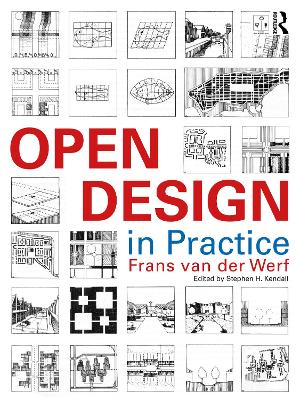
Architect and urban planner Frans van der Werf discloses in this book his own experiences as one of the pioneers of the worldwide Open Building approach. He designed as a practitioner Molenvliet, the first executed housing project that fully exemplifies the Open Building philosophy and methods. In this book he shares his practice over the course of four decades in four Urban Tissue projects and seven Support Structures in the Netherlands and abroad. They still stand today, as exemplars of how this approach can produce affordable user-centric environments of high-quality that balance the Common and the Individual spheres.

This book is organized around the distinction of the three ‘Levels of Intervention’ in the built environment: Urban Tissue, Support and Infill, the fundamental insight introduced by John Habraken in the 1960’s. After an extensive introduction Van der Werf goes into the design process of Urban Tissues, illustrated by his realized projects. Then follows how he designed Supports and answers many questions of low budget social housing projects, offering each occupant their own unique dwelling layout. He demonstrates Open decision-making on the Levels of Support and Urban Tissue by the use of the “Pattern Language” for communication and on the Infill Level direct consultation of each of the users.

Frans concludes the book with personal reflections on the use of Open Design in daily practice and adds some additional resources that inspired him. This book is essential reading for students, architects, urbanists, developers and city authorities and also for groups of future inhabitants who want to consider Open Building for a truly sustainable environment.


Architect and urban planner Frans van der Werf discloses in this book his own experiences as one of the pioneers of the worldwide Open Building approach. This book is essential reading for students, architects, urbanists, developers and city authorities who want to consider Open Building for a truly sustainable environment.

Arvustused

"Only rarely does an architect explain how they work. Frans van der Werf is an exception. He does so in this book with examples of his practice over several decades, work that shows both the consistency of his approach and its evolution. Its especially important that this book is being published now because the Open Building approach which underpins his work is finding new adherents while at the same time running into headwinds. A clear exposition of the approach, in straightforward language with helpful drawings and photographs, will be of immense help to a new generation of practitioners and clients interested in a humane, regenerative built environment."

Stephen Kendall, Emeritus Professor of Architecture at Ball State University, Philadelphia, PA, USA.

"The book is about a lifelong research of an architect on building better housing for ordinary people. The projects illustrated a beautiful balance of living in communities and individual intervention in the changing environments. It shows how a concept of Open Building developed, enhanced and enriched in design practice in almost half a century. It is both poetic and technical. It is both architectural and touching. I believe the book will be beneficial for young architects and architectural students who are facing a changing urbanism in the 21st century. It is also a reference for developers and housing authorities who are endeavor into a sustainable future of cities in the world."

Beisi Jia, Partner and Director, Baumschlager Eberle Hong Kong Ltd.

"Frans van der Werf offers us a much-needed resource which not only addresses the theory of Open Building, but also presents real-life examples from his years of practice. Having had the privilege of visiting Molenvliet many years ago, I remember the impact it had on me in terms of its human scale and spatial hierarchies, but also because of van der Werfs response when I asked, why is that window lower than the others, he simply replied the occupant is a wheelchair user.

I believe that Open Building should be the way in which we practice architecture. It should become the way that we teach and practice. The concept of Open Building is timeless and its principles are universal."

Amira Osman, Professor, Architecture and Industrial Design, Tshwane University of Technology; Past President: The South African Institute of Architects (SAIA)

"This is a well-organized and graphically coherent volume. Although the author is reflecting on 40 years of practice -there is an energy and immediacy to his writing as if these projects are under development now. The projects are well-illustrated by iterative process drawings, diagrams and photographs. In addition, the ubiquitous pen and ink vignettes by Kees Gunneweg provide both coherency and delight."

John Dale, FAIA. Principal, Synchronis. President and Co-Founder, The Council on Open Building

1. Introduction: Distinguishing Levels of Intervention
2. Urban Tissues:
the composition of public outdoor spaces
3. Supports: the composition of
collective built spaces
4. Infill: the composition of private indoor spaces
5. Reflections
Frans van der Werf (1937) is a Dutch architect and urban designer. He completed his studies at Delft University, the Netherlands, with the awarded project Housing in a Linear City, anticipating Open Building ideas. He co-designed the New Town of Evry, Paris. He has practiced Open Design in social housing and new city districts, and has designed care centers and a city center, since 1990, in bio-based organic architecture. His recent study includes Transformation of Slums into Low-Rise High-Density Urban Districts. He assisted N. John Habraken at SAR research and was a board member of SAR, Open Building and VIBA. He has lectured all over the world. (www.vdwerf.nl)