Muutke küpsiste eelistusi

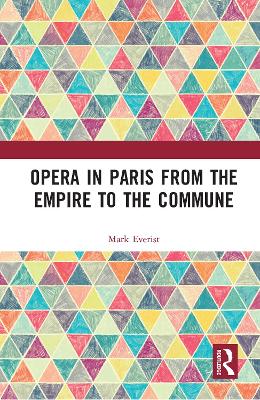
E-raamat: Opera in Paris from the Empire to the Commune

  • Formaat: PDF+DRM
  • Ilmumisaeg: 21-Nov-2018
  • Kirjastus: Routledge
  • Keel: eng
  • ISBN-13: 9781351661027
  • Formaat - PDF+DRM
  • Hind: 59,79 €*
  • * hind on lõplik, st. muud allahindlused enam ei rakendu
  • Lisa ostukorvi
  • Lisa soovinimekirja
  • See e-raamat on mõeldud ainult isiklikuks kasutamiseks. E-raamatuid ei saa tagastada.
  • Formaat: PDF+DRM
  • Ilmumisaeg: 21-Nov-2018
  • Kirjastus: Routledge
  • Keel: eng
  • ISBN-13: 9781351661027

DRM piirangud

  • Kopeerimine (copy/paste):

    ei ole lubatud

  • Printimine:

    ei ole lubatud

  • Kasutamine:

    Digitaalõiguste kaitse (DRM)
    Kirjastus on väljastanud selle e-raamatu krüpteeritud kujul, mis tähendab, et selle lugemiseks peate installeerima spetsiaalse tarkvara. Samuti peate looma endale  Adobe ID Rohkem infot siin. E-raamatut saab lugeda 1 kasutaja ning alla laadida kuni 6'de seadmesse (kõik autoriseeritud sama Adobe ID-ga).

    Vajalik tarkvara
    Mobiilsetes seadmetes (telefon või tahvelarvuti) lugemiseks peate installeerima selle tasuta rakenduse: PocketBook Reader (iOS / Android)

    PC või Mac seadmes lugemiseks peate installima Adobe Digital Editionsi (Seeon tasuta rakendus spetsiaalselt e-raamatute lugemiseks. Seda ei tohi segamini ajada Adober Reader'iga, mis tõenäoliselt on juba teie arvutisse installeeritud )

    Seda e-raamatut ei saa lugeda Amazon Kindle's. 

Studies in the history of French nineteenth-century stage music have blossomed in the last decade, encouraging a revision of the view of the primacy of Austro-German music during the period and rebalancing the scholarly field away from instrumental music (key to the Austro-German hegemony) and towards music for the stage. This change of emphasis is having an impact on the world of opera production, with new productions of works not heard since the nineteenth century taking their place in the modern repertory.

This awakening of enthusiasm has come at something of a price. Selling French opera as little more than an important precursor to Verdi or Wagner has entailed a focus on works produced exclusively for the Paris Opéra at the expense of the vast range of other types of stage music produced in the capital: opéra comique, opérette, comédie-vaudeville and mélodrame, for example. The first part of this book therefore seeks to reintroduce a number of norms to the study of stage music in Paris: to re-establish contexts and conventions that still remain obscure. The second and third parts acknowledge Paris as an importer and exporter of opera, and its focus moves towards the music of its closest neighbours, the Italian-speaking states, and of its most problematic partners, the German-speaking states, especially the music of Weber and Wagner.

Prefaced by an introduction that develops the volumes overriding intellectual drivers of cultural exchange, genre and institution, this collection brings together twelve of the authors previously published articles and essays, fully updated for this volume and translated into English for the first time.
List of examples
vii
List of figures
ix
List of tables
x
Acknowledgements xii
Ouverture: power, licence and technology
1(220)
1 The music of power: Parisian opera and the politics of genre, 1806--1864
9(44)
2 Grand opera - petit opera: Parisian opera and ballet from the Restoration to the Second Empire
53(51)
3 Jacques Offenbach: the music of the past and the image of the present
104(27)
4 The operas of Francois-Auguste Gevaert: the tour d'horizon
131(34)
5 Between Opera-Comique and Opera-National: Scribe, Vaez and Boisselot c1850
165(56)
Premier entr'acte: les ultramontains
221(108)
6 Beethoven and Rossini: opera and concert at the end of the Restoration
224(18)
7 `II n'y a qu'un Paris au monde, et j'y reviendrai planter mon drapeau!': Rossini's second grand opera
242(45)
8 A transalpine comedy: L'elisir d'amore and cultural transfer
287(23)
9 Partners in rhyme: Alphonse Royer, Gustave Vaez, and foreign opera in Paris during the July Monarchy
310(19)
Second entr'acte: la musique allemande
329(82)
10 Castil-Blaze and the reception of Weber in Paris, 1824--1857
331(24)
11 Gluck, politics and the Second Empire press
355(15)
12 Wagner and Paris: the case of Rienzi (1869)
370(41)
Strette: Censors and others
411(4)
Bibliography 415(24)
Index 439
Mark Everist is Professor of Music at the University of Southampton. His research focuses on the music of Western Europe in the period 11501330, opera in France in the nineteenth century, Mozart, reception theory and historiography. He is the author of Polyphonic Music in Thirteenth-Century France (1989), French Motets in the Thirteenth Century (1994), Music Drama at the Paris Odéon, 18241828 (2002), Giacomo Meyerbeer and Music Drama in Nineteenth-Century Paris (2005) and Mozarts Ghosts: Haunting the Halls of Musical Culture (2013) as well as the editor of three volumes of the Magnus Liber Organi for Editions de lOiseau-Lyre (20012003). In addition, he has published over 80 articles in peer-reviewed journals and collections of essays. The recipient of the Solie (2010) and Slim (2011) awards of the American Musicological Society, he was elected a fellow of the Academia Europaea in 2012. Everist was president of the Royal Musical Association from 20112017 and was elected a corresponding member of the American Musicological Society in 2014. His monograph Discovering Medieval Song: Latin Poetry and Music in the Conductus was published with Cambridge University Press in 2018, as was The Cambridge History of Medieval Music, co-edited with Thomas Kelly. A monograph on the reception of Gluck in the nineteenth century has just been completed.