Muutke küpsiste eelistusi

E-raamat: Oxford History of the Archaic Greek World: Volume III: Cumae to Cyprus

Edited by (William R. Kenan Professor of Ancient Greek History, Dartmouth College), Edited by (A.G. Leventis Senior Research Fellow; Inaugural A.G. Leventis Professor of Greek Culture emeritus, University of Cambridge)
  • Formaat - PDF+DRM
  • Hind: 80,77 €*
  • * hind on lõplik, st. muud allahindlused enam ei rakendu
  • Lisa ostukorvi
  • Lisa soovinimekirja
  • See e-raamat on mõeldud ainult isiklikuks kasutamiseks. E-raamatuid ei saa tagastada.

DRM piirangud

  • Kopeerimine (copy/paste):

    ei ole lubatud

  • Printimine:

    ei ole lubatud

  • Kasutamine:

    Digitaalõiguste kaitse (DRM)
    Kirjastus on väljastanud selle e-raamatu krüpteeritud kujul, mis tähendab, et selle lugemiseks peate installeerima spetsiaalse tarkvara. Samuti peate looma endale  Adobe ID Rohkem infot siin. E-raamatut saab lugeda 1 kasutaja ning alla laadida kuni 6'de seadmesse (kõik autoriseeritud sama Adobe ID-ga).

    Vajalik tarkvara
    Mobiilsetes seadmetes (telefon või tahvelarvuti) lugemiseks peate installeerima selle tasuta rakenduse: PocketBook Reader (iOS / Android)

    PC või Mac seadmes lugemiseks peate installima Adobe Digital Editionsi (Seeon tasuta rakendus spetsiaalselt e-raamatute lugemiseks. Seda ei tohi segamini ajada Adober Reader'iga, mis tõenäoliselt on juba teie arvutisse installeeritud )

    Seda e-raamatut ei saa lugeda Amazon Kindle's. 

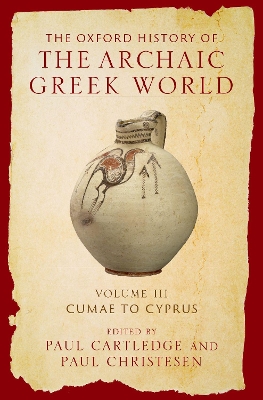
The ancient Greek world consisted of approximately 1,000 autonomous polities scattered across the Mediterranean basin and was remarkable for both its diversity and its uniformity. As Greeks dispersed throughout the Mediterranean, the different environmental and human ecosystems they encountered created important differences among widely scattered settlements: each Greek community developed its own unique set of socio-political institutions and social practices. Nonetheless, despite their dispersal and diversity, Greek communities were bound together by a network of commercial, cultural, diplomatic, and military ties and shared important commonalities, most notably language and religion.

The Oxford History of the Archaic Greek World, a collaborative effort by more than forty eminent scholars, offers twenty-one detailed and comprehensive studies of key sites from across the Greek world in the period between c. 750 and c. 480 BCE. During that period, Greeks confronted a series of demographic, political, social, and economic challenges and generated an array of responses that transformed the ways in which they lived, worked, and interacted. Much of what is now seen as distinctive about Greek culture--such as democracy, stone temples, and nude athletics--first developed during the Archaic period.

The series is organized alphabetically by polis. Volume III contains detailed and up-to-date studies of Cumae and Pithecusae, The Cyclades, and Cyprus. Together with the other volumes in the series, the Oxford History of the Archaic Greek World offers a new and unique resource for the study of ancient Greece that will transform how we understand a crucial era in antiquity.

The ancient Greek world consisted of approximately 1,000 autonomous polities scattered across the Mediterranean basin, and each one developed its own, unique set of socio-political institutions and social practices. The Oxford History of the Archaic Greek World offers twenty-one detailed studies of key sites from across the Greek world between c. 750 and c. 480 BCE--a crucial period when much of what is now seen as distinctive about Greek culture emerged. All the studies in this seven-volume series use the same structure and methodology so that readers can easily compare a wide range of Greek communities. The series thus offers a new and unique resource for the study of ancient Greece that will transform how we study and think about a crucial era in ancient Greek history. Volume III contains detailed and up-to-date studies of Cumae and Pithecusae, The Cyclades, and Cyprus.

Arvustused

This project has the potential to revolutionise Greek history. * Greece & Rome *

Series Editors' Preface
Acknowledgments
Contributors
Note to the Reader
Chapter 1: Cumae and Pithecusae
Matteo D'Acunto List of Illustrations
List of Abbreviations 1.1 Introduction
1.2 Sources
1.3 Natural Setting
1,4 Material Culture
1.5A Political and Diplomatic History: Pithecusae
1.5B Political and Diplomatic History: Cumae
1.6A Legal History: Pithecusae
1.6B Legal History: Cumae
1.7A Economic History: Pithecusae
1.7B Economic History: Cumae
1.8A Familial/Demographic History: Pithecusae
1.8B Familial/Demographic History: Cumae
1.9A Social Customs and Institutions: Pithecusae
1.9B Social Customs and Institutions: Cumae
1.10A Religious Customs and Institutions: Pithecusae
1.10B Religious Customs and Institutions: Cumae
1.11A Cultural History: Pithecusae
1.11B Cultural History: Cumae
1.12 Conclusion: Pithecusae and Cumae Guide to Further Reading
Gazetteer
Bibliography
Chapter 2: The Cyclades
Erica Angliker, Grégory Bonnin, Paul Christesen, Edward Henderson, Clayton
Howard, Alex Karsten, Yannos Kourayos, and Alexandra Sfyroera List of
Illustrations
List of Abbreviations 2.1 General Introduction
Section A: Naxos
2.2a Sources
2.3a Natural Setting
2,4a Material Culture
2.5a Political History
2.6a Legal History
2.7a Diplomatic History
2.8a Economic History
2.9a Demographic History
2.10a Social Customs
2.11a Religious Practices
2.12a Cultural History Section B: Paros
2.2b Sources
2.3b Natural Setting
2,4b Material Culture
2.5b Political History
2.6b Legal History
2.7b Diplomatic History
2.8b Economic History
2.9b Demography and Family History
2.10b Social Customs and Institutions
2.11b Religious Practices Section C: Delos
2.2c Sources
2.3v Natural Setting
2,4c Material Culture
2.5c Religious Customs and Institutions
2.6c Diplomatic History
2.7c Political History
2.8c Legal History
2.9c Economic History
2.10c Familial/Demographic History
2.11c Social Customs and Institutions
2.12c Cultural History 2.13 General Conclusion Guide to Further Reading
Gazetteer
Bibliography
Chapter 3: Cyprus
Anja Ulbrich List of Illustrations
List of Abbreviations 3.1 Introduction
3.2 Sources
3.3 Natural Setting
3.4 Material Culture
3.5 Diplomatic History
3.6 Political History
3.7 Legal History
3.8 Economic History
3.9 Familial/Demographic History
3.10 Social Customs and Institutions
3.11 Religious Customs and Institutions
3.12 Cultural History
3.13 General Conclusion Guide to Further Reading
Gazetteer
Bibliography Index
Paul Cartledge is A.G. Leventis Senior Research Fellow of Clare College, Cambridge and Inaugural A.G. Leventis Professor of Greek Culture emeritus in the Faculty of Classics at the University of Cambridge. His most recent books are Democracy: A Life and Thebes: The Forgotten City of Ancient Greece.

Paul Christesen is William R. Kenan Professor of Ancient Greek History at Dartmouth College. He is the author of three books, including most recently A New Reading of the Damonon Stele (2019).