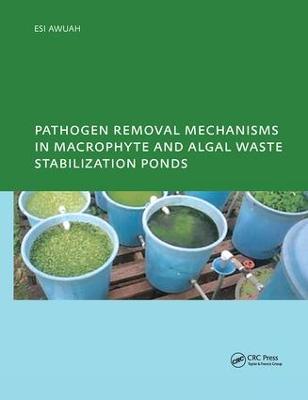
Pathogen removal mechanisms in macrophyte and algal-based waste stabilization ponds were studied in Ghana and Colombia. The macrophytes used were water lettuce (Pistia stratiotes) and duckweeds (Lemna paucicostata and Spirodela polyrhiza). The selection of the species was based on economic importance and availability. Lemna was used during the initial investigations. However, Lemna could not withstand the ammonia levels in the wastewater used. Spirodela polyrhiza a rarer species in Ghana was therefore used in subsequent studies. The main mechanisms considered in this study were pH, protozoa predation and surface attachment. The microorganisms used were faecal bacteria namely; Escherichia coli, other coliforms, Salmonella sp., other enterobacteria, E. coli, ATCC13706 and enterococci. Studies were conducted using batch scale, continuous flow bench and pilot scale ponds. Results indicated in order of importance that long retention periods, attachment, sedimentation, predation and low pH are mechanisms in macrophyte ponds enhancing faecal bacteria removal, while in the algal ponds long retention periods, sunlight penetration, high pH, attachment and sedimentation are the mechanisms of importance in faecal bacteria removal. Presence of protozoa was also found to be important but true grazing studies could not be quantified. Dissolved oxygen did not play a major role in faecal bacteria removal.
ACKNOWLEDGEMENTS, LIST OF ABBREVIATIONS, Introduction,
Chapter two
Domestic Wastewater Treatment Systems,
Chapter Three The Effect of pH on
Enterococci Removal in Water Lettuce, Duckweed and Algal Ponds,
Chapter Four
Environmental Conditions and Effect of pH on Faecal Coliform Removal in
Macrophyte and Algal Ponds,
Chapter Five Effect of pH Fluctuations on
Pathogenic Bacteria Removal in Domestic Wastewater,
Chapter Six Comparative
Performance studies of macrophyte and algal pondsUsing Low Strength Sewage,
Chapter Seven Comparative Performance Studies of Macrophyte and Algal Ponds
Using Medium Strength Sewage,
Chapter Eight The Role of Attachment in the
Removal of Faecal Bacteria from Macrophyte and Algal Waste Stabilization
Ponds,
Chapter Nine Effect of Protozoa on Faecal Bacteria Removal in
Macrophyte and Algal Waste Stabilization Ponds, Summary in English ,Summary
in Dutch, Curriculum vitae
Professor Mrs. Esi Awuah obtained her bachelors degree at the Kwame Nkrumah University of Science and Technology, Kumasi with a major in Microbiology.In 1981, she received a WHO award in connection with the Water and Sanitation Decade to do her masters in Environmental Science at the College of Environmental Science and Forestry (SUNY) Syracuse, New York, USA and obtained her Master of Science in 1985. In 1998, she obtained a fellowship from the Netherlands Government to pursue a PhD degree within the Water and Sanitation Sector Capacity building program in the Department of Civil Engineering, KNUST Kumasi, Ghana at UNESCO-IHE, Delft Netherlands.She is currently an Associate Professor and the Head of Civil Engineering Department at the Kwame Nkrumah University of Science and Technology, Kumasi, Ghana.She is also the Head of Department of Environment and Technology at the Institute of Science and Technology for Africa at KNUST, Kumasi and the Environmental Consultant for the Kwame Nkrumah University of Science and Technology, Kumasi, GhanaHer research areas
Environmental quality assessment Wastewater treatment/Solid waste management Water supply and sanitation Ecological city development
She is a member of the following organizations
Third World Organization of Women in Science (TWOWS) Ghana Science Association Ghana National Association of University Teachers

 Lisainfo e-raamatute kohta