Muutke küpsiste eelistusi

E-raamat: Performing Brains on Screen

  • Formaat: EPUB+DRM
  • Ilmumisaeg: 01-Oct-2025
  • Kirjastus: Amsterdam University Press
  • Keel: eng
  • ISBN-13: 9781040799215
Teised raamatud teemal:
  • Formaat - EPUB+DRM
  • Hind: 59,79 €*
  • * hind on lõplik, st. muud allahindlused enam ei rakendu
  • Lisa ostukorvi
  • Lisa soovinimekirja
  • See e-raamat on mõeldud ainult isiklikuks kasutamiseks. E-raamatuid ei saa tagastada.
  • Formaat: EPUB+DRM
  • Ilmumisaeg: 01-Oct-2025
  • Kirjastus: Amsterdam University Press
  • Keel: eng
  • ISBN-13: 9781040799215
Teised raamatud teemal:

DRM piirangud

  • Kopeerimine (copy/paste):

    ei ole lubatud

  • Printimine:

    ei ole lubatud

  • Kasutamine:

    Digitaalõiguste kaitse (DRM)
    Kirjastus on väljastanud selle e-raamatu krüpteeritud kujul, mis tähendab, et selle lugemiseks peate installeerima spetsiaalse tarkvara. Samuti peate looma endale  Adobe ID Rohkem infot siin. E-raamatut saab lugeda 1 kasutaja ning alla laadida kuni 6'de seadmesse (kõik autoriseeritud sama Adobe ID-ga).

    Vajalik tarkvara
    Mobiilsetes seadmetes (telefon või tahvelarvuti) lugemiseks peate installeerima selle tasuta rakenduse: PocketBook Reader (iOS / Android)

    PC või Mac seadmes lugemiseks peate installima Adobe Digital Editionsi (Seeon tasuta rakendus spetsiaalselt e-raamatute lugemiseks. Seda ei tohi segamini ajada Adober Reader'iga, mis tõenäoliselt on juba teie arvutisse installeeritud )

    Seda e-raamatut ei saa lugeda Amazon Kindle's. 

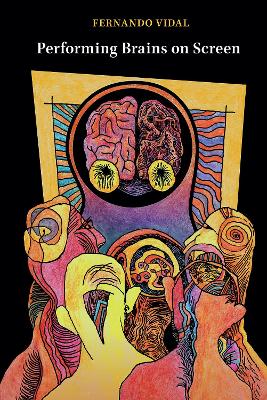
Performing Brains on Screen deals with film enactments and representations of the belief that human beings are essentially their brains, a belief that embodies one of the most influential modern ways of understanding the human. Films have performed brains in two chief ways: by turning physical brains into protagonists, as in the "brain movies" of the 1950s, which show terrestrial or extra-terrestrial disembodied brains carrying out their evil intentions; or by giving brains that remain unseen inside someone’s head an explicitly major role, as in brain transplantation films or their successors since the 1980s, in which brain contents are transferred and manipulated by means of information technology. Through an analysis of filmic genres and particular movies, Performing Brains on Screen documents this neglected filmic universe, and demonstrates how the cinema has functioned as a cultural space where a core notion of the contemporary world has been rehearsed and problematized. 1. It studies a topic that has never been researched in detail; 2. It brings film studies, film/philosophy, science studies and the history of science to bear together on a major cultural and social phenomena; 3. It questions the "symptomatic reading" of film and emphasizes the medium's social and cultural agency.

Arvustused

"The Cartesian subject may be dead but our brains still havent figured that out. In Performing Brains on Screen, Fernando Vidal provides an impressive survey of the brain as protagonist across a pulpy expanse of fiction and cinema, examining how the continuing equation of brain and selfhood informs popular understandings of identity, consciousness, and memory. Essential reading for neuroscientists, cinephiles, and anyone else who has ever pondered the odd yet enduring convention of brains transplanted, escaped, switched, uploaded, and otherwise liberated from the body as spongy receptacle of selfhood." - Jeffrey Sconce, Professor in the Screen Cultures program at Northwestern University and a Guggenheim Fellow for 2020-2021.

"The books detailed historical focus is its most valuable asset, especially for philosophers interested in the mechanics of genre formation. It condenses vast primary and secondary literature on the origins of science fiction, making it an important resource for philosophical work on genre." Michel-Antoine Xhignesse, Metascience, issue 32, 2023

Acknowledgments 9(2)
Note on References and Images 11(2)
1 Brainhood and the Cinema
13(22)
The "Deficit Model" and the Agency of Film
16(5)
Bs to Zs
21(4)
Filmic Brains in the Neurobiological Age
25(10)
2 Brains in the Pulps
35(52)
Resources
37(2)
Scientifiction, Textual and Visual
39(3)
Advertisement and "Prophetic Insight"
42(3)
Before Gernsback
45(3)
Weird Tales
48(7)
Stories Astounding and Amazing
55(32)
3 Naked Brains and Living Heads
87(40)
Brain Movies
93(7)
Body Parts
100(4)
The Donor Portion
104(7)
Apes
105(4)
Semigrafts
109(2)
Living Heads
111(4)
Some Filmic Allografts
115(3)
Paradox of the Naked Brain
118(9)
4 Personal Survival
127(28)
Immortality and the Brain
131(1)
Adam and Tithonus
132(5)
Staying the Same, Becoming Someone Else
137(18)
The Man Who Changed His Mind (1936)
138(4)
Change of Mind (1969)
142(4)
The Man With the Transplanted Brain (1971)
146(9)
5 Frankenstein's Brains
155(24)
Shelley's Novel and Frankenstein Films
157(2)
The Final Touch: Frankenstein (1931)
159(6)
The Universal Series
165(2)
The Hammer Series
167(4)
Beyond Universal and Hammer
171(8)
6 Memories, Lost and Regained
179(40)
A Preference for Retrograde Amnesia
182(5)
Localizing Memory in the Filmic Brain
187(2)
Personal Identity and the Authenticity of Memory
189(4)
Erasing Memories
193(4)
Eternal Sunshine of the Spotless Mind (2004)
197(9)
Dark City (1998)
206(13)
7 "Imagine, They Are in the Human Mind"
219(8)
Bibliography 227(22)
Films 249(6)
Index 255
Fernando Vidal is Research Professor of ICREA (Catalan Institution for Research and Advanced Studies) at the Medical Anthropology Research Center, Universitat Rovira i Virgili, Tarragona, Spain.