Muutke küpsiste eelistusi

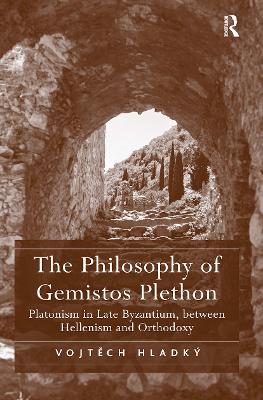
E-raamat: Philosophy of Gemistos Plethon: Platonism in Late Byzantium, between Hellenism and Orthodoxy

  • Formaat: PDF+DRM
  • Ilmumisaeg: 15-May-2017
  • Kirjastus: Routledge
  • Keel: eng
  • ISBN-13: 9781317021490
  • Formaat - PDF+DRM
  • Hind: 53,29 €*
  • * hind on lõplik, st. muud allahindlused enam ei rakendu
  • Lisa ostukorvi
  • Lisa soovinimekirja
  • See e-raamat on mõeldud ainult isiklikuks kasutamiseks. E-raamatuid ei saa tagastada.
  • Formaat: PDF+DRM
  • Ilmumisaeg: 15-May-2017
  • Kirjastus: Routledge
  • Keel: eng
  • ISBN-13: 9781317021490

DRM piirangud

  • Kopeerimine (copy/paste):

    ei ole lubatud

  • Printimine:

    ei ole lubatud

  • Kasutamine:

    Digitaalõiguste kaitse (DRM)
    Kirjastus on väljastanud selle e-raamatu krüpteeritud kujul, mis tähendab, et selle lugemiseks peate installeerima spetsiaalse tarkvara. Samuti peate looma endale  Adobe ID Rohkem infot siin. E-raamatut saab lugeda 1 kasutaja ning alla laadida kuni 6'de seadmesse (kõik autoriseeritud sama Adobe ID-ga).

    Vajalik tarkvara
    Mobiilsetes seadmetes (telefon või tahvelarvuti) lugemiseks peate installeerima selle tasuta rakenduse: PocketBook Reader (iOS / Android)

    PC või Mac seadmes lugemiseks peate installima Adobe Digital Editionsi (Seeon tasuta rakendus spetsiaalselt e-raamatute lugemiseks. Seda ei tohi segamini ajada Adober Reader'iga, mis tõenäoliselt on juba teie arvutisse installeeritud )

    Seda e-raamatut ei saa lugeda Amazon Kindle's. 

George Gemistos Plethon (c. 1360-1454) was a remarkable and influential thinker, active at the time of transition between the Byzantine Middle Ages and the Italian Renaissance. His works cover literary, historical, scientific, but most notably philosophical issues. Plethon is arguably the most important of the Byzantine Platonists and the earliest representative of Platonism in the Renaissance, the movement which generally exercised a huge influence on the development of early modern thought. Thus his treatise on the differences between Plato and Aristotle triggered the Plato-Aristotle controversy of the 15th century, and his ideas impacted on Italian Renaissance thinkers such as Ficino. This book provides a new study of Gemistos’ philosophy. The first part is dedicated to the discussion of his 'public philosophy'. As an important public figure, Gemistos wrote several public speeches concerning the political situation in the Peloponnese as well as funeral orations on deceased members of the ruling Palaiologos family. They contain remarkable Platonic ideas, adjusted to the contemporary late Byzantine situation. In the second, most extensive, part of the book the Platonism of Plethon is presented in a systematic way. It is identical with the so-called philosophia perennis, that is, the rational view of the world common to various places and ages. Throughout Plethon’s writings, it is remarkably coherent in its framework, possesses quite original features, and displays the influence of ancient Middle and Neo-Platonic discussions. Plethon thus turns out to be not just a commentator on an ancient tradition, but an original Platonic thinker in his own right. In the third part the notorious question of the paganism of Gemistos is reconsidered. He is usually taken for a Platonizing polytheist who gathered around himself a kind of heterodox circle. The whole issue is examined in depth again and all the major evidence discussed, with the result that Gemistos seems rat

Arvustused

'Hladkýs book is a valuable contribution to the study of Plethon that also daringly proposes a re-evaluation of what is commonly seen as Plethons trademark: his paganism.' Bryn Mawr Classical Review

List of Tables
ix
Acknowledgements xi
Introduction 1(1)
The Man and his Work 1(3)
Gemistos and Scholarship 4(7)
PART I PUBLIC PHILOSOPHY
1 Platonic Reforms
11(10)
2 Fate of the Soul
21(6)
3 Conclusion to Part I: Platonism in Practice
27(8)
PART II PHILOSOPHIA PERENNIS
4 Writings about the Perennial Philosophy
35(14)
5 Introduction to the Perennial Philosophy
49(12)
6 Division of Reality
61(12)
7 Zeus, the First Principle
73(8)
8 Supracelestial Gods, the Forms
81(16)
Defence of Platonic Forms
81(7)
The Forms in Plethon's Laws
88(9)
9 The Forms as the Gods
97(26)
Olympians
97(11)
Titans (Tartarus)
108(2)
Table of the Gods of the First and Second Order
110(1)
Sources of Plethon's Mythology
111(12)
10 Sensible Cosmos
123(14)
Gods of the Third Order
123(6)
Stars and Daemons
129(8)
11 Nature Mortal and Human
137(26)
The Soul and the Human Situation
137(7)
Fate and Freedom
144(7)
Ethics, Cult and Politics
151(12)
12 Conclusion to Part II: Plethon's Platonism
163(26)
PART III QUESTION OF RELIGION
13 Becoming Pagan
189(2)
14 Gemistos' Mysterious Teacher
191(14)
15 Witnesses
205(30)
Pupils and Friends
205(12)
Admirers
217(3)
Adversaries
220(15)
16 Change of Name
235(4)
17 Fight for Orthodoxy
239(12)
18 The Book
251(18)
19 Conclusion to Part III: Pagan or Christian?
269(18)
Appendix 287(24)
Manuscript Supplement 311(12)
Abbreviations 323(2)
Primary Sources 325(1)
Gemistos Plethon and His Contemporaries 325(12)
Other Ancient, Byzantine and Renaissance Authors 337(6)
Secondary Literature 343(1)
Systematic Bibliographies of Secondary Texts on Gemistos Plethon 343(1)
Secondary Texts 343(20)
Index of Passages Quoted 363(18)
General Index 381
VojtÄch Hladký is assistant professor at the Department of Philosophy and History of Sciences, Faculty of Science, Charles University, Prague, Czech Republic.