Muutke küpsiste eelistusi

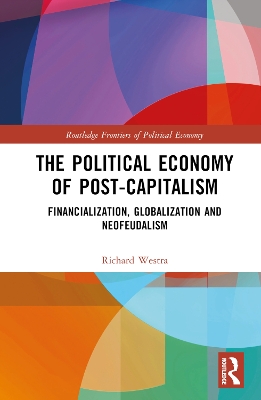
E-raamat: Political Economy of Post-Capitalism: Financialization, Globalization and Neofeudalism

(Institute of Political Science, University of Opole, Poland)
  • Formaat - PDF+DRM
  • Hind: 59,79 €*
  • * hind on lõplik, st. muud allahindlused enam ei rakendu
  • Lisa ostukorvi
  • Lisa soovinimekirja
  • See e-raamat on mõeldud ainult isiklikuks kasutamiseks. E-raamatuid ei saa tagastada.
  • Raamatukogudele

DRM piirangud

  • Kopeerimine (copy/paste):

    ei ole lubatud

  • Printimine:

    ei ole lubatud

  • Kasutamine:

    Digitaalõiguste kaitse (DRM)
    Kirjastus on väljastanud selle e-raamatu krüpteeritud kujul, mis tähendab, et selle lugemiseks peate installeerima spetsiaalse tarkvara. Samuti peate looma endale  Adobe ID Rohkem infot siin. E-raamatut saab lugeda 1 kasutaja ning alla laadida kuni 6'de seadmesse (kõik autoriseeritud sama Adobe ID-ga).

    Vajalik tarkvara
    Mobiilsetes seadmetes (telefon või tahvelarvuti) lugemiseks peate installeerima selle tasuta rakenduse: PocketBook Reader (iOS / Android)

    PC või Mac seadmes lugemiseks peate installima Adobe Digital Editionsi (Seeon tasuta rakendus spetsiaalselt e-raamatute lugemiseks. Seda ei tohi segamini ajada Adober Reader'iga, mis tõenäoliselt on juba teie arvutisse installeeritud )

    Seda e-raamatut ei saa lugeda Amazon Kindle's. 

It has become clear that instead of constituting the end of history or ending in its supplanting by socialism, capitalism has been outpaced by history and transmuted into something else. In this book, Westra explores the literature on the current state of capitalism ranging from questions of financial system and technological change through evidence of shifting class contours to a far more predatory constellation dubbed neofeudalism.In seeking to expose the dire consequences for humanity of capitalist unravelling, this book remedies the lacunae and disparateness of current writings which leave fundamental questions of what precisely capitalism is or was and the historical delimitations of capitalism unanswered. Westra not only critically analyzes the arguments over capitalisms passing under key rubrics of financialization, globalization, intangible assets and social class, unveiling interconnections among perspectives, but grounds determinations over the existence of capitalism in a novel synthetic definition of it. Thus, while capitalism has always been an exploitative, asymmetric wealth distributive, alienating, class divisive, crises ridden society, Westra explains how, supported by neoliberal state policies, the economic transmutations the book treats undermine what coherence capitalism maintained for human economic affairs to the existential detriment of society.This book will be of interest to academics and students across fields of economics, political economy, economic history, political science and sociology as well as to progressive policymakers and social activists.

Westra explores a nuanced literature on postcapitalism which claims that instead of constituting the end of history or ending in its supplanting by socialism, capitalism has transmuted into something else.

Arvustused

Westras main thesis could hardly be more provocative: the demise of the post-World War II economic order has not led to a new phase of capitalist development, but to a post-capitalism of on-going social disintegration and nascent authoritarian statism. Those resisting this stark conclusion will be tremendously challenged by Westras arguments, carefully developed in comprehensive critical examinations of globalization, financialization, and the rise of intangible capital. There is no reason to make things complicated: if you are concerned with humanitys future, you should read this work. It is as simple as that.

- Tony Smith, Professor Emeritus of Philosophy at Iowa State University.

1. Introduction2. Capitalism in the Future Perfect Tense3. Financialization4. Globalization5. Intangible Assets6. Social Class7. Conclusion
Richard Westra is University Professor at the University of Opole, Poland.