"Examining the identity and belonging of native and non-native speakers of Greek during the time of the High Roman Empire, Eleni Bozia closely studies grammarians, lexicographers and literary writers who used Attic Greek. Bozia argues that transculturalism and translingualism created a new space for both the naturalised and native citizenry. In the act of imitating, emulating and recreating Attic Greek, speakers formed a socio-politically distinct and nuanced mode of expression in the social echelons of the Roman world"--
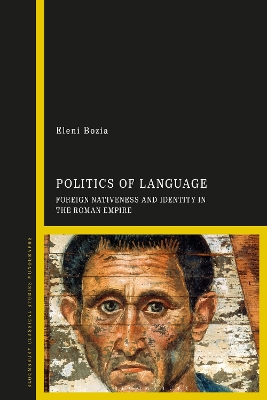
Examining the identity and belonging of native and non-native speakers of Greek during the time of the High Roman Empire, Eleni Bozia closely studies grammarians, lexicographers and literary writers who used Attic Greek.
Bozia argues that transculturalism and translingualism created a new space for both the naturalised and native citizenry. In the act of imitating, emulating and recreating Attic Greek, speakers formed a socio-politically distinct and nuanced mode of expression in the social echelons of the Roman world.
Additionally, this is the first book to explore Greek and Latin texts from both a philological and a computational linguistics perspective. The result is a consideration of how imitation and innovation affect the social positioning of native and bilingual speakers. As such, this combined reading of data derived from classical studies in conjunction with computational linguistics, offers the context of how to serve a new interpretation of our understanding and appreciation of identity.
Arvustused
An innovative combination of classics, sociology and computational linguistics. A sound exploration of the role of language in the creation and maintenance of identities in the High Roman Empire. Delightfully written and accessible to all readerships. -- Luis Unceta Gómez, Senior Lecturer in Latin Philology, Autonomous University of Madrid, Spain
Muu info
An examination of the language used by native and non-native writers of Greek in the Roman Empire, while considering language as a means of establishing identity and social standing.
Acknowledgements
Introduction
Chapter 1: Enculturating Blood and Ancestry in the Greco-Roman WorldChapter 2: Grammar and Lexicography as ?ducational and ?thnic ?arkers
Chapter 3: Attic Oratory and its Imperial Revival: Quantifying Theory and Practice
Chapter 4: Experimental Results, Analysis, and Visualisation
Chapter 5: 'Ga??t?? ?? ???????e??': Greekness, Latinity, and Otherness in the World of the High Empire
Conclusion
Notes
Bibliography
Index
Eleni Bozia is Professor of Classics and Digital Humanities at the University of Florida, USA.

 Lisainfo e-raamatute kohta