Muutke küpsiste eelistusi
  • Formaat - EPUB+DRM
  • Hind: 136,50 €*
  • * hind on lõplik, st. muud allahindlused enam ei rakendu
  • Lisa ostukorvi
  • Lisa soovinimekirja
  • See e-raamat on mõeldud ainult isiklikuks kasutamiseks. E-raamatuid ei saa tagastada.
  • Raamatukogudele

DRM piirangud

  • Kopeerimine (copy/paste):

    ei ole lubatud

  • Printimine:

    ei ole lubatud

  • Kasutamine:

    Digitaalõiguste kaitse (DRM)
    Kirjastus on väljastanud selle e-raamatu krüpteeritud kujul, mis tähendab, et selle lugemiseks peate installeerima spetsiaalse tarkvara. Samuti peate looma endale  Adobe ID Rohkem infot siin. E-raamatut saab lugeda 1 kasutaja ning alla laadida kuni 6'de seadmesse (kõik autoriseeritud sama Adobe ID-ga).

    Vajalik tarkvara
    Mobiilsetes seadmetes (telefon või tahvelarvuti) lugemiseks peate installeerima selle tasuta rakenduse: PocketBook Reader (iOS / Android)

    PC või Mac seadmes lugemiseks peate installima Adobe Digital Editionsi (Seeon tasuta rakendus spetsiaalselt e-raamatute lugemiseks. Seda ei tohi segamini ajada Adober Reader'iga, mis tõenäoliselt on juba teie arvutisse installeeritud )

    Seda e-raamatut ei saa lugeda Amazon Kindle's. 

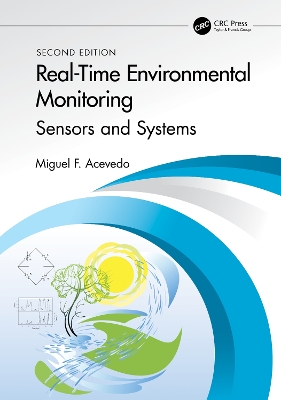
"This updated edition of Real-Time Environmental Monitoring: Sensors and Systems introduces the fundamentals of environmental monitoring based on electronic sensors, instruments, systems, and software that allow continuous and long-term ecological and environmental data collection. It explains how to use sensors for building more complex instruments, systems, and databases, and introduces a variety of sensors and systems employed to measure environmental variables in air, water, soils, vegetation canopies, and wildlife observation and tracking. This second edition is thoroughly updated, and each theoretical chapter is taught parallel with a hands-on application lab manual"--

This updated edition introduces the fundamentals of environmental monitoring based on electronic sensors, instruments, systems, and software that allow continuous and long-term ecological and environmental data collection, and each theoretical chapter is taught parallel with a hands-on application lab manual.


Written 10 years after the publication of the first edition, this updated edition of Real-Time Environmental Monitoring: Sensors and Systems introduces the fundamentals of environmental monitoring based on electronic sensors, instruments, systems, and software that allow continuous and long-term ecological and environmental data collection. It accomplishes two objectives: explains how to use sensors for building more complex instruments, systems, and databases, and introduces a variety of sensors and systems employed to measure environmental variables in air, water, soils, vegetation canopies, and wildlife observation and tracking. This second edition is thoroughly updated in every aspect of technology and data, and each theoretical chapter is taught parallel with a hands-on application lab manual.

  • Emphasizes real-time monitoring as an emerging area for environmental assessment and compliance and covers the fundamentals on how to develop sensors and systems
  • Presents several entirely new topics not featured in the first edition, including remote sensing and GIS, machine learning, weather radar and satellites, groundwater monitoring, spatial analysis, and habitat monitoring
  • Includes applications to many environmental and ecological systems
  • Uses a practical, hands-on approach with the addition of an accompanying lab manual, which students can use to deepen their understanding, based on the author’s 40 years of academic experience

Intended for upper-level undergraduate and graduate students, taking courses in civil and environmental engineering, electrical engineering, mechanical engineering, geosciences, and environmental sciences, as well as professionals working in environmental services, and researchers and academics in engineering.

1. Principles of Environmental Monitoring
2. Programming and
Single-Board Computers
3. Sensors and Transducers: Basic Circuits
4. Bridge
Circuits and Signal Conditioning
5. Dataloggers and Sensor Networks
6.
Wireless Technologies: Telemetry and Wireless Sensor Networks
7.
Environmental Monitoring and Electric Power
8. Remote Monitoring of the
Environment
9. Probability, Statistics, and Machine Learning
10. Databases
and Geographic Information Systems
11. Atmospheric Monitoring
12. Water
Monitoring
13. Terrestrial Ecosystems Monitoring
14. Wildlife Monitoring
Miguel F. Acevedo has over 40 years of academic experience, the last 27 of these at the University of North Texas (UNT) where he is currently a Regents Professor. His career has been interdisciplinary and especially at the interface of science and engineering. He has served UNT as faculty member in the department of Geography, the Graduate Program in Environmental Sciences of the Biology department, and the Electrical Engineering department. He obtained his Ph.D. degree in Biophysics from the University of California, Berkeley (1980) and masters degrees in electrical engineering and Computer Science from Berkeley (M.E., 1978) and the University of Texas at Austin (M.S., 1972). Before joining UNT, he was at the Universidad de Los Andes, Merida, Venezuela, where he served in the School of Systems Engineering, the graduate program in Tropical Ecology, and the Center for Simulation and Modeling. He has served on the Science Advisory Board of the U.S. Environmental Protection Agency and on many review panels of the U.S. National Science Foundation. He has received numerous research grants, and written several textbooks, numerous journal articles, as well as many book chapters and proceeding articles. In addition to the Regents Professor rank, UNT has recognized him with the Citation for Distinguished Service to International Education, and the Regents Faculty Lectureship. His research interests focus on environmental systems and sustainability. He has published four textbooks with CRC Press.