Muutke küpsiste eelistusi

E-raamat: Realising Farmers' Rights to Crop Genetic Resources: Success Stories and Best Practices

Edited by (Fridtjof Nansen Institute, Lysaker, Norway), Edited by (Fridtjof Nansen Institute, Lysaker, Norway)
  • Formaat: EPUB+DRM
  • Ilmumisaeg: 18-Jul-2013
  • Kirjastus: Routledge
  • Keel: eng
  • ISBN-13: 9781136157684
  • Formaat - EPUB+DRM
  • Hind: 27,29 €*
  • * hind on lõplik, st. muud allahindlused enam ei rakendu
  • Lisa ostukorvi
  • Lisa soovinimekirja
  • See e-raamat on mõeldud ainult isiklikuks kasutamiseks. E-raamatuid ei saa tagastada.
  • Formaat: EPUB+DRM
  • Ilmumisaeg: 18-Jul-2013
  • Kirjastus: Routledge
  • Keel: eng
  • ISBN-13: 9781136157684

DRM piirangud

  • Kopeerimine (copy/paste):

    ei ole lubatud

  • Printimine:

    ei ole lubatud

  • Kasutamine:

    Digitaalõiguste kaitse (DRM)
    Kirjastus on väljastanud selle e-raamatu krüpteeritud kujul, mis tähendab, et selle lugemiseks peate installeerima spetsiaalse tarkvara. Samuti peate looma endale  Adobe ID Rohkem infot siin. E-raamatut saab lugeda 1 kasutaja ning alla laadida kuni 6'de seadmesse (kõik autoriseeritud sama Adobe ID-ga).

    Vajalik tarkvara
    Mobiilsetes seadmetes (telefon või tahvelarvuti) lugemiseks peate installeerima selle tasuta rakenduse: PocketBook Reader (iOS / Android)

    PC või Mac seadmes lugemiseks peate installima Adobe Digital Editionsi (Seeon tasuta rakendus spetsiaalselt e-raamatute lugemiseks. Seda ei tohi segamini ajada Adober Reader'iga, mis tõenäoliselt on juba teie arvutisse installeeritud )

    Seda e-raamatut ei saa lugeda Amazon Kindle's. 

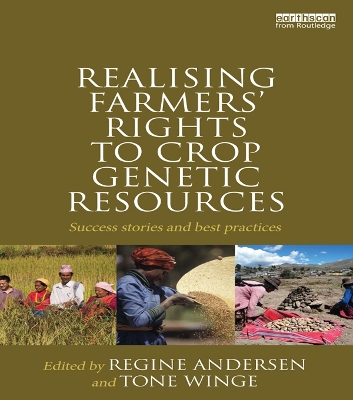
Farmers' Rights are essential for maintaining crop genetic diversity, which is the basis of all food and agricultural production in the world. The International Treaty on Plant Genetic Resources for Food and Agriculture recognizes Farmers' Rights and provides for relevant measures. However, implementation is slow, and in many countries there is resistance. 

This book shows the necessity of realizing Farmers' Rights for poverty alleviation and food security, the practical possibilities of doing so, and the potential gains for development and society at large. It provides decision-makers and practitioners with a conceptual framework for understanding Farmers’ Rights and success stories showing how each of the elements of Farmers' Rights can be realized in practice. The success stories have brought substantial achievements as regards one or more of the four elements of Farmers' Rights: the rights of farmers to save, use, exchange and sell farm-saved seed; the protection of traditional knowledge; benefit- sharing; and participation in decision-making. 

This does not mean that these examples are perfect. Challenges encountered on the way are conveyed and offer important lessons. The stories represent different regions and localities, including Europe, Asia, Africa and Latin America, as well as various categories of stakeholders and types of initiatives and policies.

Arvustused

"This book meticulously documents the progress of initiatives undertaken to shape the Farmers' Rights described in the International Treaty, taking the need to provide legal space for Farmers' Rights as the point of departure. With its suggestions for future work, it is a wealth of information for all concerned about and engaged in strengthening farmers' continuing role in maintaining crop diversity." Bert Visser, Centre for Genetic Resources, Wageningen University and Research Centre, The Netherlands


"This book is indispensable for decision-makers and practitioners dealing with agriculture and food production. It illustrates from the theory to the practice how Farmers' Rights can and need to be implemented in order to ensure the continuous conservation and development of agro-biodiversity in the twenty-first century. As such it is a milestone for the realization of Farmers' Rights." José Esquinas-Alcázar, Director and Chair of Studies on Hunger and Poverty, University of Córdoba, Spain and Former Secretary of the FAO International Treaty on Plant Genetic Resources for Food and Agriculture


"This is an excellent book for people who are interested in knowing what Farmers Rights can actually look like on the ground. By presenting success stories, Andersen and Winge take a positive, proactive approach to analyzing achievements in an area that is still, unfortunately, fraught with challenges, setbacks and relatively slow progress. A wide range of actors involved in Farmer Rights advocacy and policy development at local, national and international levels will benefit from the case studies and overall analysis this book provides." Michael Halewood, Head, Policy Research Unit, Bioversity International, Italy

Part 1: Introduction
1. Crop Genetic Diversity and Farmers Rights
2.
What Constitutes a Success Story in the Context of Farmers Rights? Part 2:
Success Stories from the Realization of Farmers Rights to Save, Use,
Exchange and Sell Farm-saved Seed
3. Norways Path to Ensuring Farmers
Rights in the European Context
4. Conservation of Local Varieties in the
Basque Country in Spite of Legal Restrictions
5. Combining Farmers Rights
and Plant Variety Protection in the Indian Law Part 3: Success Stories from
the Protection of Traditional Knowledge 6 Cataloguing Potato Varieties and
Traditional Knowledge from the Andean Highlands of Huancavelica, Peru
7. A
Community Registry in the Philippines Part 4: Success Stories from the
Realization of Farmers Rights to Participate in Benefit Sharing
8.
Participatory Barley Breeding in Syria
9. Benefiting from Diversity in Nepal
10. Community Seed Fairs in Zimbabwe
11. Farmer Innovation in Tigray,
Ethiopia
12. Capacity Building and Farmer Empowerment in Mali
13. The
Hiroshima Agricultural Gene Bank: Re-introducing Local Varieties, Maintaining
Traditional Knowledge Part 5: Success Stories from Farmers Participation in
Decision-making
14. Advocacy for Farmers Rights in Nepal Part 6: Ways
Forward
15. Future Prospects for the Realization of Farmers Rights
Regine Andersen is a Senior Research Fellow at the Fridtjof Nansen Institute, Lysaker, Norway. 


Tone Winge is a Research Fellow at the Fridtjof Nansen Institute, Lysaker, Norway.