Muutke küpsiste eelistusi

E-raamat: Representing from Life in Seventeenth-century Italy

  • Formaat - PDF+DRM
  • Hind: 59,79 €*
  • * hind on lõplik, st. muud allahindlused enam ei rakendu
  • Lisa ostukorvi
  • Lisa soovinimekirja
  • See e-raamat on mõeldud ainult isiklikuks kasutamiseks. E-raamatuid ei saa tagastada.

DRM piirangud

  • Kopeerimine (copy/paste):

    ei ole lubatud

  • Printimine:

    ei ole lubatud

  • Kasutamine:

    Digitaalõiguste kaitse (DRM)
    Kirjastus on väljastanud selle e-raamatu krüpteeritud kujul, mis tähendab, et selle lugemiseks peate installeerima spetsiaalse tarkvara. Samuti peate looma endale  Adobe ID Rohkem infot siin. E-raamatut saab lugeda 1 kasutaja ning alla laadida kuni 6'de seadmesse (kõik autoriseeritud sama Adobe ID-ga).

    Vajalik tarkvara
    Mobiilsetes seadmetes (telefon või tahvelarvuti) lugemiseks peate installeerima selle tasuta rakenduse: PocketBook Reader (iOS / Android)

    PC või Mac seadmes lugemiseks peate installima Adobe Digital Editionsi (Seeon tasuta rakendus spetsiaalselt e-raamatute lugemiseks. Seda ei tohi segamini ajada Adober Reader'iga, mis tõenäoliselt on juba teie arvutisse installeeritud )

    Seda e-raamatut ei saa lugeda Amazon Kindle's. 

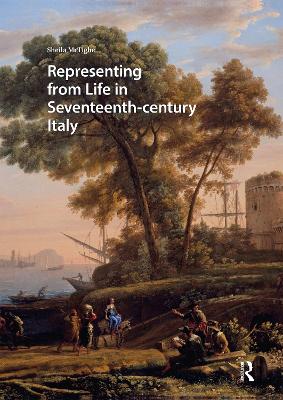
In drawing or painting from live models and real landscapes, more was at stake for artists in early modern Italy than achieving greater naturalism. To work with the model in front of your eyes, and to retain their identity in the finished work of art, had an impact on concepts of artistry and authorship, the authority of the image as a source of knowledge, the boundaries between repetition and invention, and even the relation of images to words. This book focuses on artists who worked in Italy, both native Italians and migrants from northern Europe. The practice of depicting from life became a self-conscious departure from the norms of Italian arts. In the context of court culture in Rome and Florence, works by artists ranging from Caravaggio to Claude Lorrain, Pieter van Laer to Jacques Callot, reveal new aspects of their artistic practice and its critical implications.

Arvustused

"The objective of Sheila McTighe's book of this title is to understand the role of eye-witnessing, depicting 'from life', and the process by which works of art were made in Italy during the early modern period. [ ...] It is an ambitious remit that is superbly handled, revealing deep analysis based on close and prolonged looking, asking penetrating questions of the material, through contemporary sources." - Mark McDonald, Print Quarterly, XXXIX, 2022, I

"Attending to recent focus in the discipline on the methods of artistic practice, the book sheds new light on little-understood aspects of early modern artistic working methods, from Caravaggio's 'true doubles' to Callot's miniaturization devices, to Claude's perspectival instruments. Through a rich historical contextualization, it also brings to the fore a range of interdisciplinary influences on art-making of the period, from court wit to instruments of vision, to mapping and measurement, and theatrical scenography." - Professor Genevieve Warwick, University of Edinburgh

"[ ...] Representing from Life in Seventeenth-Century Italy contributes significantly to our understanding of a difficult and still underresearched subject. It can be recommended for undergraduates as well as specialists owing to its clarity of argument and sustained engagement with its visual materials." - Thomas Balfe, Renaissance Quarterly, Vol. 75, No. 2

"In the most transcultural and trans-media study of the phenomenon of From Life picturing to date [ ...] this book restores richness and multifaceted complexity to the phenomenon, reframing it as a polysemous mode of picturing and unfolding the different utilities of representing From Life that served a range of meta-artistic, socio-political and cultural interests and agendas both individual and collective." - Ruth Sargent Noyes, Seventeenth-Century News, Vol. 80, Iss. 1-2

Introduction: Depicting from Life 15(26)
1 Caravaggio's Physiognomy
41(50)
2 Jacques Callot, Drawing Dal Vivo around 1620: Commerce in Florence, Piracy on the High Seas
91(54)
3 Jacques Callot's Capricci di variefigure (1617): The Allusive Imagery of the Everyday, Represented `from Life' and Emulating a Text
145(34)
4 The Motif of the Shooting Man, and Capturing the Urban Scene: Claude Lorrain and the Bamboccianti
179(42)
5 The Absent Eyewitness: the Revolt of Masanielto and Depiction Dal Vivo in the Middle of the Seventeenth Century
221(24)
Conclusion 245(4)
Index 249
Sheila McTighe is Senior Lecturer at the Courtauld Institute of Art, University of London. She has written about Nicolas Poussin, Annibale Carracci, caricature, and genre painting and prints, focusing on 17th-century Italy and France.