Muutke küpsiste eelistusi

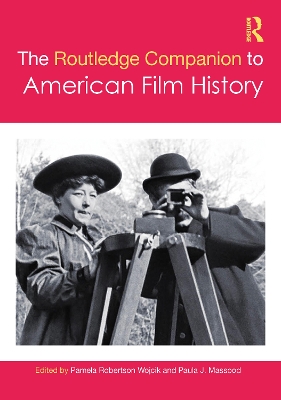
E-raamat: Routledge Companion to American Film History

Edited by (University of Notre Dame, USA), Edited by (Brooklyn College, CUNY, USA)
Teised raamatud teemal:
  • Formaat - EPUB+DRM
  • Hind: 67,59 €*
  • * hind on lõplik, st. muud allahindlused enam ei rakendu
  • Lisa ostukorvi
  • Lisa soovinimekirja
  • See e-raamat on mõeldud ainult isiklikuks kasutamiseks. E-raamatuid ei saa tagastada.
  • Raamatukogudele
Teised raamatud teemal:

DRM piirangud

  • Kopeerimine (copy/paste):

    ei ole lubatud

  • Printimine:

    ei ole lubatud

  • Kasutamine:

    Digitaalõiguste kaitse (DRM)
    Kirjastus on väljastanud selle e-raamatu krüpteeritud kujul, mis tähendab, et selle lugemiseks peate installeerima spetsiaalse tarkvara. Samuti peate looma endale  Adobe ID Rohkem infot siin. E-raamatut saab lugeda 1 kasutaja ning alla laadida kuni 6'de seadmesse (kõik autoriseeritud sama Adobe ID-ga).

    Vajalik tarkvara
    Mobiilsetes seadmetes (telefon või tahvelarvuti) lugemiseks peate installeerima selle tasuta rakenduse: PocketBook Reader (iOS / Android)

    PC või Mac seadmes lugemiseks peate installima Adobe Digital Editionsi (Seeon tasuta rakendus spetsiaalselt e-raamatute lugemiseks. Seda ei tohi segamini ajada Adober Reader'iga, mis tõenäoliselt on juba teie arvutisse installeeritud )

    Seda e-raamatut ei saa lugeda Amazon Kindle's. 

Presenting new and diverse scholarship, this collection brings together original essays that explore American film history from a fresh perspective.


Presenting new and diverse scholarship, this collection brings together original essays that explore American film history from a fresh perspective.

Comprising an introduction and 34 chapters written by leading scholars from around the globe, and edited by Pamela Robertson Wojcik and Paula J. Massood, this collection offers discussions of the American film industry from previously unexplored vantage points. Rather than follow a chronological format, as with most film histories, this Companion offers a multiplicity of approaches to historiography and is arranged according to often underdeveloped or overlooked areas in American film, including topics such as alternate archives, hidden labor, histories of style, racialized technologies, cinema’s material cultures, spectators and fans, transnational film production, intermedial histories, history in and about films, and the historical afterlives of cinema.

An exciting collection for serious film studies students and scholars interested in new perspectives and fresh approaches to thinking about and doing American film history.

Arvustused

Wow. Two of our finest film scholars, Pamela Robertson Wojcik and Paula J. Massood, have produced a volume that makes us reconsider most of what we thought we knew about American cinema. The introduction alone is worth the price of admission, but the cast of multi-disciplinary historians provides the nuance, depth, and surprise that will keep you coming back for more. - Eric Smoodin, Professor of American Studies, University of California, Davis, USA and co-editor, The American Film History Reader

"Get ready to embark on a historical odyssey where toys, music videos, and campy directors comprise the methods; where color technologies, make-up design, and vocal codes reveal cultural frictions; where new media resurrects the old, bad challenges good, and perspectives attuned to the complexities of brown, Black, indigenous, queer, youthful, and female-identified lives come together in a verifiable page turner. I havent been this excited in a very long while!" - Jennifer M. Bean, Editor-in-Chief, Feminist Media Histories: An International Journal

Introduction: American Film History as a Multiplicity Pamela Robertson
Wojcik and Paula J. Massood Part I: Alternate Archives
1. Cinemas Playful
Objects: On Toys and the Movies Meredith Bak
2. Finding Its Voice? Sound and
the (Re)-writing of Film History Dimitrios Latsis
3. Doing Disney History
Despite Disney Peter C. Kunze
4. Doing Bad Film History: Lessons on Archive
and Method from John Waters Hollis Griffin Part II: Hidden Labor
5. Heroes,
Villains, or Collaborators: The Place of Hollywood Unions in American Film
Industry History Kate Fortmueller
6. Students Will Be Participants:
Designing Working-Class Film Education at The Harry Alan Potamkin Film School
McKayla Sluga
7. The Reticent Close-Up: Editing and Understatement in the
Films of Barbara McLean Patrick Keating Part III: Historicizing Style
8.
Teaching Hollywood to Speak: Voice Culture and the Transition to Sound
Kristen Hatch
9. Marlon Brando, Marilyn Monroe, and Method Acting: Between
Art and Commerce Amanda Konkle
10. New Pathways Toward a New Hollywood: Love
with the Proper Stranger Cynthia Lucia Part IV: Racialized Technologies
11.
Written Refusals: Oscar Micheauxs Confrontations with the New York State
Motion Picture Commission Alyssa Lopez
12. Hollywood Color: Race, Aesthetics,
Technology Kirsty Sinclair Dootson and Xin Peng
13. Basic Dark Face:
Writing the History of Makeup in Post-Civil Rights Hollywood Desirée J.
Garcia Part V: Histories of Fans and Spectators
14. Movie Stars Make News:
Fan Magazines, Print Culture, and American Film History of the Studio Era
Mary R. Desjardins
15. I Want Big Things: Beauty Merchandising and Noirs
Femme Fans Shelley Stamp
16. Any Given Sunday at La Cadena Metropolitana:
Spanish-Language Theaters in Los Angeles and the Influence of Film
Exhibitors, 1963-2001 Ross Melnick Part VI: Cinemas Material Cultures
17.
Early Motion Pictures Cultures of Print Sarah Gleeson-White
18. Histories of
Exhibition and Spectatorship: Loss and Imagination Jocelyn
Szczepaniak-Gillece
19. The Stuff that Dreams Are Made Of: Re-Materializing
Spectatorship Studies Caetlin Benson-Allott Part VII: Transnational
Production
20. Speculating a Speculative History of Early Chinese American
Film Culture Yiman Wang
21. Neither Invasion nor Americanization: A Short
History of the French Film Industry in Fort Lee Clara Auclair
22. When
Hollywood Came to Greece: 20th Century-Fox and the Challenges of Turning a
Small Country into a Runaway Film Production Destination in the 1950s Yannis
Tzioumakis
23. The Quintessential Seventies Picture Show: Voyage of the
Damned (1976) as Heritage Film between Art Cinema and Disaster Flick Roy
Grundmann Part VIII: Intermedial Histories
24. Parabola: Transhistorical
Connections Between Experimental Film and Music Videos Amy Skjerseth
25. From
Home Movie Makers to Content Creators: Forging a Genealogy of Self-Made Media
Lauren Berliner
26. Webs of Stories: 21st Century Native American Film and
Television Amy Corbin
27. Drawn to Life: Intermedial Promotion and the
Monetization of Film History in Disney and Cirque du Soleil Kirsten Moana
Thompson Part IX: Movies as/in History
28. Once Upon a Time: Movies about
Hollywood as Film History Steven Cohan
29. A Netflix Original: History,
Hollywood and Commemoration in the Streaming Era Jonathan Stubbs
30. Acts of
Recovery: Excavating Youth through the Detritus of Film History Pamela
Robertson Wojcik Part X: Historical Afterlives of Cinema
31. In the Wake of
Archival Rediscovery: The Afterlives of Something GoodNegro Kiss (1898)
Allyson Nadia Field
32. Rediscovered Again: The Nonlinear Path of Alice Guy
Blaché into US Film History Aurore Spiers
33. Casablanca: Rethinking Film
History Through the Old Classics Barbara Klinger
34. Theres No More to
Say?: The Lives and Afterlives of Shirley Clarkes Portrait of Jason Paula
J. Massood
Pamela Robertson Wojcik is the Andrew V. Tackes Professor in Film, Television, and Theatre at the University of Notre Dame, USA; a Guggenheim Fellow; and former President of the Society for Cinema and Media Studies. She is the author most recently of Unhomed: Cycles of Mobility and Placelessness in American Cinema (2024).

Paula J. Massood is Professor of Screen Studies at Feirstein Graduate School of Cinema at Brooklyn College, CUNY, USA. She is the author of Black City Cinema: African American Urban Experiences in Film (2003) and Making a Promised Land: Harlem in 20th-Century Photography and Film (2013), editor of The Spike Lee Reader (2007), and co-editor of Media Crossroads: Intersections of Space and Identity in Screen Cultures (2021).