Muutke küpsiste eelistusi

E-raamat: Routledge International Handbook of Radical Ethical Social Work

Teised raamatud teemal:
  • Formaat - EPUB+DRM
  • Hind: 318,50 €*
  • * hind on lõplik, st. muud allahindlused enam ei rakendu
  • Lisa ostukorvi
  • Lisa soovinimekirja
  • See e-raamat on mõeldud ainult isiklikuks kasutamiseks. E-raamatuid ei saa tagastada.
Teised raamatud teemal:

DRM piirangud

  • Kopeerimine (copy/paste):

    ei ole lubatud

  • Printimine:

    ei ole lubatud

  • Kasutamine:

    Digitaalõiguste kaitse (DRM)
    Kirjastus on väljastanud selle e-raamatu krüpteeritud kujul, mis tähendab, et selle lugemiseks peate installeerima spetsiaalse tarkvara. Samuti peate looma endale  Adobe ID Rohkem infot siin. E-raamatut saab lugeda 1 kasutaja ning alla laadida kuni 6'de seadmesse (kõik autoriseeritud sama Adobe ID-ga).

    Vajalik tarkvara
    Mobiilsetes seadmetes (telefon või tahvelarvuti) lugemiseks peate installeerima selle tasuta rakenduse: PocketBook Reader (iOS / Android)

    PC või Mac seadmes lugemiseks peate installima Adobe Digital Editionsi (Seeon tasuta rakendus spetsiaalselt e-raamatute lugemiseks. Seda ei tohi segamini ajada Adober Reader'iga, mis tõenäoliselt on juba teie arvutisse installeeritud )

    Seda e-raamatut ei saa lugeda Amazon Kindle's. 
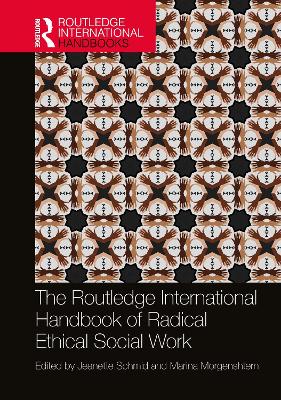
This volume offers an initial articulation of radical, ethical social work as a socially transformative response to societal divisions and polarisation.

The contributors conceptualise this interstitial space of the radical and ethical as acutely sensitive to power relations, systemic harms, and diverse epistemologies and ontologies while being relational, contextual, compassionate, and informed by oppositional consciousness and revolutionary hope. The 30 chapters are spread across three sections: Theorizing Radical, Ethical Social Work; Academic Contexts; and Practical Contexts. In disrupting assumed positions and orthodoxies and making visible tensions and contradictions in contemporary social work, this book suggests greater complexity, nuance, and possibility, whilst promoting novel, unique social work responses and dialogue.

Presenting a new politics of social work, this Handbook will motivate social work scholars, educators, practitioners, students, and policy makers towards complex, critical, relevant, transformative, socially just, decolonised, ethical social work engagement.


This volume offers an initial articulation of radical, ethical social work as a socially transformative response to societal divisions and polarization.

Arvustused

This volume on radical, ethical social work is most welcome. In these deeply divided times of hateimbued technology and politics, it is uplifting to know that social workers still cling to their ideals of human rights, social justice, and peaceful coexistence.

Mel Gray, PhD, Professor Emeritus, University of Newcastle, Australia, AU

The Routledge International Handbook of Radical Ethical Social Work renews the moral and political purpose of social work for a polarized world. By bringing the radical and the ethical into a shared, evolving space, it illuminates new pathways for reflective, compassionate, inclusive, and transformative practice. This kaleidoscopic volume resists injustice while nurturing solidarity, reparation, and mutual accountability across diverse contexts. Grounded in humility, hope, and decolonial engagement, it redefines social work as a living practice of moral courage and relational responsibilityone that listens, stands alongside, and acts with dignity and care for people and the planet.

Antoinette Lombard, PhD, Professor Emeritus of Social Work, University of Pretoria, ZA; President, International Association for Schools of Social Work (IASSW)

This edited volume offers a thoughtprovoking exploration of the complex intersections between the radical and ethical dimensions of social work.

Nilan Yu, PhD, UniSA Justice & Society, University of South Australia, AU

Section 1: Theorizing Radical, Ethical Social Work 1.Introduction: The
Ethical Radical Space in Social Work: A Kaleidoscope 2.Overcoming Modernitys
Moral Cacophony: Realising Social Works Radical, Ethical Potential through
Revolutionary Aristotelianism 3.Pluriversality as a Lens for Expanding
Radical, Ethical Social Work 4.Advancing the Radical and Ethical Core of
Social Work: More Inclusive and Participatory Approaches to Theory Production
5.Centring Resistant Margins: The Courageous Critical and Radical Ethical
Core 6.Re-Stor(y)ing Ethics Through Kinship, Relational Accountability and
Radical Revolutionary Love Section 2: Academic Contexts 7.Theory Base Guiding
Canadian Social Work Educators: Foregrounding Criticality 8.Undoing the
Essentialized White Body in Anti-Oppressive Social Work: A Radical Moral
Imperative 9.Using a Radical, Ethical Social Work Lens to Understanding the
Tensions in Student-Educator Relationships from the Educators Perspective
10.A Process of Radical and Ethical Collaboration on Social Work Course
Redesign: Voices of South African Educators 11.Radical, Ethical Social Work
in Carceral and Fugitive Spaces: Oral Presentation Section 3: Practical
Contexts 12.Pedagogical Relationships and Recognition Theory as an Expression
of Radical, Ethical Social Work 13.Applying a Radical Ethical Core to
Co-Design Research with Currently and Fromerly Incarcerated Women 14.The
Least Harmful Path: Radical, Ethical Social Work in Practice Within and
Around Systems of Social Control 15.The Radical Ethical Core of Social Work
If You Want to Change Outcomes for Children, Change the Way Decisions Are
Made Family Group Conferences and Restorative Approaches Redefining
Relationships in Child Protection Practice 16.The Necropolitics of Covid-19
and Pandemic Social Work: Unsettling the Politics of Care 17.Compassionate
Radical Ethical Social Work: Understanding Toxic Harm in South Korea as
Structural-Ecosocial Conditions of Health 18.Integrating Western and
Traditional Notions of Health for Rural South African Women Dealing with
Cervical Cancer: Is it Possible and Desirable? 19.Understanding Palliative
Care Through a Radical, Ethical Social Work Lens 20.Communities of Recovery
and Their Development: Practicing the Radical and its Ethical Core in Social
Work 21.Radical, Ethical Gerontological Social Work 22.Powerful? Powerless?
Both?: The Complex Experiences of the Jewish Immigrant Men from the Former
Soviet Union in Toronto 23.Challenging Heteronormativity Through Groupwork
with Black-Identifying Men: A Radical, Ethical Social Work Approach 24.More
Than What Meets the Eye: A Radical, Ethical Overview of Gender and Sexuality
within South African Social Work 25.Structural Inequalities Facing Women in
Nigeria and South Africa: A Radical Ethical Social Work Perspective
26.Participation and Oppurtunity Justice in the Social Sphere/Space: Social
Work Between Participation and Paternalism: Who Has a Say, Who is Heard in
Neighbourhood and Community Development? 27.Radical and Ethical Social Work
Responses to Xenophobic Violence in South Africa 28.The Future of Social Work
in Times of Disasters: Towards a Multispecies Ethics 29.Untangling the Knot:
Dilemmas in the Professionalization of Social Work Towards a Radical, Ethical
Space 30.Conclusion
Jeanette Schmid is a research fellow for the Centre for Social Development in Africa, University of Johannesburg and retired Social Work Professor at Vancouver Island University. She is a seasoned social work researcher, consultant, practitioner, and educator with a strong interdisciplinary focus.

Marina Morgenshtern is an Associate Professor and Dean at Trent University Durham-GTA. She is a former chair of the Department of Social Work at Trent University.