Muutke küpsiste eelistusi

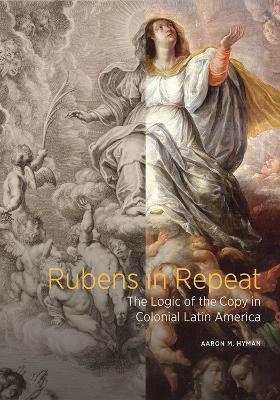
E-raamat: Rubens in Repeat: The Logic of the Copy in Colonial Latin America

  • Formaat: EPUB+DRM
  • Sari: Getty Publications -
  • Ilmumisaeg: 15-Mar-2026
  • Kirjastus: Getty Publications
  • Keel: eng
  • ISBN-13: 9798887120829
  • Formaat - EPUB+DRM
  • Hind: 98,28 €*
  • * hind on lõplik, st. muud allahindlused enam ei rakendu
  • Lisa ostukorvi
  • Lisa soovinimekirja
  • See e-raamat on mõeldud ainult isiklikuks kasutamiseks. E-raamatuid ei saa tagastada.
  • Formaat: EPUB+DRM
  • Sari: Getty Publications -
  • Ilmumisaeg: 15-Mar-2026
  • Kirjastus: Getty Publications
  • Keel: eng
  • ISBN-13: 9798887120829

DRM piirangud

  • Kopeerimine (copy/paste):

    ei ole lubatud

  • Printimine:

    ei ole lubatud

  • Kasutamine:

    Digitaalõiguste kaitse (DRM)
    Kirjastus on väljastanud selle e-raamatu krüpteeritud kujul, mis tähendab, et selle lugemiseks peate installeerima spetsiaalse tarkvara. Samuti peate looma endale  Adobe ID Rohkem infot siin. E-raamatut saab lugeda 1 kasutaja ning alla laadida kuni 6'de seadmesse (kõik autoriseeritud sama Adobe ID-ga).

    Vajalik tarkvara
    Mobiilsetes seadmetes (telefon või tahvelarvuti) lugemiseks peate installeerima selle tasuta rakenduse: PocketBook Reader (iOS / Android)

    PC või Mac seadmes lugemiseks peate installima Adobe Digital Editionsi (Seeon tasuta rakendus spetsiaalselt e-raamatute lugemiseks. Seda ei tohi segamini ajada Adober Reader'iga, mis tõenäoliselt on juba teie arvutisse installeeritud )

    Seda e-raamatut ei saa lugeda Amazon Kindle's. 

"This book excavates the unequaled reception of Flemish artist Peter Paul Rubens in Latin America in the form of prints made after his works, arguing that colonial artists in the New World forged new frameworks for artistic creativity by conforming to European printed designs"--

This book examines the reception in Latin America of prints designed by the Flemish artist Peter Paul Rubens, showing how colonial artists used such designs to create all manner of artworks and, in the process, forged new frameworks for artistic creativity.

Peter Paul Rubens (1577&;1640) never crossed the Atlantic himself, but his impact in colonial Latin America was profound. Prints made after the Flemish artist&;s designs were routinely sent from Europe to the Spanish Americas, where artists used them to make all manner of objects.

Rubens in Repeat is the first comprehensive study of this transatlantic phenomenon, despite broad recognition that it was one of the most important forces to shape the artistic landscapes of the region. Copying, particularly in colonial contexts, has traditionally held negative implications that have discouraged its serious exploration. Yet analyzing the interpretation of printed sources and recontextualizing the resulting works within period discourse and their original spaces of display allow a new critical reassessment of this broad category of art produced in colonial Latin America&;art that has all too easily been dismissed as derivative and thus unworthy of sustained interest and investigation. This book takes a new approach to the paradigms of artistic authorship that emerged alongside these complex creative responses, focusing on the viceroyalties of New Spain and Peru in the seventeenth and eighteenth centuries. It argues that the use of European prints was an essential component of the very framework in which colonial artists forged ideas about what it meant to be a creator.

This book examines the reception in Latin America of prints designed by the Flemish artist Peter Paul Rubens, showing how colonial artists used such designs to create all manner of artworks and, in the process, forged new frameworks for artistic creativity.

Arvustused

"Rubens in Repeat is an innovative study about the mobility of objects and their reinterpretation across the vast geography of the early modern Spanish Empire. Aaron M. Hyman's attention to buildings, cities, and viceroyalties as settings for the transformation of print into paint, stone, and other media provides a scholarly model for thinking locally and writing globally."-Jesus Escobar, Northwestern University;; "An explosive defamiliarization of the Flemish Baroque as period, geography, and mode. Hyman weaves close looking with startling archival finds to situate Rubens not so much as a transatlantic brand, but as an inflection of what exactly "European" art-and so too Latin American visual culture-was in the long seventeenth century. No longer just the art historical fellow of Van Dyck, Snyders, and Jan Bruegel, here Rubens aligns with Durer, Warhol, even Judd. But time remains fundamental: Hyman sinks us into the documents and places us before dozens of never-published objects, disabling the colonialist myth of the copy as "other." Rubens-always an artist more interesting than his art-emerges as a willful ghost, forever betwixt repetitions."-Christopher P. Heuer, author of Into the White: The Renaissance Arctic and the End of the Image;;"Both "logic" and "copy" are carefully examined, and finally subverted, in this extraordinary book. The extensive use of prints after works by Rubens throughout Spanish and Portuguese America from the seventeenth to the nineteenth centuries is a commonplace in studies of Latin American art. Delving deeply into specific examples and their variations in different geographies and institutions, Hyman both informs and expands the reader's knowledge and understanding of the paths of creativity and reception."-Clara Bargellini, Instituto de Investigaciones Esteticas, Universidad Nacional Autonoma de Mexico

Acknowledgments vi
Introduction: Conformity 1(28)
Part 1 The City: Cuzco 29(90)
Chapter One Cuzco's Aesthetic Of Sameness
37(36)
Chapter Two Rethinking "Rubens" In The Andes
73(46)
Part 2 The Cathedral: Mexico City 119(90)
Chapter Three Inventors In New Spain
125(38)
Chapter Four Metropolitan Academicians
163(46)
Part 3 The Viceroyalty: New Spain And Peru 209(91)
Chapter Five The Transatlantic Thesis Disputation
217(40)
Chapter Six Rubens Works Miracles In New Spain
257(43)
Illustration Credits 300(2)
About The Author 302(1)
Index 303
Aaron M. Hyman is assistant professor in the Department of the History of Art at Johns Hopkins University.