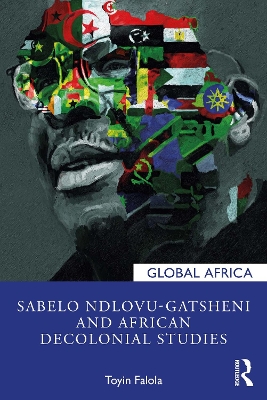
"This book considers the work of the preeminent scholar on decoloniality, Sabelo Ndlovu-Gatsheni, as a means of examining the development of decoloniality discourse and of considering the future direction of the African knowledge economy. Sabelo Ndlovu-Gatsheni has been instrumental in the construction of theories and ideas necessary for advancing a decolonial system of education and epistemology. This book considers how Professor Ndlovu-Gatsheni's work has helped to shape our thinking both on Mugabe andthe history of Zimbabwe, and beyond to the broader questions of race, liberation, higher education, and the future of decolonial studies. Renowned author Professor Toyin Falola then invites us to consider the dangers of continued repression of African epistemologies, and the enormous benefits of an alternative knowledge economy in which a diverse multiplicity of ideas drives our understanding of the world on to new heights. Unpacking the various conceptual leanings of decoloniality through the works of one of its leading lights, this book will be an essential read for researchers across the fields of African Studies, Race Studies, Philosophy, and Education"--
This book considers the work of the preeminent scholar on decoloniality, Sabelo Ndlovu-Gatsheni, instrumental in theorising how to advance a decolonial system of education and epistemology. This book examines the development of decoloniality discourse and of considering the future direction of the African knowledge economy.
This book considers the work of the preeminent scholar on decoloniality, Sabelo Ndlovu-Gatsheni, as a means of examining the development of decoloniality discourse and considering the future direction of the African knowledge economy.
Sabelo Ndlovu-Gatsheni has been instrumental in the construction of theories and ideas necessary for advancing a decolonial system of education and epistemology. This book considers how Professor Ndlovu-Gatsheni’s work has helped to shape our thinking both on Mugabe and the history of Zimbabwe, and beyond to the broader questions of race, liberation, higher education, and the future of decolonial studies. Renowned author Professor Toyin Falola then invites us to consider the dangers of continued repression of African epistemologies, and the enormous benefits of an alternative knowledge economy in which a diverse multiplicity of ideas drives our understanding of the world on to new heights.
Unpacking the various conceptual leanings of decoloniality through the works of one of its leading lights, this book will be an essential read for researchers across the fields of African Studies, Race Studies, Philosophy, and Education.
Arvustused
Sabelo Ndlovu-Gatsheni and African Decolonial Studies carries the stamp of an innovative work: it is the first to articulate the nexus of scholarship and politics as a vital charge in the hand of an individual scholar. Deploring his magisterial voice, Falola has offered us a solid book, an intellectual fortress to fully understand decoloniality.
Serges Kamga, Dean of the Faculty of Law, University of the Free State, South Africa
In this volume, Toyin Falola, the globally acclaimed doyen of African Studies, presents a critically thoughtful and well-researched book on decolonization and decoloniality, exploring the details and explaining their intricacies and nuances through the work of Ndlovu-Gathseni. Most importantly, Falola moves beyond Ndlovu-Gathseni's work to offer us the most expansive text and context on a subject that is now at the forefront of global scholarship.
Wanjala S. Nasong'o, Professor of International Studies, RhodesCollege, Memphis, Tennessee.
1: Introduction: Sabelo Ndlovu-Gatsheni's Decolonization Vision for the
World 2: Decolonization and Decoloniality 3: Marxism and Decolonization 4:
Race and African Studies 5: Africas Liberation 6: Zimbabwe in History 7:
Mugabe and His Politics 8: Militarism in Africa 9: The Challenges of Higher
Education 10: Futurity 11: An Epilogue: The Future of Decolonial Studies
Bibliography
Toyin Falola, Ph.D., is the Jacob and Frances Sanger Mossiker Chair in the Humanities and University Distinguished Teaching Professor, Department of History, The University of Texas at Austin. He is an Extraordinary Professor of Political Science, University of Pretoria, Professor of Human Rights, University of the Free State, and Professor Emeritus in the Humanities, Lead City University, Ibadan. He is the recipient of many distinguished awards, including 16 honorary doctorates. He has contributed substantially to decolonization studies, most recently Decolonizing African Studies: Knowledge Production, Agency, and Voice (2022) and Decolonizing African Knowledge: Autoethnography and African Epistemologies (2022).


 Lisainfo e-raamatute kohta