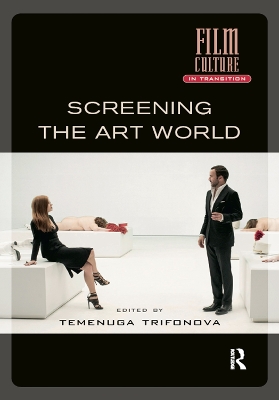
1. breadth of geographical examples; 2. interdisciplinary approach; 3. original approach to an established subject (the relationship between art and cinema). Unlike most studies of the relationship between cinema and art, which privilege questions of medium or institutional specificity and intermediality, Screening the Art World explores the ways in which artists and the art world more generally have been represented in cinema. Contributors address a rarely explored subject -art in cinema, rather than the art of cinema - by considering films across genres, historical periods and national cinemas in order to reflect on cinema’s fluctuating imaginary of ‘art’ and ‘the art world’. The book examines the intersection of art history with history in cinema, cinema’s simultaneous affirmation and denigration of the idea of art as ‘truth’ and what this means for cinema’s understanding of itself, the dominant, often contradictory ways in which artists have been represented on screen, and cinematic representations of the art world’s tenuous position between commercial good and cultural capital.
| Editor's Introduction |
|
7 | (24) |
|
|
|
Part I Cinema's Vision of Art: Aspirational, Satiric, Philosophical |
|
|
|
1 Art, Truth, Representation: Lois Weber's Dumb Girt of Portici |
|
|
31 | (16) |
|
|
|
2 Avant-Garde and Kitsch: Modern Art and Money on Screen, 1963--1964 |
|
|
47 | (18) |
|
|
|
3 Cinema as Philosophy of Art |
|
|
65 | (20) |
|
|
|
Part II The Aura of Art in (the Age of) Film |
|
|
|
4 Ineffability? The Several Vermeers |
|
|
85 | (16) |
|
|
|
5 The Joker at the Museum in Tim Burton's Batman: Artistic Vandalism in Hollywood |
|
|
101 | (14) |
|
|
|
6 Chaos ex machina: The Art of Jean Tinguely and the Documentary Image |
|
|
115 | (18) |
|
|
|
7 China's Van Goghs: Documentary Production, International Taste, and Artistic Labor |
|
|
133 | (16) |
|
|
|
Part III Affective Historiography: Negotiating the Past through Screening Art |
|
|
|
|
|
149 | (16) |
|
|
|
9 Art and History in Woman in Gold (2015), The Monuments Men (2014), and Francofonia (2015) |
|
|
165 | (16) |
|
|
|
10 Examining Public Art in Parks and Recreation's Pawnee, Indiana |
|
|
181 | (22) |
|
|
|
Part IV The Figure of the Artist: Between Mad Genius and Entrepreneur of the Self |
|
|
|
11 Homicidal and Suicidal Artist Figures in Film |
|
|
203 | (16) |
|
|
|
12 Blood Lust: Realism, Violent Inspiration, and the Artist in Horror Cinema |
|
|
219 | (16) |
|
|
|
13 Picturing Picasso: Revisiting Paul Haesaerts's Visite a Picasso (1950) |
|
|
235 | (18) |
|
|
|
|
|
14 This Is the End of High Entertainment: Tiny Furniture and This Is the End |
|
|
253 | (16) |
|
|
|
15 Screening Performance: Curating the Artist Persona |
|
|
269 | (18) |
|
|
|
16 Peter Greenaway's Artist-Entrepreneurs |
|
|
287 | (18) |
|
|
| Bibliography |
|
305 | (22) |
| Index |
|
327 | |
Temenuga Trifonova is Associate Professor in Creative Arts and Humanities at University College London. She is the author of Screening the Art World, The Figure of the Migrant in Contemporary European Cinema, Contemporary Visual Culture and the Sublime, Warped Minds: Cinema and Psychopathology, European Film Theory, The Image in French Philosophy, and the novels Tourist and Rewrite. Katherine Manthorne is Professor of Modern Art of the Americas in the Doctoral Program in Art History, Graduate Center, City University of New York. Her most recent book on film is Film and Modern American Art: The Dialogue Between Cinema and Painting (2019). Professor of Art History and Film and Media Studies at the University of South Carolina, Susan Felleman is the author of Botticelli in Hollywood: The Films of Albert Lewin (1997), Art in the Cinematic Imagination (2006), Real Objects in Unreal Situations: Modern Art in Fiction Films (2014), and co-author of Screening Statues: Sculpture and Cinema (2017), among other writings. Brigitte Peucker is the Elias Leavenworth Professor of German and a Professor of Film and Media Studies at Yale University. Her most recent book on cinema is Aesthetic Spaces: The Place of Art in Film (2019). Pierre-Antoine Pellerin is Associate Professor at the University of Lyon where he teaches American literature and gender studies. He has published in Angles, Transatlantica, Interfaces, Transtext(e)s and Theatre Topics and was recently guest editor of an issue of the French Review of American Studies devoted to The Art of Failure. Des ORawe is a senior lecturer in Film Studies at Queens University Belfast. His research focuses chiefly on comparative approaches to the study of film, and his publications include: Regarding the Real: Cinema, Documentary, and the Visual Arts (2016); and Post-Conflict Performance, Film, and Visual Arts: Cities of Memory (with Mark Phelan, 2016). A. T. McKenna is a lecturer in Media Industries at Kings College London. He is the author of King Creole: The Death of Rock and Roll in America (forth_x0002_coming, 2021), Showman of the Screen: Joseph E. Levine and his Revolutions in Film Promotion (2016), co-author of The Man Who Got Carter: Michael Klinger, Independent Film Production and the British Film Industry (2013), and co-editor of Beyond the Bottom Line: The Producer in Film and Television Studies (2014). Gillian McIver is a writer, filmmaker, and curator based in London. She is the author of Art History for Filmmakers: The Art of Visual Storytelling (Bloomsbury 2016), a survey of the historical and aesthetic relationship between cinema and visual art. She teaches at the University for the Creative Arts and Central St Martins. Christine Sprengler is Professor of Art History at Western University. She is the author of Screening Nostalgia (2009), Hitchcock and Contemporary Art (2014), and Fractured Fifties (forthcoming). She has published essays on cultural memory and nostalgia, contemporary cinematic art, and the relationship between cinema and the visual arts. Annie DellAria is Assistant Professor of Art History at Miami University in Oxford, Ohio and the author of The Moving Image as Public Art: Sidewalk Spectators and Modes of Enchantment (Palgrave Macmillan, 2021). Her writings have also appeared in Afterimage, Public Art Dialogue, Millennium Film Journal, MIRAJ, and other venues. Bruce Barber, Professor Emeritus at NSCAD University, is the author of Performance [ Performance] and Performers: Essays and Conversations (2008), Trans/Actions: Art, Film and Death (2009) and Littoral Art and Communicative Action (2013), and editor of Essays on Performance and Cultural Politicization(1983). Dr Kate Robertson is an Australian-born, New York-based writer and academic affiliate of the University of Sydney. She has written about art, culture, and film for a range of publications and authored two books: Identity, Community, and Australian Artists, 18901914 (Bloomsbury, 2019) and Trouble Every Day (Liverpool University Press, 2021). Steven Jacobs is an art historian specializing in the interaction between film and the visual arts. He teaches at Ghent University and at the University of Antwerp. Joséphine Vandekerckhove is currently enrolled as a PhD student (Fellow of the Research Foundation Flanders) at the Department of Art History, Musicology and Theater Studies of Ghent University and Universitą di Verona, where she is working on a comparative study of Belgian and Italian mid-twentieth-century art documentaries. Kelly Lloyd is an interdisciplinary artist who focuses on issues of representation and knowledge production and prioritizes public-facing collaborative research. Lloyd is currently studying for a Practice-Led DPhil in Fine Art at The University of Oxfords Ruskin School of Art and Wadham College. Website: www.k-lloyd.com. Susan Flynn is Director of eduCORE, the centre for excellence in educational research centre at the Institute of Technology, Carlow, Ireland. She teaches digital culture and education, and her research is concerned with the performance and the curation of the self via digital technologies. She is editor of a number of edited collections, including The Body Onscreen in the Digital Age and Screening American Nostalgia (both forthcoming in 2021, New York: McFarland). Marco de Waard is senior lecturer in literary studies and cultural analysis at Amsterdam University College and a research fellow at the Amsterdam School for Cultural Analysis. He teaches and writes at the intersection of cultural analysis, literary and film studies, political and critical theory, and cultural memory studies.

 Lisainfo e-raamatute kohta