Muutke küpsiste eelistusi

E-raamat: Serving Athena: The Festival of the Panathenaia and the Construction of Athenian Identities

(Center for Hellenic Studies, Washington)
  • Formaat: EPUB+DRM
  • Ilmumisaeg: 11-Mar-2021
  • Kirjastus: Cambridge University Press
  • Keel: eng
  • ISBN-13: 9781108618021
  • Formaat - EPUB+DRM
  • Hind: 41,99 €*
  • * hind on lõplik, st. muud allahindlused enam ei rakendu
  • Lisa ostukorvi
  • Lisa soovinimekirja
  • See e-raamat on mõeldud ainult isiklikuks kasutamiseks. E-raamatuid ei saa tagastada.
  • Formaat: EPUB+DRM
  • Ilmumisaeg: 11-Mar-2021
  • Kirjastus: Cambridge University Press
  • Keel: eng
  • ISBN-13: 9781108618021

DRM piirangud

  • Kopeerimine (copy/paste):

    ei ole lubatud

  • Printimine:

    ei ole lubatud

  • Kasutamine:

    Digitaalõiguste kaitse (DRM)
    Kirjastus on väljastanud selle e-raamatu krüpteeritud kujul, mis tähendab, et selle lugemiseks peate installeerima spetsiaalse tarkvara. Samuti peate looma endale  Adobe ID Rohkem infot siin. E-raamatut saab lugeda 1 kasutaja ning alla laadida kuni 6'de seadmesse (kõik autoriseeritud sama Adobe ID-ga).

    Vajalik tarkvara
    Mobiilsetes seadmetes (telefon või tahvelarvuti) lugemiseks peate installeerima selle tasuta rakenduse: PocketBook Reader (iOS / Android)

    PC või Mac seadmes lugemiseks peate installima Adobe Digital Editionsi (Seeon tasuta rakendus spetsiaalselt e-raamatute lugemiseks. Seda ei tohi segamini ajada Adober Reader'iga, mis tõenäoliselt on juba teie arvutisse installeeritud )

    Seda e-raamatut ei saa lugeda Amazon Kindle's. 

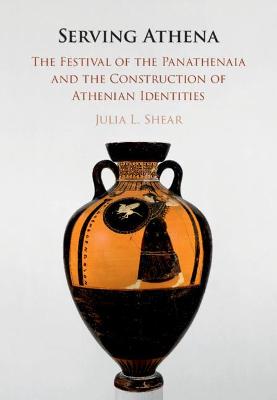
"his book asks how individuals took part in the Panathenaia, the most important festival in ancient Athens, and how doing so created identities for them. Everyone did not take part in the same way and the opportunities also changed over time. This differential participation articulated individuals' relationships both to the goddess and to the community so that the festival played an important role in negotiating what it meant to be Athenian (and non-Athenian). Athenians' involvement also marked out theirmembership in the group of 'all the Athenians', while for others, both individuals and collectives, participating placed them in relationship to this community of 'all the Athenians'. Thus the festival served to create identities both at the level of individuals and at the level of the worshipping community of 'all the Athenians'. Neither the celebration nor Athenian identities were static so that changes in one sphere affected the other. The Panathenaia also provides a lens for thinking about Sourvinou-Inwood's polis religion, its relationship to identities and the connections between ritual and religion, on the one hand, and politics, in the hard sense, on the other"--

The first full-length treatment of the Panathenaia, the most important festival in ancient Athens. Investigates how individuals participated in this long-lived, all-Athenian celebration, and how their participation constructed and fostered both group and social identity. Essential for anyone working on ancient Greece and especially Greek religion.

Arvustused

'Shear's approach is programmatically holistic; she uses literary, epigraphical, and archaeological sources as well as theories of the social sciences This book provides impressive evidence for the festival throughout its history and thought-provoking insights into the logics of constructing identities for the various subgroups attested as participants over the course of time. Hopefully, it will motivate further discussion about the importance and relevance of cult practices for social history - and for the cult.' Marion Meyer, Bryn Mawr Classical Review 'Shear's long-awaited publication is a detailed and lengthy analysis which presents what is known of the festival's history, religious significance, and associated events.' Tyler Jo Smith, Religious Studies Review

Muu info

Examines how the Panathenaia ('all Athenian'), the most important festival in ancient Athens, created identities for participants.
List of Figures
ix
List of Tables
xiv
Preface xvii
List of Abbreviations
xxi
1 The Panathenaia: An Introduction
1(38)
2 Giants and Heroes: The Mythologies of the Panathenaia
39(44)
3 The Little Panathenaia
83(33)
4 The Great Panathenaia: Ritual and Reciprocity
116(55)
5 The Panathenaic Games: Entertaining the Goddess
171(41)
6 Creating Identities at the Great Panathenaia: Athenian Men
212(41)
7 Creating Identities at the Great Panathenaia: Other Residents and Non-Residents
253(61)
8 The City, the Goddess and the Festival
314(22)
Appendix 1 The Hellenistic Archons of Athens: 323/2 to 48/7 bc 336(8)
Appendix 2 The Parthenon Frieze and the Panathenaia 344(7)
Appendix 3 The Races for the Apobates and the Dismounting Charioteer 351(6)
Appendix 4 The Pyrrhiche and the Tribal Team Events 357(4)
Appendix 5 The Date of IG II2 3079 = IG II3.4 528 361(5)
Appendix 6 The Officials of the Great Panathenaia in the Third Century Bc 366(11)
Appendix 7 Tiberius Claudius Novius and the Great Panathenaia Sebasta 377(3)
Appendix 8 The Text of Agora XVIII C197 380(10)
Tables 390(67)
Bibliography 457(41)
Index Locorum 498(14)
Index of Collections 512(6)
General Index 518
Julia L. Shear is a CHS Fellow in Hellenic Studies at the Center for Hellenic Studies of Harvard University and a Senior Associate Member of the American School of Classical Studies at Athens, having previously held a National Endowment for the Humanities Fellowship at the American School of Classical Studies at Athens and positions at Boaziçi University, Istanbul and the University of Glasgow. She is the author of Polis and Revolution: Responding to Oligarchy in Classical Athens (Cambridge, 2011), which was shortlisted for the Runciman Award in 2012, and has published a significant series of articles on Athenian religion, memory, society and culture. She has also excavated extensively on various sites in Greece, Italy and Cyprus and especially in the Athenian Agora in Athens in Greece.