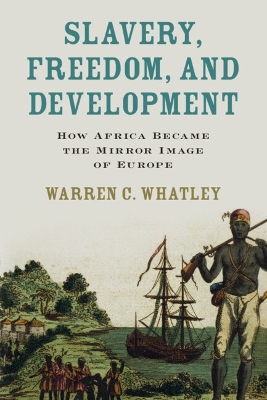
In this innovative reinterpretation of the economic history of Africa and Europe, Warren C. Whatley argues that freedom from Western-style slavery is the origin of modern Western economic growth. Such freedom was achieved around the 13th century in Western European Christendom by making enslavement among European Christians a sin but still a recognized property right and form of wealth. After 1500, the triangular trade in the North Atlantic integrates the slave and free sectors of expanding European Empires, spreading freedom and development in Europe and slavery and underdevelopment in Africa. Whatley documents when the slave and/or free sectors drove the expansion of Empire, and how exposure to slave trades in Africa spread institutions and norms better suited to capturing and trading people slavery, polygyny, ethnic stratification and inherited aristocracies some of the mechanisms through which the past is still felt in Africa today.
Arvustused
'A bold and data-rich reinterpretation of African and European economic divergence. By placing slavery and freedom at the center of the story, Whatley offers a provocative account of how the two regions became mirror images of each other; an argument that will challenge readers and energize debate across disciplines.' Marlous van Waijenburg, author of Financing the African Colonial State 'Warren Whatley has given us a sweeping interpretation of interactions between European and African development, with slavery and freedom at the center of the historical narrative. The results are stunning. Highly recommended to readers of all backgrounds.' Gavin Wright, author of Slavery and American Economic Development
Muu info
Reinterprets African and European economic history to argue that freedom and slavery produce development and underdevelopment.
List of Figures; List of Maps; List of Tables; Preface;
Acknowledgements;
1. Reinterpreting African Economic History;
2. Going Behind
the Mirror Image;
3. Lessons from Slavery in World History;
4. On the Origins
of Western Freedom and Development;
5. African Development Before the
Trans-Atlantic Slave Trade;
6. The Trans-Atlantic Slave Trade in Africa;
7.
How African-American Slavery Grew the Free Economies of Europe;
8. Into the
Interior of Africa;
9. How the Slave Trades Underdeveloped Africa;
10. Past,
Present, and Future; References; Index.
Warren C. Whatley is professor emeritus of economics at the University of Michigan whose scholarly research in economic history spans Africa, Europe and the Americas. He served on the editorial boards of the Journal of Economic History and Explorations in Economic History, and as President of the National Economic Association.

 Lisainfo e-raamatute kohta