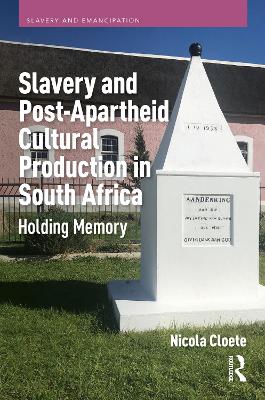
In Slavery and Post-Apartheid Cultural Production in South Africa: Holding Memory Nicola Cloete investigates the intricacies of memory, heritage, identity, and nation-building within the context of South Africa’s history of slavery.
Combining theoretical, archival, and ethnographic research through an interdisciplinary use of memory, the author crafts new frameworks for analyzing how memory is mobilized in recovering histories of slavery in post-apartheid South Africa. By examining wine farms, museums and memorials, walking tours and ethnographic experiences, the book elucidates how memory is embodied and emplaced through affective encounters. Using diverse theoretical approaches to memory, Cloete devises a theory of “holding memory” and ultimately argues that memory enables a validated claim for participation and belonging in the post-apartheid nation for a range of stakeholders through the mobilization of a previously marginalized historic event.
An important contribution, this book shows how memories of slavery are negotiated and deployed between cultural identity and national discourses of race and reconciliation. It will be of interest to researchers in the fields of cultural and sensory studies and memory studies.
In Slavery and Post-Apartheid Cultural Production in South Africa: Holding Memory Nicola Cloete investigates the intricacies of memory, heritage, identity, and nation-building within the context of South Africa’s history of slavery.
Introduction: Being shaped by slavery
Backgroundfinding a place
Finding a name
Finding a tracememory and loss
Archives and loss
A meagre story
Resurgences
Race and nationalism as discursive formation
Slavery and racial identities
Interdisciplinary approaches to slavery in South Africa
Emplacement
The politics of memory, identity, and heritage
Representation, memory, and discourses of the nation in South Africa
Structure of the book
Chapter outline
A note on terminology and naming practices
Returning to meagre stories
1 Digesting institutional memories of slavery
Introduction
Cape Towns slave heritagetransforming memory into living legacy
Pan-African heritagereconciling memory and markets in Ghana
The memory of slavery as a transnational discourse
Museums
Palatable narratives of slavery
The Slave Lodge Museum
Remembering slavery
History of exhibition development
The Slave Lodge and a palimpsestic exhibition practice
Sćo José
Monuments and memorials
The Memorial to the Enslaved
Slave forts as memorial sites
Conclusion
2 Histories in motion: Walking tours as critical engagements with the
geography and memory of slavery
Introduction
Walking as methodology
Walking and forms of commemoration
Heritage tourism and walking tours
Slavery and Coloured identities
Coloured as social and historical category
Setting outCape Town heritage tours
Attempts at progressive engagementSlave Heritage Walks of Cape Town
Remembering as returnTranscending History Tours
Walking with slavery
Simons Town Walking History Tour
Conclusion
3 Seeing slavery today: The social politics of wine farms
Introduction
Coloured as political identity
Seeing slavery
Solms-Delta today
Solms-Delta history
Theoretical framings
Considering memory and place
Solms-Deltaa sociopolitical and economic reconstruction of the past
Slave narratives in museum and wine-tasting contexts
Museum van de Caab
Slavery in Museum van de Caab
Groot Constantia Wine Farm and Museum complex
Aesthetic reflections of enslavementSpier Wine Farm
Conclusion
Conclusion: The naming of Karel Cloete and emergent histories of enslavement
All I have inherited is the forgetting
Finding the threadfamily photographs, oral histories, memories, and archives
Bringing some threads together
Finding myself in the objects
Index
Dr Nicola Cloete is a Senior Lecturer in the Department of Curatorial, Public and Visual Studies at Wits University. Her writing can be found in the International Journal of Heritage Studies, the South African Historical Journal, de Arte, Research in Drama Education, and elsewhere.

 Lisainfo e-raamatute kohta