Muutke küpsiste eelistusi

E-raamat: Social Aspects of Memory: Stories of Victims and Perpetrators from Bosnia-Herzegovina

  • Formaat: PDF+DRM
  • Ilmumisaeg: 14-May-2019
  • Kirjastus: Routledge
  • Keel: eng
  • ISBN-13: 9781351838634
  • Formaat - PDF+DRM
  • Hind: 31,19 €*
  • * hind on lõplik, st. muud allahindlused enam ei rakendu
  • Lisa ostukorvi
  • Lisa soovinimekirja
  • See e-raamat on mõeldud ainult isiklikuks kasutamiseks. E-raamatuid ei saa tagastada.
  • Formaat: PDF+DRM
  • Ilmumisaeg: 14-May-2019
  • Kirjastus: Routledge
  • Keel: eng
  • ISBN-13: 9781351838634

DRM piirangud

  • Kopeerimine (copy/paste):

    ei ole lubatud

  • Printimine:

    ei ole lubatud

  • Kasutamine:

    Digitaalõiguste kaitse (DRM)
    Kirjastus on väljastanud selle e-raamatu krüpteeritud kujul, mis tähendab, et selle lugemiseks peate installeerima spetsiaalse tarkvara. Samuti peate looma endale  Adobe ID Rohkem infot siin. E-raamatut saab lugeda 1 kasutaja ning alla laadida kuni 6'de seadmesse (kõik autoriseeritud sama Adobe ID-ga).

    Vajalik tarkvara
    Mobiilsetes seadmetes (telefon või tahvelarvuti) lugemiseks peate installeerima selle tasuta rakenduse: PocketBook Reader (iOS / Android)

    PC või Mac seadmes lugemiseks peate installima Adobe Digital Editionsi (Seeon tasuta rakendus spetsiaalselt e-raamatute lugemiseks. Seda ei tohi segamini ajada Adober Reader'iga, mis tõenäoliselt on juba teie arvutisse installeeritud )

    Seda e-raamatut ei saa lugeda Amazon Kindle's. 
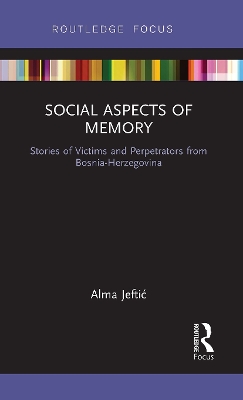
Social Aspects of Memory presents a compelling study of how ordinary people remember war. Whilst the book focuses on the cities of Sarajevo and East Sarajevo during the 1992-1995 war in Bosnia-Herzegovina, Jeftic also presents narratives from other war-torn cities and countries around the world. This book adopts a unique approach, by looking at how perpetrators and victims (as well as new generations who may not remember the war directly) manage in the aftermath of war. Jeftic explores how our memories of war and violence are formed, and how we can learn to reconcile those memories, individually and as a collective.


Drawing on the author’s own extensive empirical research, the book explores the connections between memories for significant war events, transgenerational transmission of memories, bias for in-group wrongdoings and readiness for reconciliation between two groups.


Giving a voice to underrepresented narratives and prioritising the importance of expression as a necessary catalyst for reconciliation, this book is essential reading for those interested in collective and transgenerational memory and memory studies, especially in relation to the aftermath of the 1992-1995 war in Bosnia-Herzegovina.


Social Aspects of Memory presents a compelling study of how ordinary people remember war events. Focusing on the divided city of Sarajevo during the Bosnian War, the book adopts a unique approach, looking at how perpetrators and victims (as well as new generations) manage in the aftermath.

Arvustused

"This is an excellent study of social memory as articulated by the war narratives in Bosnia and Herzegovina. Alma Jeftis book is based on the primary research among ordinary individuals across the line of ethnic divide. By successfully combining quantitative and qualitative methods with the theoretical insights this empirically rich and comprehensive study makes an important contribution to the literature on psychology and sociology of memory and representation." - Sinia Maleevi, Professor of Sociology, University College, Dublin, Ireland

"Situated at the intersections of psychology, memory studies and peace and conflict research, this book demonstrates the crucial importance of examining the psychological dimensions of peacebuilding. Alma Jeftic's investigation into remembrance of the siege of Sarajevo brings important insights into the role of individual and social memory for fraught processes of postwar coexistence." - Johanna Mannergren Selimovic, The Swedish Institute of International Affairs, Sweden

"In this compelling study of long-term psychological effects of mass violence in Bosnia, Alma Jefti shows how traumatic events are being remembered by different groups and individuals, and how memories are being passed on to new generations with no first-hand experience of the events. This book is a crucial contribution to our understanding of collective memory, shared trauma and possibilities for reconciliation in societies torn apart by war." - Tea Sindbæk Andersen, Associate Professor, Department of Cross-Cultural and Regional Studies, University of Copenhagen, Denmark

Preface


Chapter 1 - Sarajevo for Beginners: History, Culture and Politics from the
Ottoman Empire to Post-Dayton Bosnia-Herzegovina


Chapter 2 - The Siege of Sarajevo between Mnene" and Anamnesis"


Chapter 3 - Sins of Memory: Terror of Remembrance and Terror of Forgetting


Chapter 4 - Memory and Remembrance in Divided Bosnia-Herzegovina between a
"labour in vain" and perspective taking
Alma Jeftic is a PhD candidate in Psychology at the University of Belgrade, Serbia, President of the Association of Psychologists in Federation Bosnia-Herzegovina Sarajevo Subsidiary, and a Governing Board member of the Research Network on Transnational memory and Identity in Europe (Council for European Studies at Columbia University).