Muutke küpsiste eelistusi

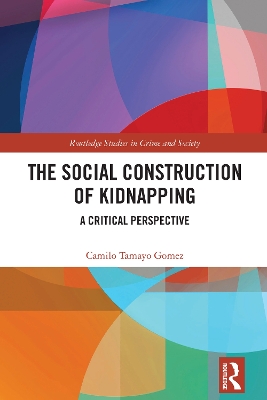
E-raamat: Social Construction of Kidnapping: A Critical Perspective

(University of Huddersfield)
  • Formaat - EPUB+DRM
  • Hind: 59,79 €*
  • * hind on lõplik, st. muud allahindlused enam ei rakendu
  • Lisa ostukorvi
  • Lisa soovinimekirja
  • See e-raamat on mõeldud ainult isiklikuks kasutamiseks. E-raamatuid ei saa tagastada.
  • Raamatukogudele

DRM piirangud

  • Kopeerimine (copy/paste):

    ei ole lubatud

  • Printimine:

    ei ole lubatud

  • Kasutamine:

    Digitaalõiguste kaitse (DRM)
    Kirjastus on väljastanud selle e-raamatu krüpteeritud kujul, mis tähendab, et selle lugemiseks peate installeerima spetsiaalse tarkvara. Samuti peate looma endale  Adobe ID Rohkem infot siin. E-raamatut saab lugeda 1 kasutaja ning alla laadida kuni 6'de seadmesse (kõik autoriseeritud sama Adobe ID-ga).

    Vajalik tarkvara
    Mobiilsetes seadmetes (telefon või tahvelarvuti) lugemiseks peate installeerima selle tasuta rakenduse: PocketBook Reader (iOS / Android)

    PC või Mac seadmes lugemiseks peate installima Adobe Digital Editionsi (Seeon tasuta rakendus spetsiaalselt e-raamatute lugemiseks. Seda ei tohi segamini ajada Adober Reader'iga, mis tõenäoliselt on juba teie arvutisse installeeritud )

    Seda e-raamatut ei saa lugeda Amazon Kindle's. 

Drawing on fifteen years of research, including statistical analysis, archival work, and interviews with former hostages, ex-combatants, and policymakers, it reveals how kidnapping shaped Colombia’s conflict and its ongoing efforts toward justice, truth, and reconciliation.


Moving beyond simplistic and sensationalist portrayals of kidnapping, this book offers a critical and interdisciplinary analysis that examines kidnapping as a social, historical, cultural, and political phenomenon.

Kidnapping is a profound violation of human rights that reshapes societies, disrupts governance, and inflicts lasting trauma on individuals and communities. In Colombia, kidnapping became an endemic feature of the armed conflict, leaving tens of thousands of families in a perpetual state of uncertainty and fear. Through an innovative blend of criminology, sociology, transitional justice, surveillance studies, and collective memory epistemologies, this book unpacks kidnapping as a crime of (im)mobility, a strategy of war, and a serious human rights violation. Drawing on fifteen years of research, including statistical analysis, archival work, and interviews with former hostages, ex-combatants, and policymakers, it reveals how kidnapping shaped Colombia’s conflict and its ongoing efforts toward justice, truth, and reconciliation. By exploring its patterns, motivations, and legacies, this book not only sheds light on Colombia’s experience but also contributes to global discussions on transitional justice, collective memory, and the strategies societies adopt to confront mass victimisation.

The Social Construction of Kidnapping is essential reading for scholars and students of criminology, transitional justice, human rights, political violence, and Latin American studies, as well as policymakers, human rights advocates, and anyone seeking a deeper understanding of how societies confront legacies of mass victimisation and forge paths toward accountability and healing.

Introduction.
1. Unpacking kidnapping, a critical approach
2. Dynamics
and characterisation of kidnapping in Colombia (1970 2024)
3. Political
kidnapping and the Colombian armed conflict
4. Analysing mutual surveillance
practices during long-term kidnapping situations: the case of jungle
kidnapping camps in Colombia
5. From resilience to collective memory: civil
societys responses to the kidnapping phenomenon in Colombia
6. Transitional
justice and kidnapping in Colombia: the long road to acknowledgement and
recognition
7. Conclusion
Camilo Tamayo Gomez is a Senior Lecturer at The University of Huddersfield (UK), a Senior Adviser in Transitional Justice for the United Nations Development Programme (UNDP), and President of the Research Committee on Social Movements, Collective Action and Social Change (RC48) of the International Sociological Association (ISA). Gomez is also the Co-Editor-in-Chief of The International Journal of Transitional Justice (IJTJ).