Muutke küpsiste eelistusi

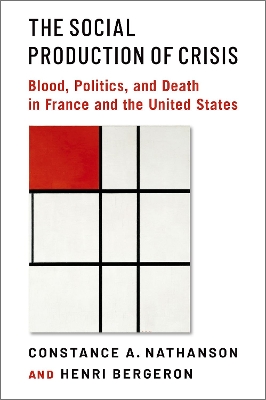
E-raamat: Social Production of Crisis: Blood, Politics, and Death in France and the United States

(Senior CNRS Research Professor, Sciences Po), (Professor Emerita, Columbia University)
  • Formaat: EPUB+DRM
  • Ilmumisaeg: 10-Mar-2023
  • Kirjastus: Oxford University Press Inc
  • Keel: eng
  • ISBN-13: 9780197682494
  • Formaat - EPUB+DRM
  • Hind: 40,12 €*
  • * hind on lõplik, st. muud allahindlused enam ei rakendu
  • Lisa ostukorvi
  • Lisa soovinimekirja
  • See e-raamat on mõeldud ainult isiklikuks kasutamiseks. E-raamatuid ei saa tagastada.
  • Formaat: EPUB+DRM
  • Ilmumisaeg: 10-Mar-2023
  • Kirjastus: Oxford University Press Inc
  • Keel: eng
  • ISBN-13: 9780197682494

DRM piirangud

  • Kopeerimine (copy/paste):

    ei ole lubatud

  • Printimine:

    ei ole lubatud

  • Kasutamine:

    Digitaalõiguste kaitse (DRM)
    Kirjastus on väljastanud selle e-raamatu krüpteeritud kujul, mis tähendab, et selle lugemiseks peate installeerima spetsiaalse tarkvara. Samuti peate looma endale  Adobe ID Rohkem infot siin. E-raamatut saab lugeda 1 kasutaja ning alla laadida kuni 6'de seadmesse (kõik autoriseeritud sama Adobe ID-ga).

    Vajalik tarkvara
    Mobiilsetes seadmetes (telefon või tahvelarvuti) lugemiseks peate installeerima selle tasuta rakenduse: PocketBook Reader (iOS / Android)

    PC või Mac seadmes lugemiseks peate installima Adobe Digital Editionsi (Seeon tasuta rakendus spetsiaalselt e-raamatute lugemiseks. Seda ei tohi segamini ajada Adober Reader'iga, mis tõenäoliselt on juba teie arvutisse installeeritud )

    Seda e-raamatut ei saa lugeda Amazon Kindle's. 

When does epidemic disease disrupt society to the point where it becomes a political crisis? In the early 1980s, almost unnoticed in the larger drama that was AIDS, over half of hemophiliacs and a large number of blood transfusion recipients were infected with toxic blood contaminated with HIV. The French public's "discovery" of this catastrophe in the early 1990s created a transformative political crisis; this same discovery in the United States went largely unnoticed.

In The Social Production of Crisis, Constance A. Nathanson and Henri Bergeron focus on a profoundly troubling story to present a detailed case comparative analysis not only of the catastrophe itself and its multiple retrospective interpretations but also of its intimate connection to the history and organization of blood as a consumer product in each country. They draw on secondary sources, archival research, and interviews with key players to provide a historical, political, and social reconstruction of the HIV contamination of the blood supply to answer the question of how and why disease morphed into crisis in France and not in the United States. They also raise questions about the curious immunity to human suffering as a policy engine in the United States, about the often reiterated weakness of civil society in France, and about theorizing alternative epidemic trajectories.

Investigating a series of morally shocking events, this book develops a sociological theory of how political crises are socially produced and raises questions about disease policy and politics in the US and France.

Arvustused

In this critically important and timely book, Nathanson and Bergeron offer a tale of two countries and their divergent responses to the recognition that HIV had contaminated their blood supplies, placing millions at risk. In the US this story is all but forgotten, a footnote in the wider history of the AIDS epidemic. In France, the debate about HIV in the blood supply became and remains the source of protest, public debate, and political crisis. Essential reading for anyone interested in epidemics, comparative policy, and culture. * Allan M. Brandt, Harvard University, and author of No Magic Bullet: A Social History of Venereal Disease in the United States (Oxford, 2020) * In the early 1980s, a contaminated national blood supply led to AIDS infection of over half of hemophiliacs in the U.S. and in France. This book explains-in painstaking detail and with incisive analysis-how and why the same set of events created a national crisis in France and barely a ripple in the United States. A must read! * Abigail C. Saguy, Professor and Chair, UCLA Sociology * In this sophisticated and deft analysis, Bergeron and Nathanson ask why, despite the deaths of thousands of hemophiliacs, contamination of the blood supply with HIV did not become a crisis in the US, while a somewhat lower casualty count led to the most serious public health scandal in post-war France and ended multiple political careers. Their answer takes the form of a fascinating, multi-stranded historical narrative that brings together decisions taken after WWII, the symbolic ambiguity of blood and blood products, legal constructs, the power of professional and donor associations, and the rhetorical work of multiple, interested parties. It is essential reading for anyone interested, especially in the wake of the Coronavirus epidemic, in how public health crises are made or unmade. * Gil Eyal, author of The Crisis of Expertise * This exemplary comparative analysis of parallel health crises in France and the United States draws on the best tools available to explain diverging national outcomes. Bringing together a sophisticated political sociology of the state, with cultural, network and strategic action analysis, Nathanson and Bergeron produce a brilliant account that will should inform many other future studies. This book should be widely read and discussed. * Michèle Lamont, Harvard University *

1 Introduction
1(18)
2 The Social Life of Blood, 1948--1980
19(26)
PART I HIV/BLOOD STORIES
3 Act I---Before the Storm, 1981--1985
45(31)
4 Act II---The Storm Breaks, 1986--1995
76(27)
5 Mobilization of the Afflicted
103(22)
PART II BLOOD EPISTEMOLOGY
6 Litigation
125(15)
7 The Quest for Compensation
140(23)
8 Authoritative Retrospection
163(18)
PART III REFLECTIONS
9 The Social Production of Political Crisis
181(19)
10 Conclusion: Crisis and Change
200(13)
Appendix A Chronologies 213(4)
Appendix B Acronyms 217(2)
Appendix C Original Sources 219(2)
Bibliography 221(12)
Index 233
Constance A. Nathanson is currently Professor Emerita at Columbia University. She has over 45 years of experience in research on sociological dimensions of health and health policy. Her work over the past 30 years has focused on the history, politics, and sociology of public health policy and policy change in the United States and in its peer developed countries. Recent publications include articles theorizing policy and policy change in public health from a sociological perspective, more substantive articles on tobacco and gun control policy, the role of social movements in policy change, and essays on health inequalities, as well as a book, Disease Prevention as Social Change (2007), that describes and interprets public health policy shifts across the past two centuries in the United States, France, Great Britain, and Canada.

Henri Bergeron is a Senior CNRS Research Professor at the Center for Sociology of Organizations, Sciences Po, Director of the Chair "Transforming

organization" at Sciences Po. He is also co-director of the Health Department of Interdisciplinary Centre for the Evaluation of Public Policies (Centre of Excellence - LABEX), and Scientific coordinator of the Chair in Health Studies-Sciences Po. He is the director of the Master on "Organizational behavior and Human Resources" at Sciences Po and the Scientific Director of the "Management and Public Affairs" track at Sciences Po's School of Public Affairs. He teaches and conducts research on organizational behavior, institutional changes and drivers (including digital transformation), on institutional entrepreneurship, and leadership, and on power in and between organizations (in particular in the field of health).