Muutke küpsiste eelistusi

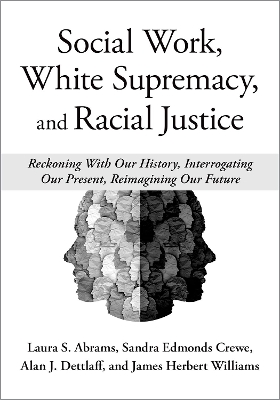
E-raamat: Social Work, White Supremacy, and Racial Justice: Reckoning With Our History, Interrogating our Present, Reimagining our Future

Edited by (Dean and Professor, Howard University School of Social Work), Edited by (Professor, University of Houston Graduate College of Social Work), Edited by (Professor, Arizona State University School of Social ), Edited by (Professor, UCLA Luskin School of Public Affairs)
  • Formaat: EPUB+DRM
  • Ilmumisaeg: 20-Oct-2023
  • Kirjastus: Oxford University Press Inc
  • Keel: eng
  • ISBN-13: 9780197641446
  • Formaat - EPUB+DRM
  • Hind: 83,25 €*
  • * hind on lõplik, st. muud allahindlused enam ei rakendu
  • Lisa ostukorvi
  • Lisa soovinimekirja
  • See e-raamat on mõeldud ainult isiklikuks kasutamiseks. E-raamatuid ei saa tagastada.
  • Formaat: EPUB+DRM
  • Ilmumisaeg: 20-Oct-2023
  • Kirjastus: Oxford University Press Inc
  • Keel: eng
  • ISBN-13: 9780197641446

DRM piirangud

  • Kopeerimine (copy/paste):

    ei ole lubatud

  • Printimine:

    ei ole lubatud

  • Kasutamine:

    Digitaalõiguste kaitse (DRM)
    Kirjastus on väljastanud selle e-raamatu krüpteeritud kujul, mis tähendab, et selle lugemiseks peate installeerima spetsiaalse tarkvara. Samuti peate looma endale  Adobe ID Rohkem infot siin. E-raamatut saab lugeda 1 kasutaja ning alla laadida kuni 6'de seadmesse (kõik autoriseeritud sama Adobe ID-ga).

    Vajalik tarkvara
    Mobiilsetes seadmetes (telefon või tahvelarvuti) lugemiseks peate installeerima selle tasuta rakenduse: PocketBook Reader (iOS / Android)

    PC või Mac seadmes lugemiseks peate installima Adobe Digital Editionsi (Seeon tasuta rakendus spetsiaalselt e-raamatute lugemiseks. Seda ei tohi segamini ajada Adober Reader'iga, mis tõenäoliselt on juba teie arvutisse installeeritud )

    Seda e-raamatut ei saa lugeda Amazon Kindle's. 

"The profession of social work in the United States has a complex history of perpetuating White supremacy and racism alongside a professed goal to achieve social justice and equality for all. The paradox of being situated as a justice-oriented professionthat operates within structures of oppression and racial hierarchy has led to ongoing struggle over the definition and purpose of the profession itself. There are numerous discursive conflicts and actual harm that results from being actors in state sanctioned systems of unequal power while working toward a social justice ideal. Indeed, many scholars have discussed social work's paradoxical positions in relation to populations they purport to help: single women and mothers, Black, Brown, and Indigenous communities, and children and families struggling with poverty, oppression, and displacement (Abramovitz, 2017; Abrams & Curran, 2004; Thibeault & Spencer, 2019). Prior scholarship has centered around control and coercion with respect to the people that we profess to help (Fook, 2002); if social work is simply a tool to try to soften the blows of oppression, hence making oppressive conditions just slightly more "bearable" and thwarting resistance (Lundy, 2011). Other scholars have documented how social workers actively participate in state sanctioned racial violence (Roberts, 2002); and how the profession's social control function is in conflict with anti-oppression work (Abramowitz, 1998; Dominelli, 1996; Webb, 2006). This edited volume on Social Work, White Supremacy, and Racial Justice aspires to add context, insight and new ways of thinking to these critical conversations"--

The profession of social work in the United States has a complex history of upholding White supremacy alongside a goal of achieving racial justice. Moreover, the profession simultaneously practices within racist institutions and systems and works to dismantle them. While there are many ways that the profession of social work has improved quality of life for minoritized groups, there are numerous missed opportunities where we have failed to uphold our values. In the wake of national movements to stop state-sanctioned violence and anti-Black racism and the knowledge of persistent racial disparities in key social welfare institutions (i.e., child welfare, criminal justice, health, housing, and mental health), these paradoxes remain the forefront of discussion in academia, social media, and social work practice. The aftermath of these national efforts provided an opportunity to appraise our profession's relationship to White supremacy and racial justice in order to reimagine and work
to achieve an anti-racist future.

In this edited volume, the authors critically examine social work's history, values, and mission, offer innovative strategies for education and practice, and make a call-to-action for social work to eliminate structural racism in education, research, practice, and social service institutions and systems. A collection of 40 chapters using diverse voices, theories, and methods challenges us to conceptualize and enact an anti-racist future through reckoning with our past histories of oppression and resistance, de-centering whiteness, and forging new practices, policies, and pedagogies that can lead to an anti-racist future.

Acknowledgements
About the Editors
About the Contributors
Foreword

Introduction

PART I: SOCIAL WORK'S HISTORICAL LEGACY OF RACISM AND WHITE SUPREMACY

Preface to Part I: How We Understand Our Past Will Shape Our Future

Agents of Segregation: Social Workers, Institutions, and Urban Spaces

Chapter
1. Unveiling Racism in the College Settlement Movement: Susan Wharton, W.E.B. Du Bois, and the "Colored Investigation" of Philadelphia's Seventh Ward

Chapter
2. The Response of School Social Work to Racial Segregation and Desegregation in American Public Schools

Chapter
3. Gentrification and the History of Power and Oppression of Older African Americans in Washington DC: Looking through a Social Welfare and Housing Policy Lens

Social Work, Immigration and Displacement

Chapter
4. Tracing Absent Critiques: Racism, White Supremacy and Anti-Asianism in Social Work's Discourses of Immigration

Chapter
5. From "Problem" to Mass Repatriation: Social Work, Racialization, and the Forced Deportation of Mexican-Origin Residents, 1917-1933

Chapter
6. Displacing a Community, Professionalizing a Practice: Race and Pathology in the Eviction of Malaga Island

White Supremacy and Gendered Racism: Legacies of Exclusion and Coercion

Chapter
7. Coercion and Institutional Racism in the Evolving Mental Health System: Social Workers as both the Problem and the Solution

Chapter
8. From Denial to Disproportionality: History of White Supremacy, Structural Racism, and the Child Welfare System

Chapter
9. Institutional Racism in the Child Welfare System: A Social Justice Issue

Chapter
10. Mothers Who Receive Temporary Assistance for Needy Families: A Citizenship Accounting

PART II: REFLECTIONS ON OUR PAST AND PRESENT: ADDRESSING RACISM FROM WITHIN

Preface to Part II: Calling Ourselves Out and Advocating for Change within the Profession

Women of Color: Enduring and Confronting Racism within the Profession

Chapter
11. Calling Out Racism in Social Work: Why We Should and Why We Don't

Chapter
12. Everyday Whiteness and the Failure of the Private Life

Chapter
13. Becoming Anti-Racist Social Workers

Social Work Education: Combatting Racism in Practice and Theory

Chapter
14. The Black Woman's Tax

Chapter
15. Survival and Resistance in the Academy: A Dialogue with Women of Color Faculty

Chapter
16. Better Late than Never: The Transformation Power of Black Feminist Thought

Chapter
17. Keeping it 100: Innovative Ways to Combat Racism in Social Work Education

Calling Out Racism through Uprooting Whiteness

Chapter
18. Fifteen Years of Critical Race Theory in Social Work Education: What We've Learned

Chapter
19. Examining the Antiracism Contributions of Black Male Social Work Educators Across Generations

Chapter
20. Social Work's Blame Game: Blackness, Neoliberalism, and the Profession's Turn Away from Organizing

PART III: ENVISIONING AN ANTI-RACIST FUTURE: FROM PRACTICE TO POLICY

Preface to Part III: The Future We Wish To See Will Not Come Easily

Toward a New Vision of Society Powered by Our Moral Imagination

Chapter
21. Using Futures Thinking to Imagine the Evolution of Anti-Racism in Social Work: Four Scenarios that May or May Not Involve a Future for the Profession

Chapter
22. Imagining a New World Through Afrofuturism: A Response to Racism Within the Social Work Profession

Chapter
23. Beyond Re-Imagining Black Lives

Abolitionist Strategies for Achieving Liberation

Chapter
24. Making Policing Obsolete: The Harms of Policing and an Abolitionist Social Work Response

Chapter
25. The Role of Social Workers in Transforming the American Educational System as a Means to Carceral Abolition

Chapter
26. Black Mothers Matter: Reimagining Child Protection and a State that Supports Black Mothers

Chapter
27. The Subjection and Spectacle of Social Work: Deconstructing and Reckoning With Social Work's Power of Policing

Reimagining Our Future Starts Now: Social Work's Role in Radical Change

Chapter
28. Radically Imagining Anti-Racist Social Work Research Using a Trauma-Informed, Socially Just Framework

Chapter
29. Envisioning Anti-Racist Social Work Organizational Change: Amplifying the Grey Literature

Chapter
30. Toward a Historically Accountable Critical Whiteness Curriculum for Social Work

PART IV: STRATEGIES FOR ACHIEVING RACIAL JUSTICE IN SOCIAL WORK EDUCATION

Preface to Part IV: Implementing an Anti-Racism Approach to Social Work Education

Dismantling Anti-Racist Pedagogies in Social Work Education

Chapter
31. Riotous Research: A Critical Trauma Theory to Uplift the Language of Those Unheard--Black, Indigenous and Social Work Students of Color

Chapter
32. Advancing Culturally Disruptive Pedagogies to Dismantle Anti-Black Racism in the Generalist Social Work Curriculum

Envisioning a Future for Social Work: Looking Back, Looking Forward

Chapter
33. Taking a Look in the Mirror to See the Future: Equitable Creative Placemaking and Social Work

Chapter
34. Envisioning an Antiracist Profession: A Qualitative Content Analysis of the Literature to Aid Social Work's Quest Toward Racial Reckoning and Social Justice

Chapter
35. LatCrit and Social Work Epistemology--Dismantling Whiteness in Ways of Knowing

Whiteness and White Supremacy: Theory, Education, and Practice

Chapter
36. Imagining the End of Racism through Ending White Supremacy: Implications for Social Work Education and Practice

Chapter
37. Managing White Fragility: Teaching While Black

Chapter
38. Creating an Anti-Colonial Academic Space for Social Work Education

Anti-Racist, Anti-Oppressive Social Work Education and Practice

Chapter
39. Resisting Curriculum Violence and Developing Anti-Oppressive, Trauma-Informed, Culturally Sustaining Approaches for Social Work Education And Practice

Chapter
40. Remedying the Foundation of Social Work Education:
Towards an Actionable Anti-Racist Pedagogy

Afterword
Laura S. Abrams, PhD is a Professor of Social Welfare at the UCLA Luskin School of Public Affairs. She received her BA in history from Brandeis University and her MSW and PhD from the UC Berkeley School of Social Welfare.


Sandra Edmonds Crewe, PhD, MSW, BSW, ACSW is Dean and Professor, Howard University School of Social Work. She received her BSW/MSW from the National Catholic School of Social Service, Catholic University of America, and inaugural Ph.D. social work degree from Howard University, Washington, DC.

Alan J. Dettlaff, PhD is Dean of the Graduate College of Social Work at the University of Houston and the inaugural Maconda Brown O'Connor Endowed Dean's Chair.

James Herbert Williams, PhD., MSW, MPA is the Arizona Centennial Professor of Social Welfare Services at the School of Social Work at Arizona State University.